Tiles Border Design Ideas for Floors and Walls
12 designs Styles, colours and patterns Updated 8 Oct 2026
A good tiles border design frames a floor or wall the way a frame finishes a photo. A border can be a dark band around the room, a marble look inlay in the hall or a thin strip across a bathroom wall.
Borders also hide uneven room edges. A plain field inside a border makes a crooked wall harder to notice. Below are floor border tiles, inlays, wall strips and skirting ideas, with the band width, surface and a practical note for the fitter. For the main tiles inside the border, see hall tiles design.
Floor Tiles Border Design
A floor border is usually a band of 100 to 300 mm, set 300 to 600 mm away from the walls. Here are simple floor tile border ideas for rooms and passages.

- Size
- 100 x 600 mm band
- Finish
- Matt
- Best for
- Bedroom
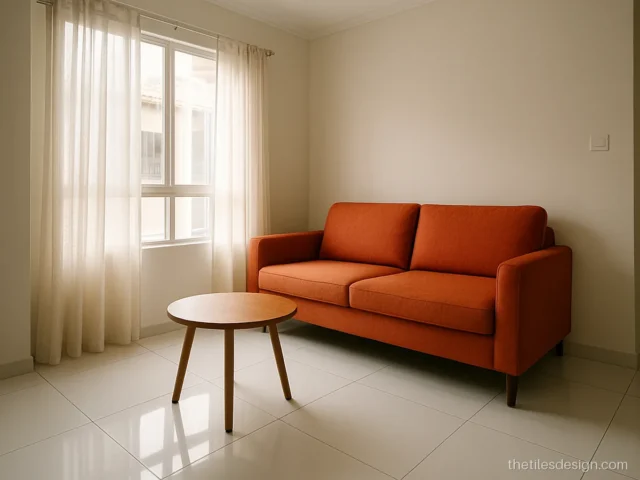
A dark grey band around a light floor gives a bedroom a neat, finished look. Furniture sits outside the band, along the walls.
Fitter's tip: Fix the border band first, then fill the centre. This keeps the band perfectly straight.
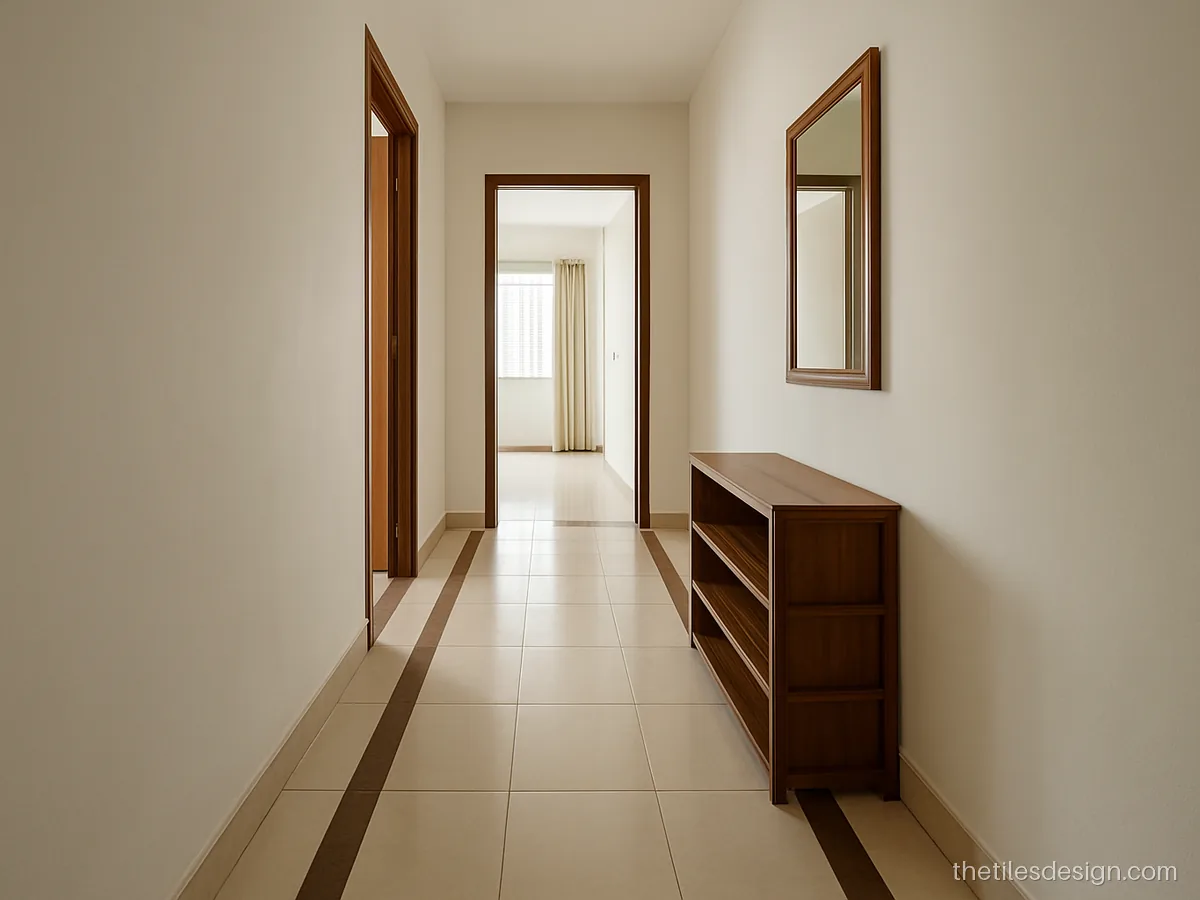
- Size
- 50 x 600 mm strips
- Finish
- Satin
- Best for
- Passage
Two thin brown lines run along a passage like a runner. It guides the eye towards the rooms at the end.
Fitter's tip: Cut strips from full tiles on a wet cutter for a clean edge. Buy one extra box for this.
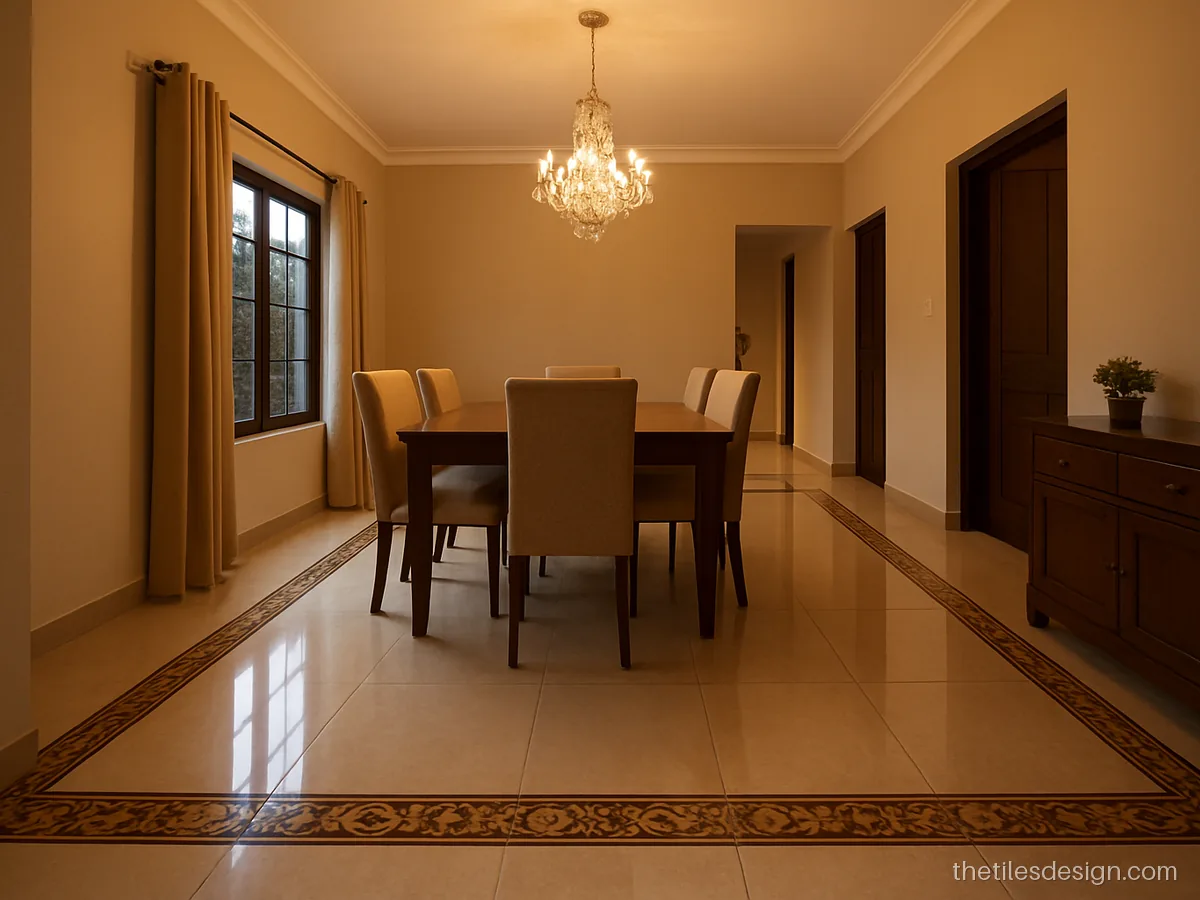
- Size
- 150 x 600 mm
- Finish
- Glossy
- Best for
- Dining area
A printed leaf border marks the dining area inside an open hall. Digital border tiles come in matching sets with corners.
Fitter's tip: Buy the matching corner pieces. Mitred cuts on printed borders rarely line up.
Marble Look Border and Inlay Ideas for the Hall
In the hall, a marble look border or a centre inlay gives the classic look of old marble floors. Use a contrast colour so it shows from the door.
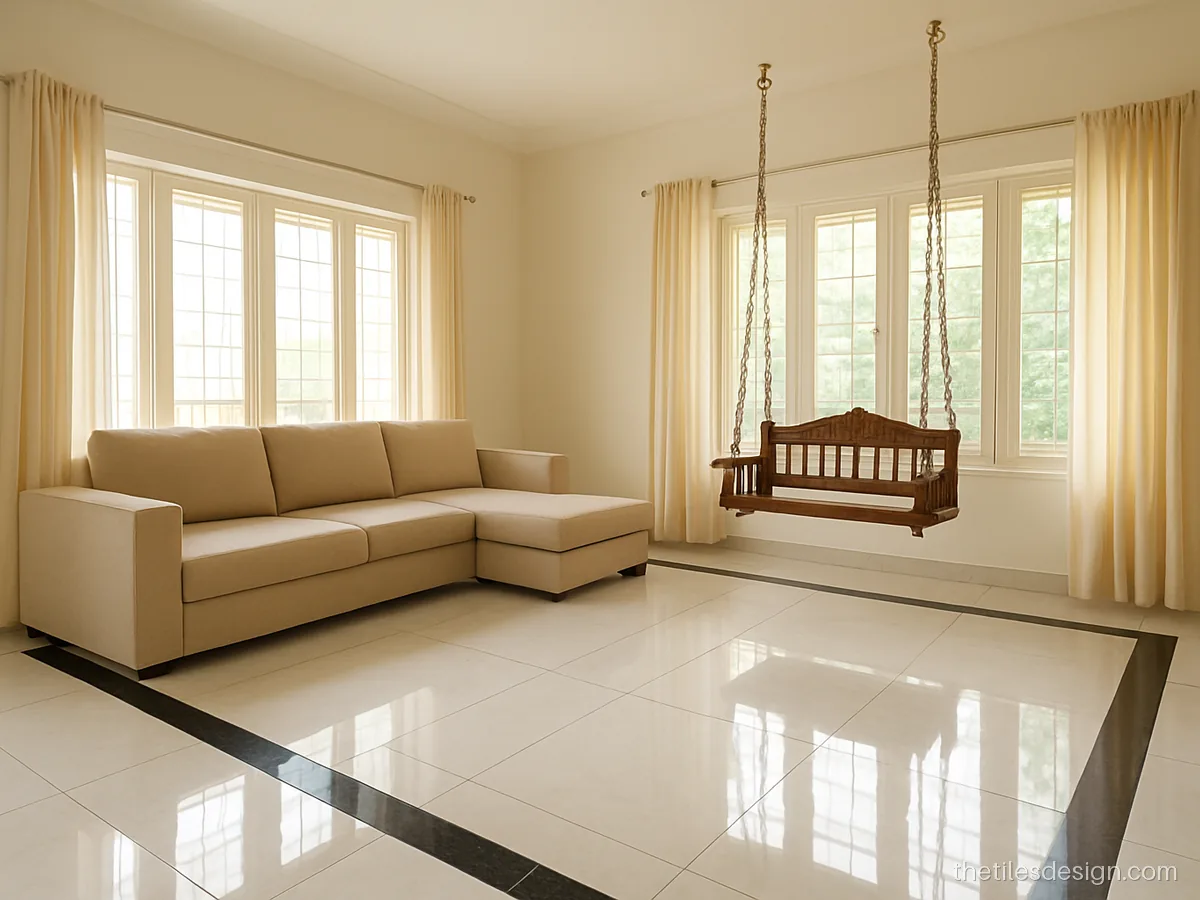
- Size
- 200 x 800 mm band
- Finish
- Polished
- Best for
- Large hall
Black marble look borders on a white floor make a hall look sharp and formal. Good for large halls with high ceilings.
Fitter's tip: Polished floors get slippery with water. Keep a doormat at every entry to the hall.
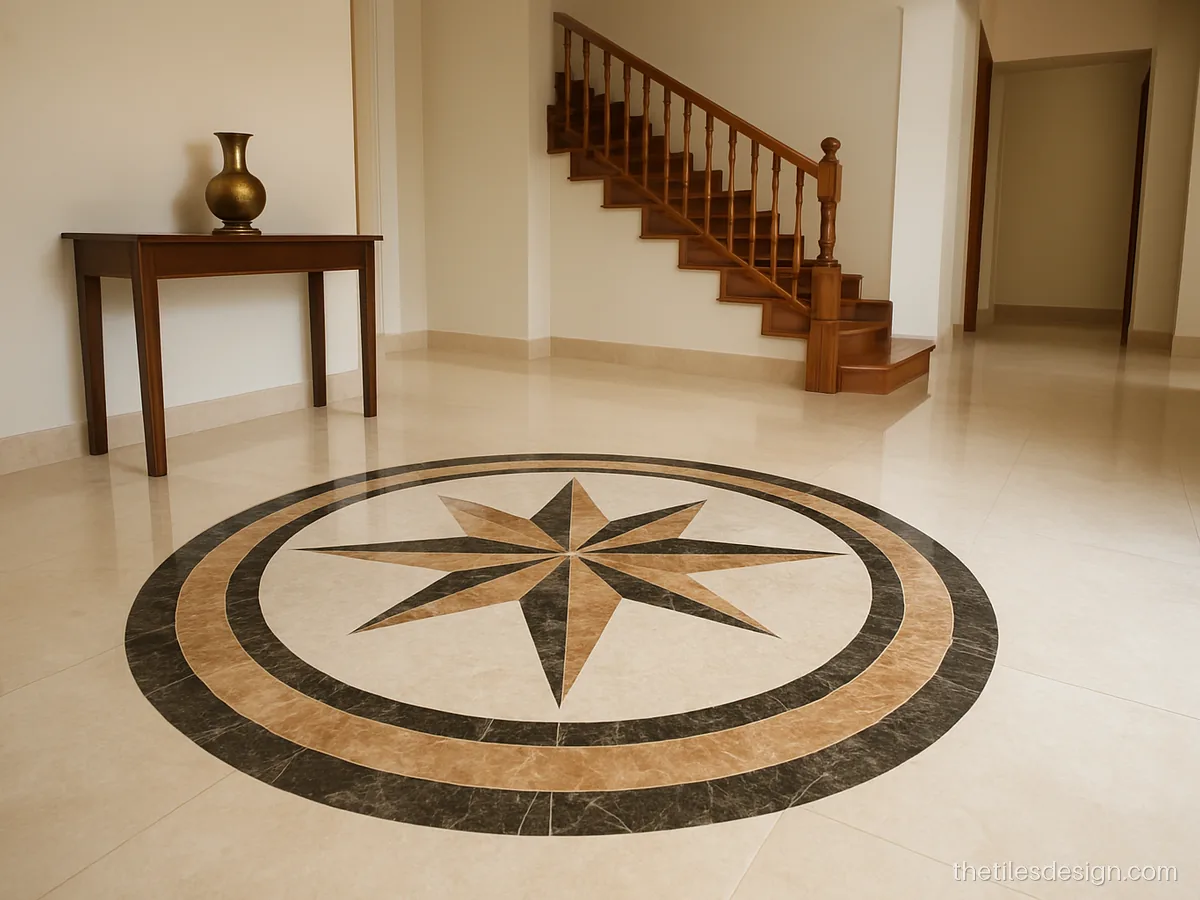
- Size
- 1200 mm round
- Finish
- Polished
- Best for
- Foyer or hall centre
A round inlay in the centre gives the hall a focus point. Leave it open, with no centre table hiding it.
Fitter's tip: Set the inlay at the exact centre of the room, and run the field tiles from it outwards.
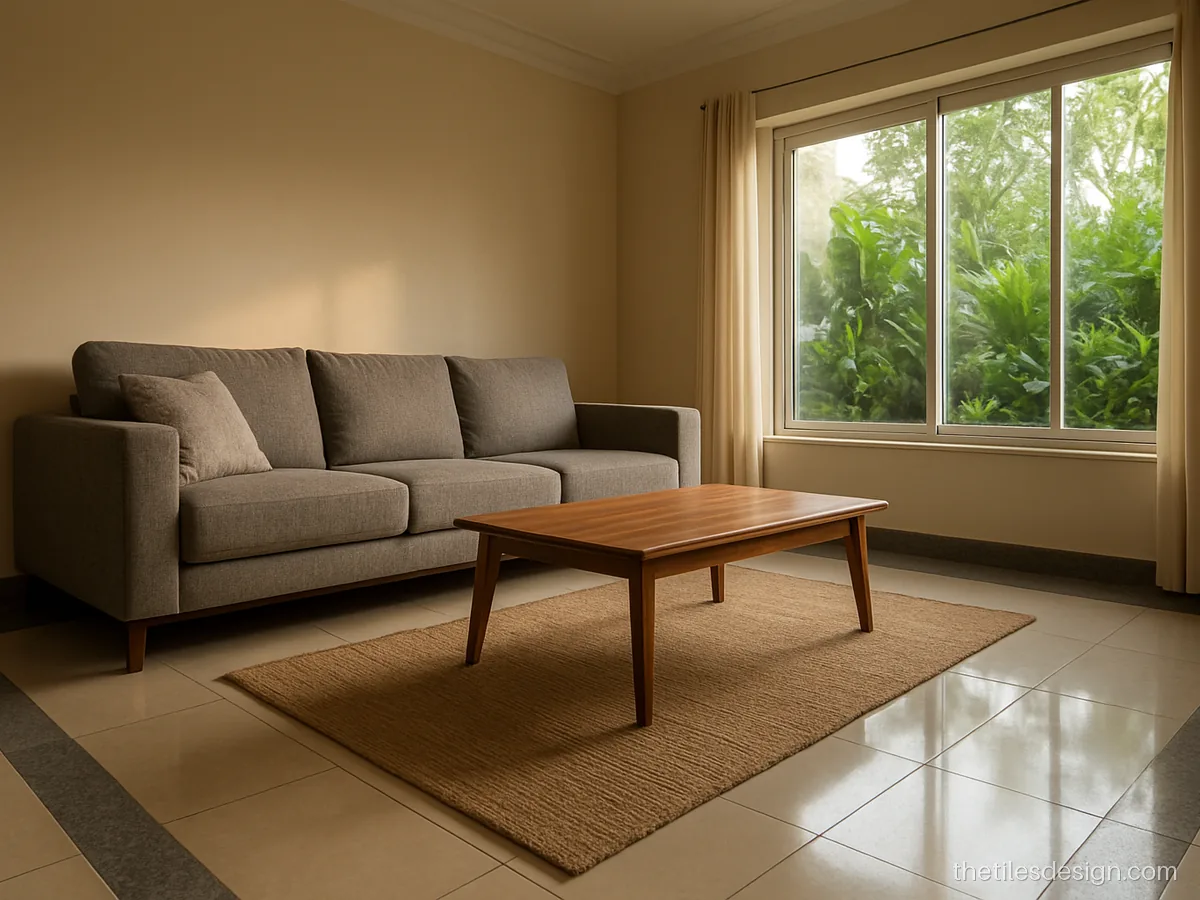
- Size
- 150 mm granite
- Finish
- Polished
- Best for
- Busy hall
A grey granite strip border is strong and does not chip. It suits halls where furniture is moved often.
Fitter's tip: Match the granite thickness to the tile using extra mortar or packing, so the floor stays level.
Border Tiles for Walls
Wall border tiles design adds a line of colour across a plain wall. In bathrooms and kitchens, set it at eye level, about 1,200 to 1,500 mm high.
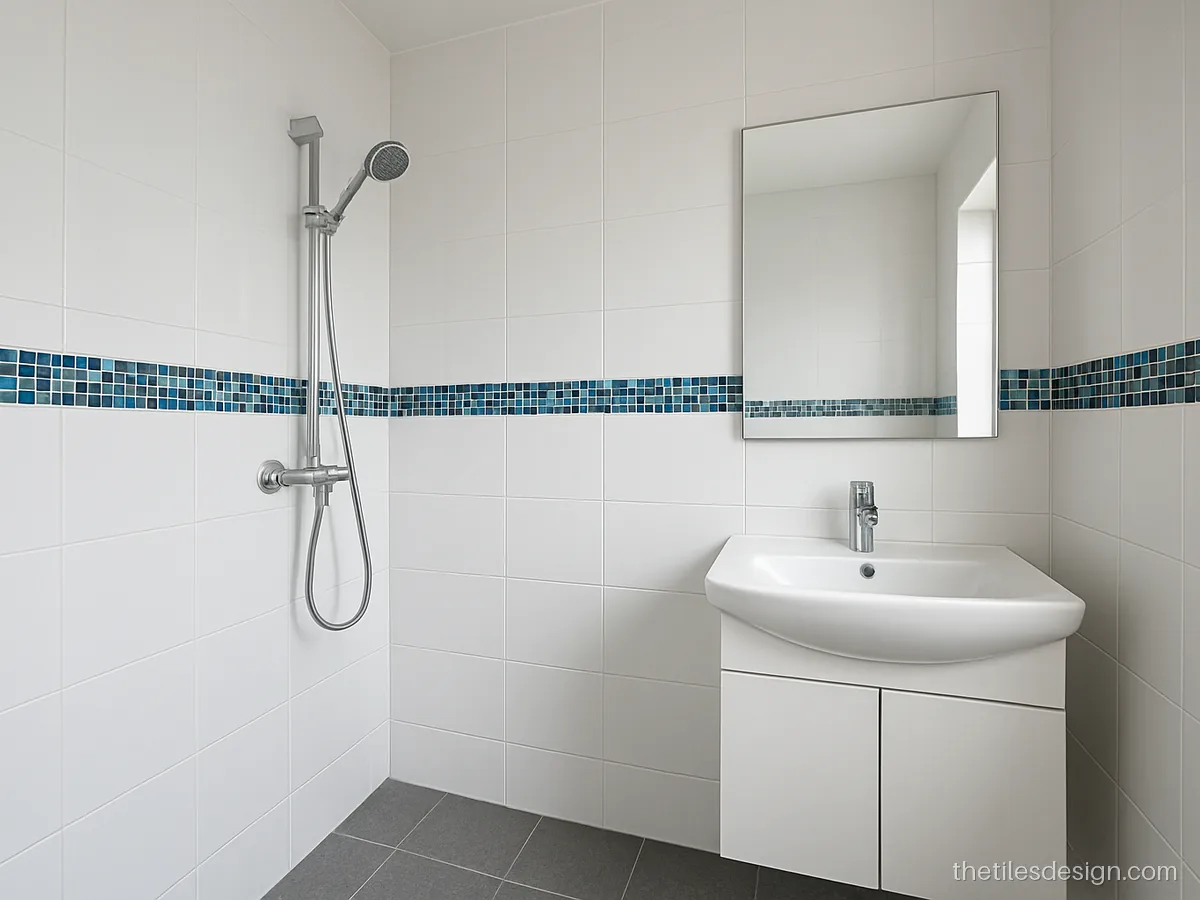
- Size
- 50 x 300 mm strip
- Finish
- Glossy
- Best for
- Bathroom wall
A glass mosaic strip at eye level breaks a tall white bathroom wall. It is the most common wall tiles border design.
Fitter's tip: Use epoxy grout on the strip. Small joints in a wet area stain quickly with cement grout.
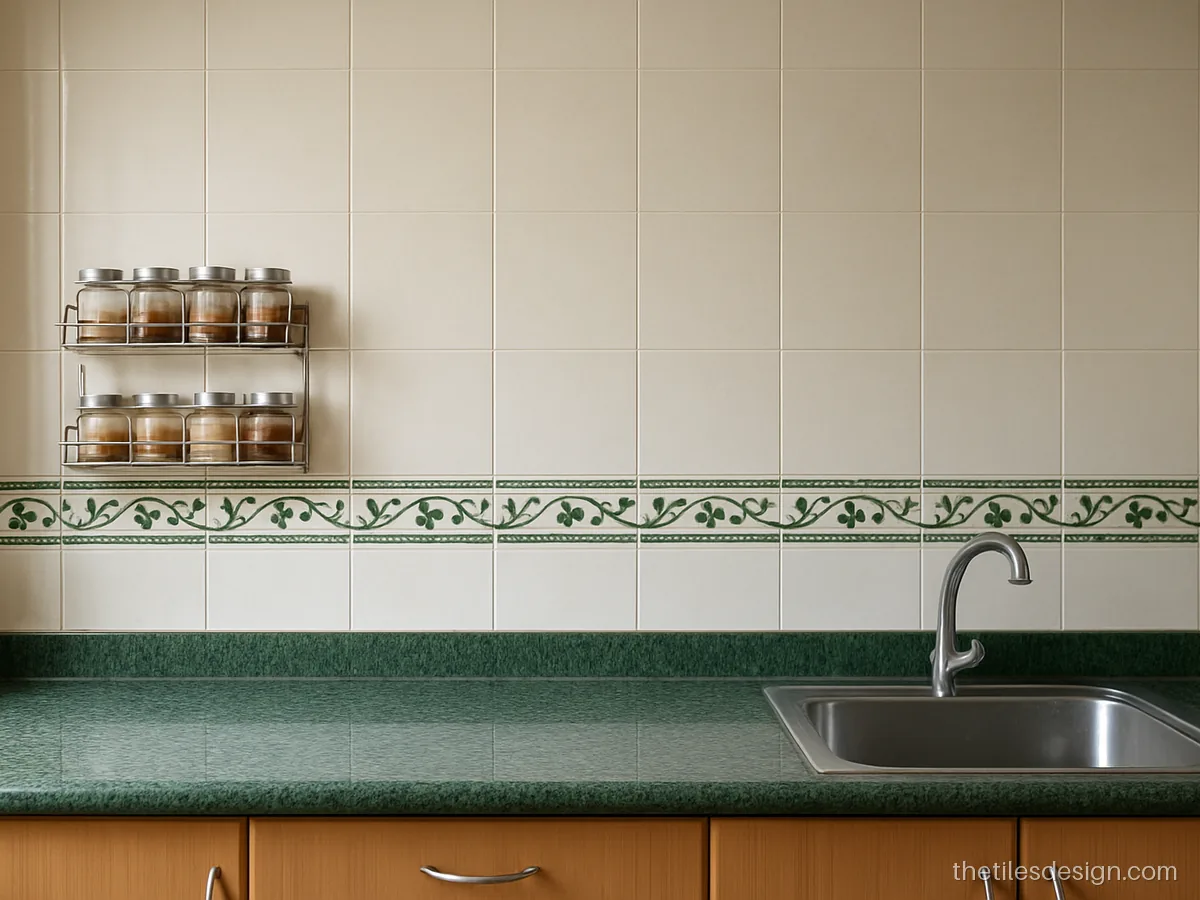
- Size
- 60 x 300 mm
- Finish
- Glossy relief
- Best for
- Kitchen wall
A listello is a thin decorative ceramic border tile. This one in cream and green runs above the counter.
Fitter's tip: Keep the listello at least 450 mm above the counter, clear of plug points and taps.
- Size
- 50 x 300 mm
- Finish
- Satin
- Best for
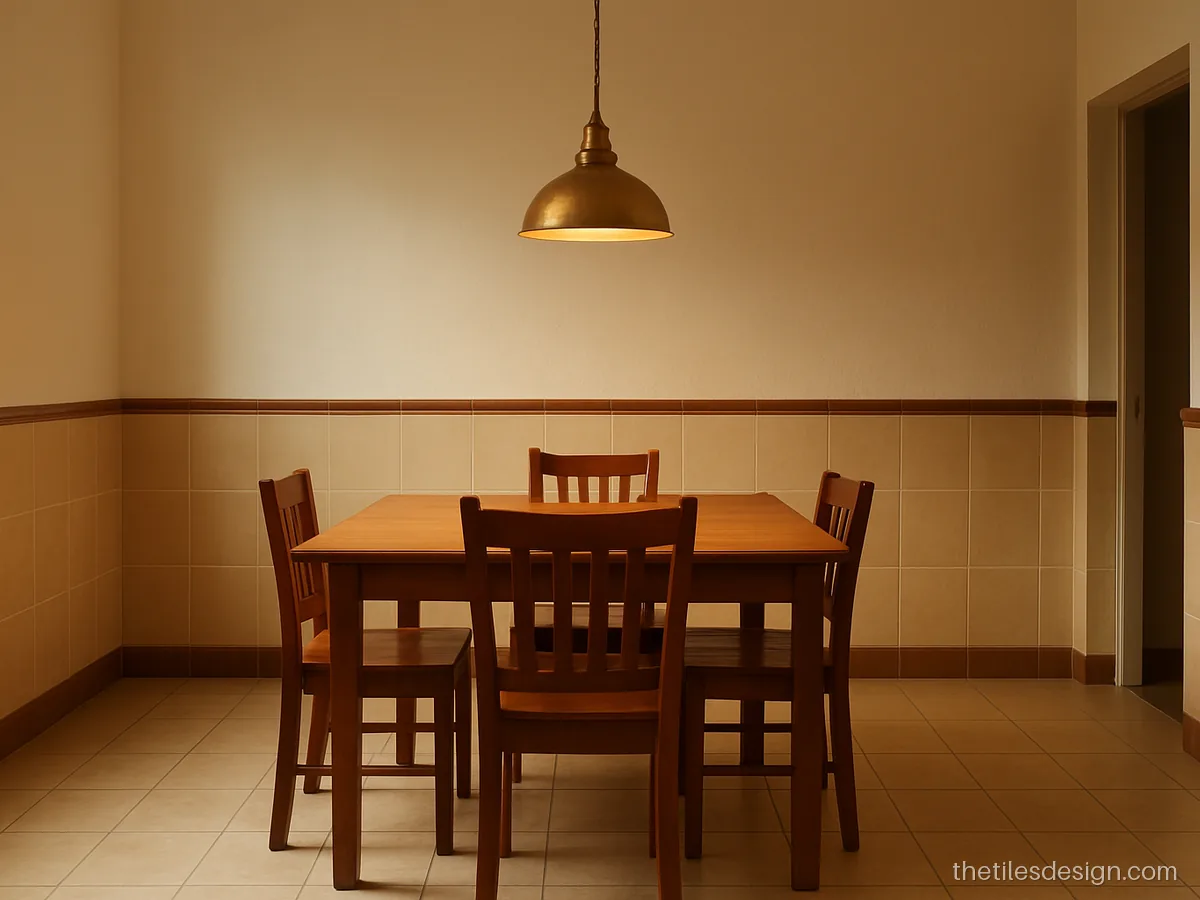
- Dining wall dado
A chair rail border tops a tiled dado and protects the painted wall above from chair backs.
Fitter's tip: Set the chair rail at 900 mm from the floor, just above the height of chair backs.
Skirting Tiles and Modern Tile Skirting
Skirting protects the bottom of the wall from mop water, dust and furniture. Usually it is 75 to 100 mm high, cut from the floor tiles or bought ready.
- Size
- 100 x 600 mm
- Finish
- Matt
- Best for
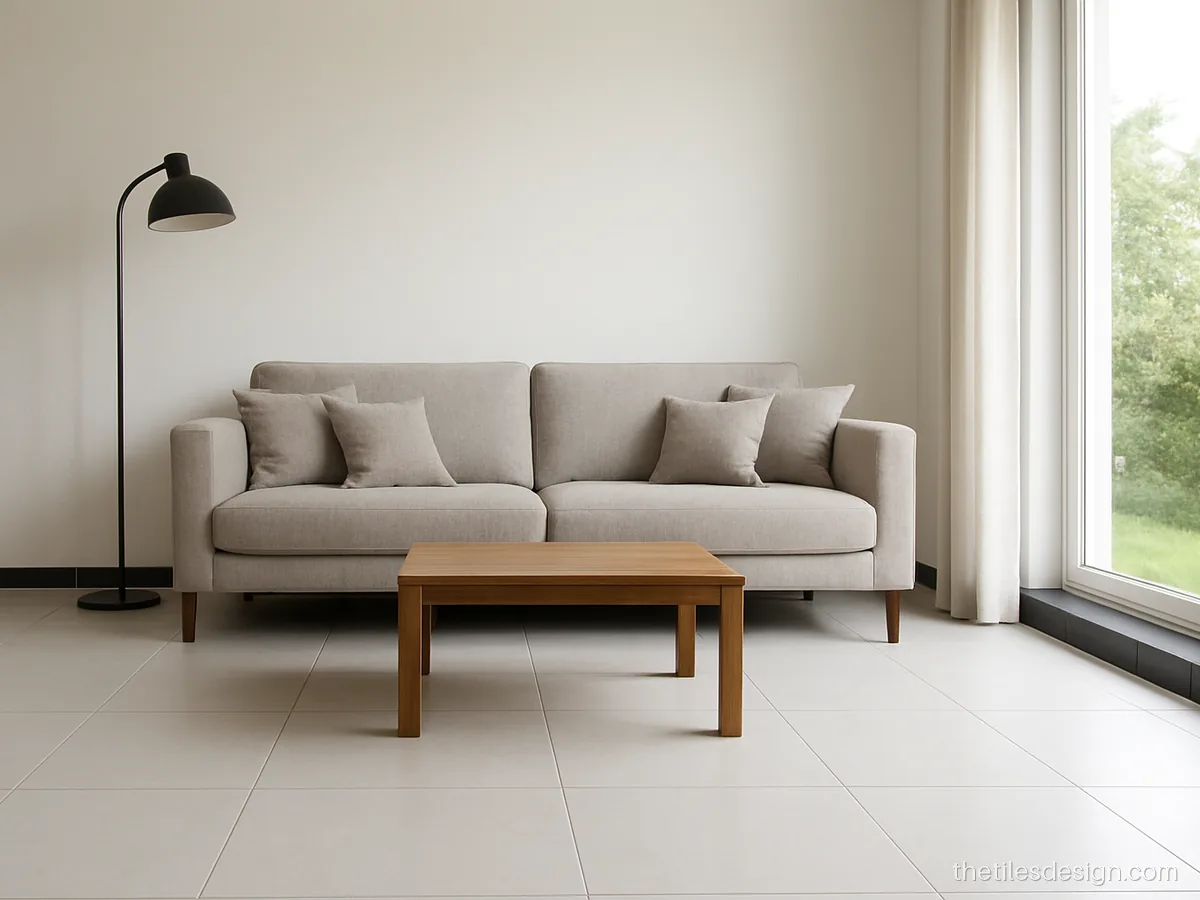
- Living room
Black skirting with a white floor gives a crisp outline and hides mop marks. It suits modern homes with white walls.
Fitter's tip: Fix skirting after the floor, with a 1 mm gap at the floor joint filled with grout.
- Size
- 80 x 600 mm
- Finish
- Matt
- Best for
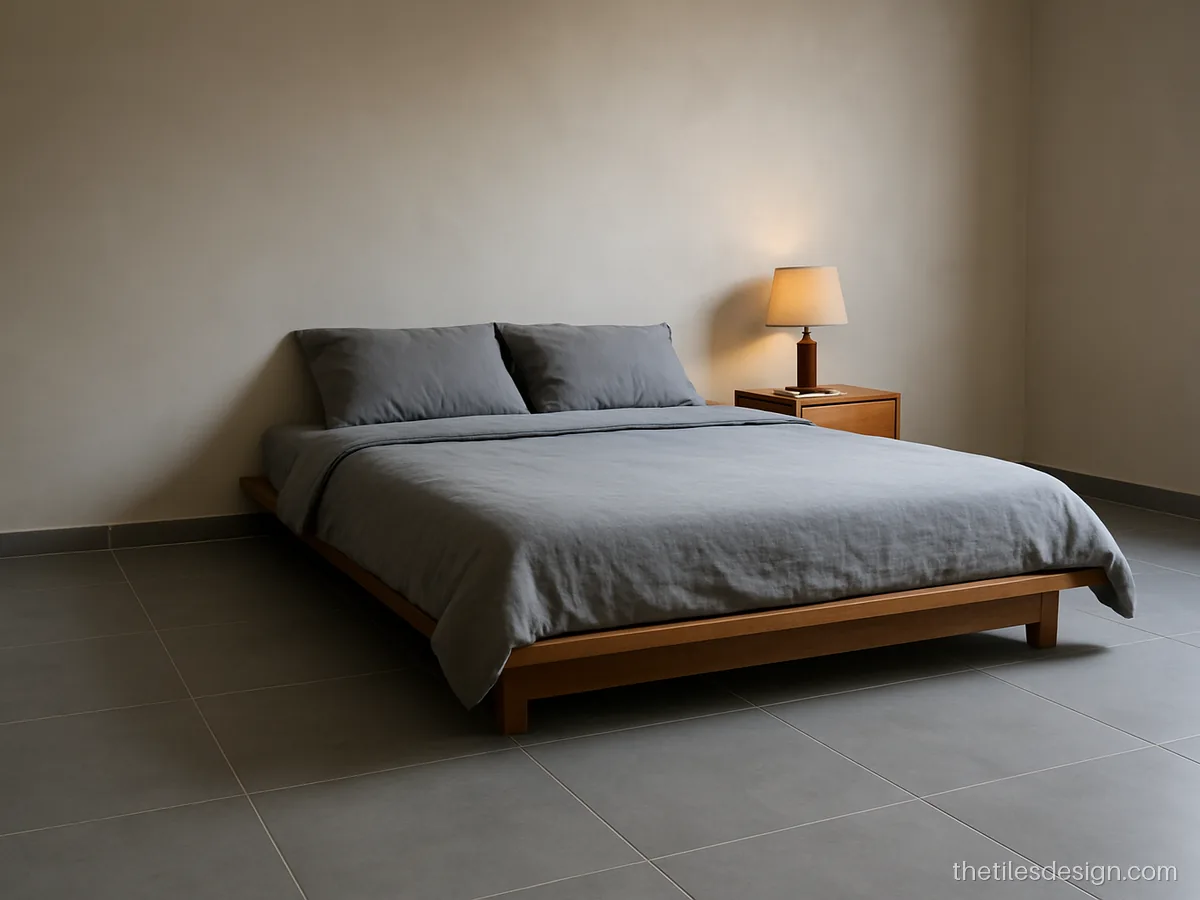
- New builds
Flush skirting sits in line with the plaster, so dust has no ledge to settle on. A clean modern look for new builds.
Fitter's tip: Plan flush skirting before plastering. The mason must leave a recess for the tile.
- Size
- 100 mm high
- Finish
- Matt
- Best for
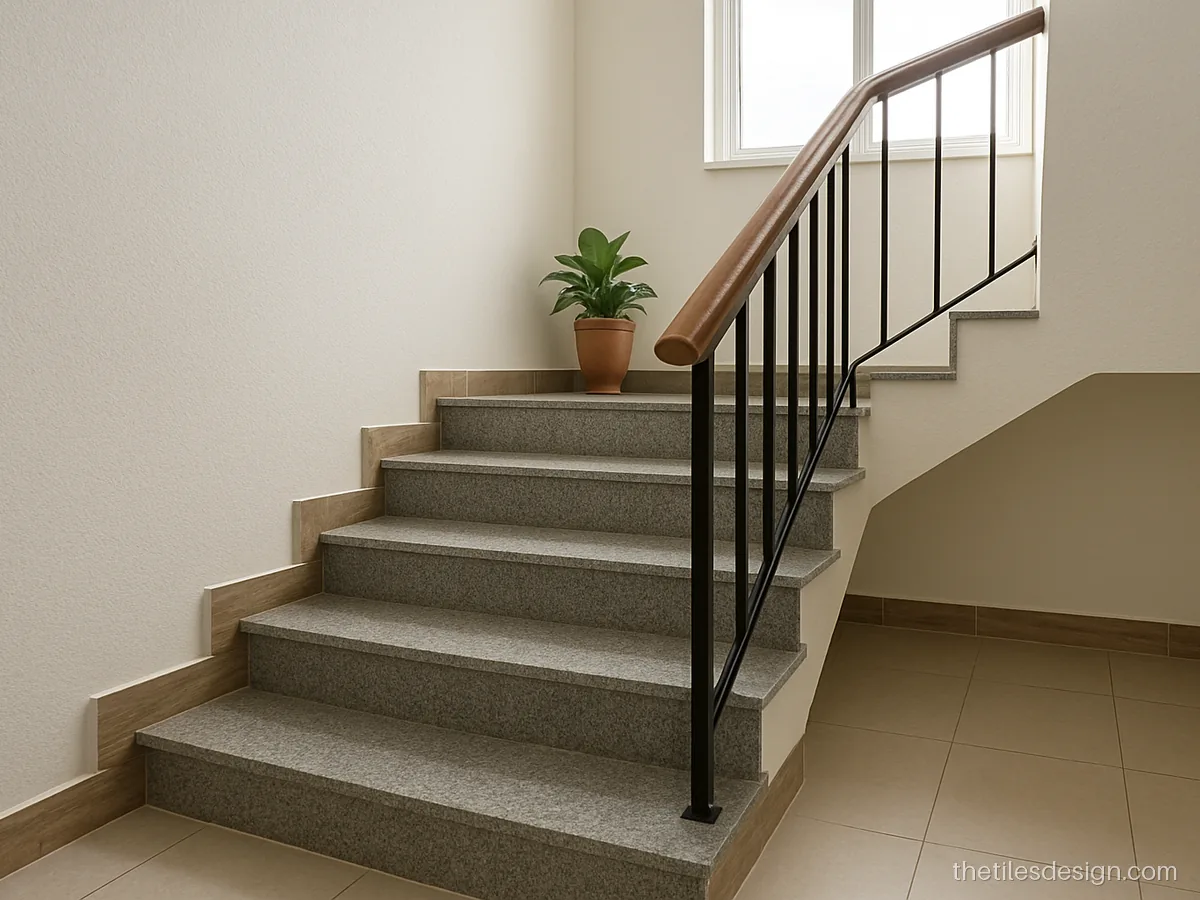
- Staircase
Stepped skirting along the stairs protects the wall from shoes. Wood look tiles match a wooden handrail.
Fitter's tip: Cut each stepped skirting piece to the tread and riser on site. Templates in cardboard help.
How to Plan a Border
- Distance from wall: keep a floor border 300 to 600 mm from the wall, where it will not be hidden under furniture.
- Width: 100 to 150 mm for bedrooms, 150 to 300 mm for large halls.
- Colour: one or two shades darker than the main floor is safe. Strong contrast like black on white needs a large room.
- Thickness: the border must match the floor tile thickness, or you get a trip edge.
Ceramic border tiles, granite strips and digital borders cost differently. Marble look inlays and curved shapes cost more because of the cutting labour. For pattern ideas inside the border, see tile patterns.
Common Border and Skirting Sizes
| Use | Size | Finish |
|---|---|---|
| Floor band | 100 to 300 mm wide | Matt or polished |
| Wall strip | 50 to 100 mm | Glossy or relief |
| Listello | 60 x 300 mm | Glossy relief |
| Skirting | 75 to 100 mm high | Same as floor |
For matching colours, see tiles colour design. For mosaic strips, see mosaic tiles.
Tile questions people ask
What are the best floor tile border ideas for a small room?
Use a thin band, about 100 mm, in a shade close to the floor. Strong dark borders cut a small room into pieces and make it look smaller.
Are border tiles for walls still in fashion?
Yes, but thinner and simpler than before. A single mosaic strip or a slim metal trim looks fresh. Wide printed flower borders look dated.
Which floor border design suits a white hall floor?
Grey, black or brown marble look borders all suit white. Grey border tiles are the easiest, as they hide dust and do not look too heavy.
What height should skirting tiles be?
Most homes use 75 to 100 mm. Taller skirting, up to 150 mm, suits halls where mops and furniture touch the wall often.
Do decorative ceramic tile borders crack easily?
Raised relief borders can chip at the edges if hit. Fix them with full adhesive on the back and keep them away from door frames and corners.
Can I add a border to an old tiled floor?
Only by removing a band of old tiles, which often damages the ones next to them. It is easier to plan the border when you lay a new floor.