Moroccan Tiles and Patterned Floor Tile Ideas
15 designs Styles, colours and patterns Updated 8 Oct 2026
Moroccan tiles are small square patterned tiles, often 200 x 200 mm, with stars, flowers and lattice shapes that join across tiles to make a bigger design. The real ones are cement tiles coloured by hand moulds. Most homes today use ceramic or vitrified tiles printed in the same Moroccan style, which are cheaper and easier to clean.
Our own Athangudi tiles from Tamil Nadu are a close cousin: cement tiles with a smooth, cool surface. This gallery shows Moroccan tile design ideas for floors, bathrooms, kitchens and verandahs. For more layouts, see tile patterns.
Moroccan Floor Tiles
Moroccan floor tiles work best in a defined area: a foyer, a dining space or a verandah. Frame them with plain tiles so the pattern has an edge.
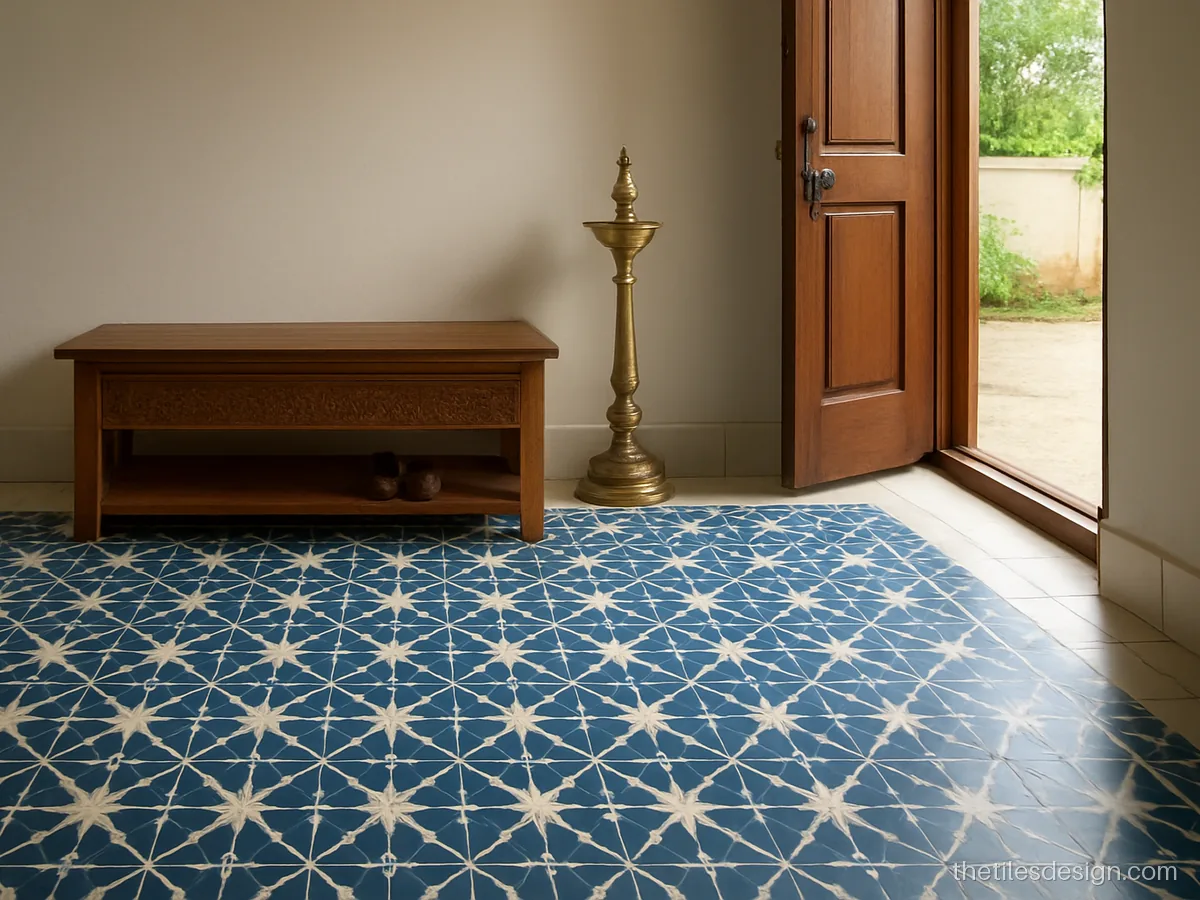
- Size
- 200 x 200 mm
- Finish
- Matt
- Best for
- Foyer
Blue and white stars join into a lattice when four tiles meet. A plain white border frames the pattern at the walls.
Fitter's tip: Lay a dry row from the centre both ways first, so cut tiles at the walls are equal.
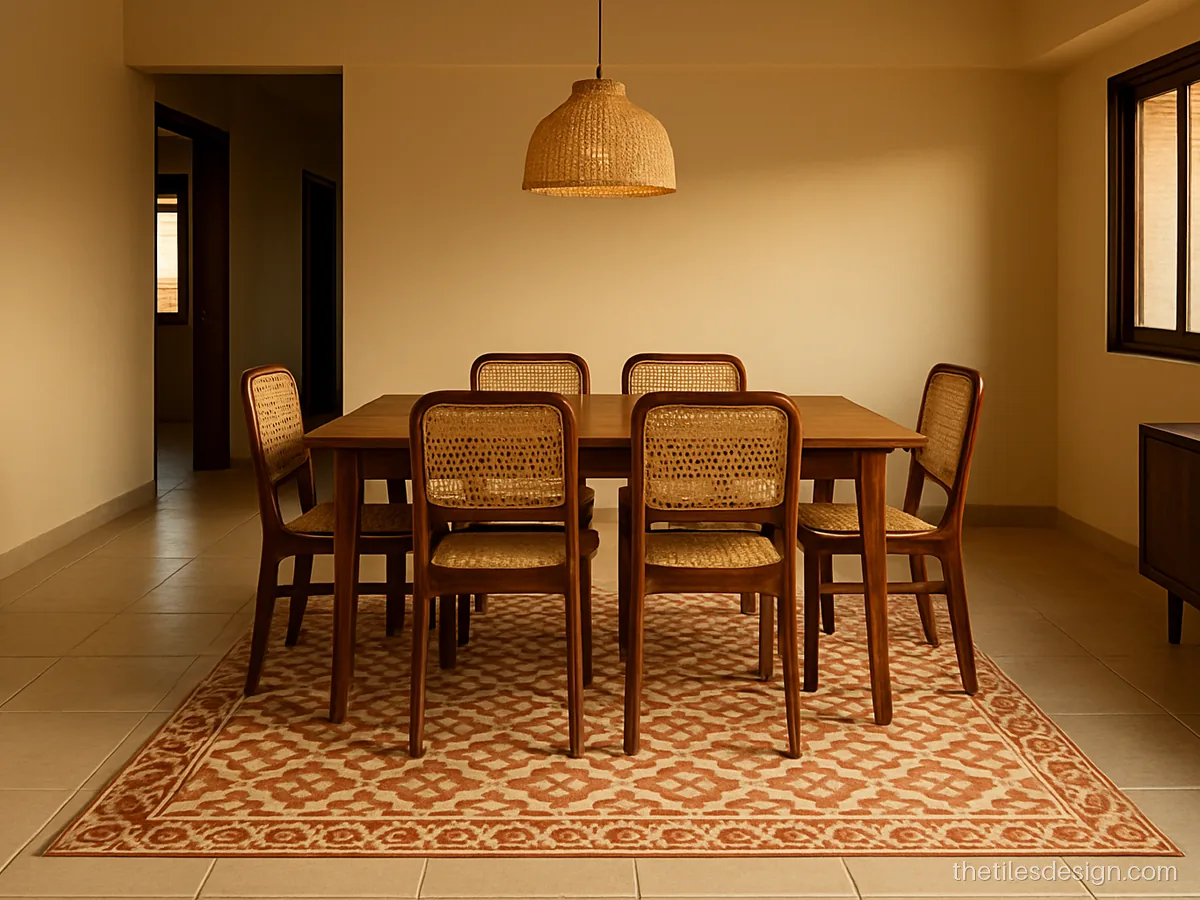
- Size
- 200 x 200 mm
- Finish
- Matt
- Best for
- Dining area
A rug-sized patch of warm patterned tiles under the dining table marks the eating area in an open hall.
Fitter's tip: Keep the patterned patch at least 600 mm wider than the table on all sides so chairs stay on it.
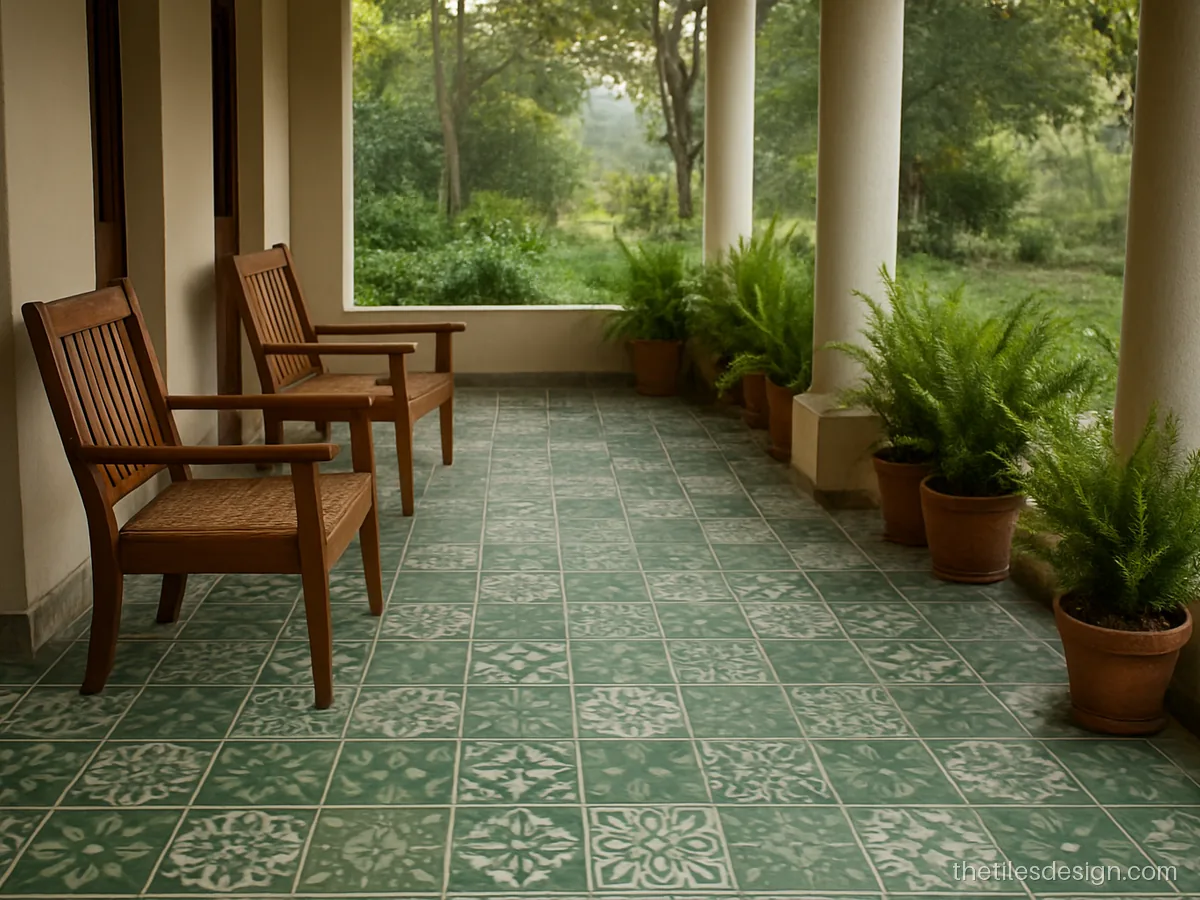
- Size
- 200 x 200 mm
- Finish
- Matt anti-skid
- Best for
- Verandah
Mixed patterns in one green colour make a patchwork that looks planned, not random. It suits a shaded verandah.
Fitter's tip: Lay all boxes out first and spread each pattern evenly, so no two same tiles sit side by side.
Patterned Floor Tiles for Bathrooms
A patterned bathroom floor with plain walls is an easy way to add character. Choose matt or anti-skid tiles, as glossy patterns get slippery with soap.
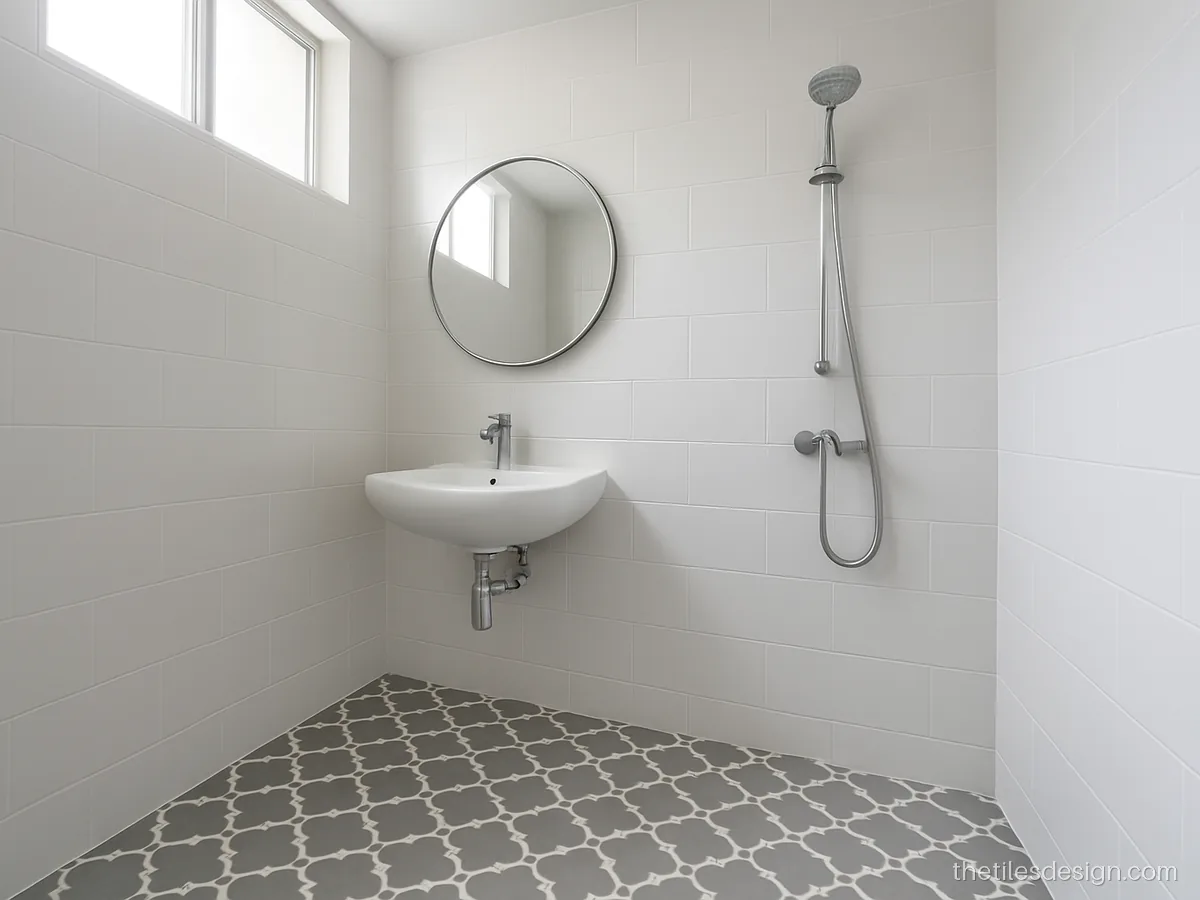
- Size
- 200 x 200 mm
- Finish
- Matt anti-skid
- Best for
- Small bathroom
Grey and white quatrefoils look clean and hide water marks. White walls keep the small bathroom bright.
Fitter's tip: Small tiles follow the slope to the drain easily. Use grey epoxy grout in the wet zone.
- Size
- 200 x 200 mm
- Finish
- Satin
- Best for
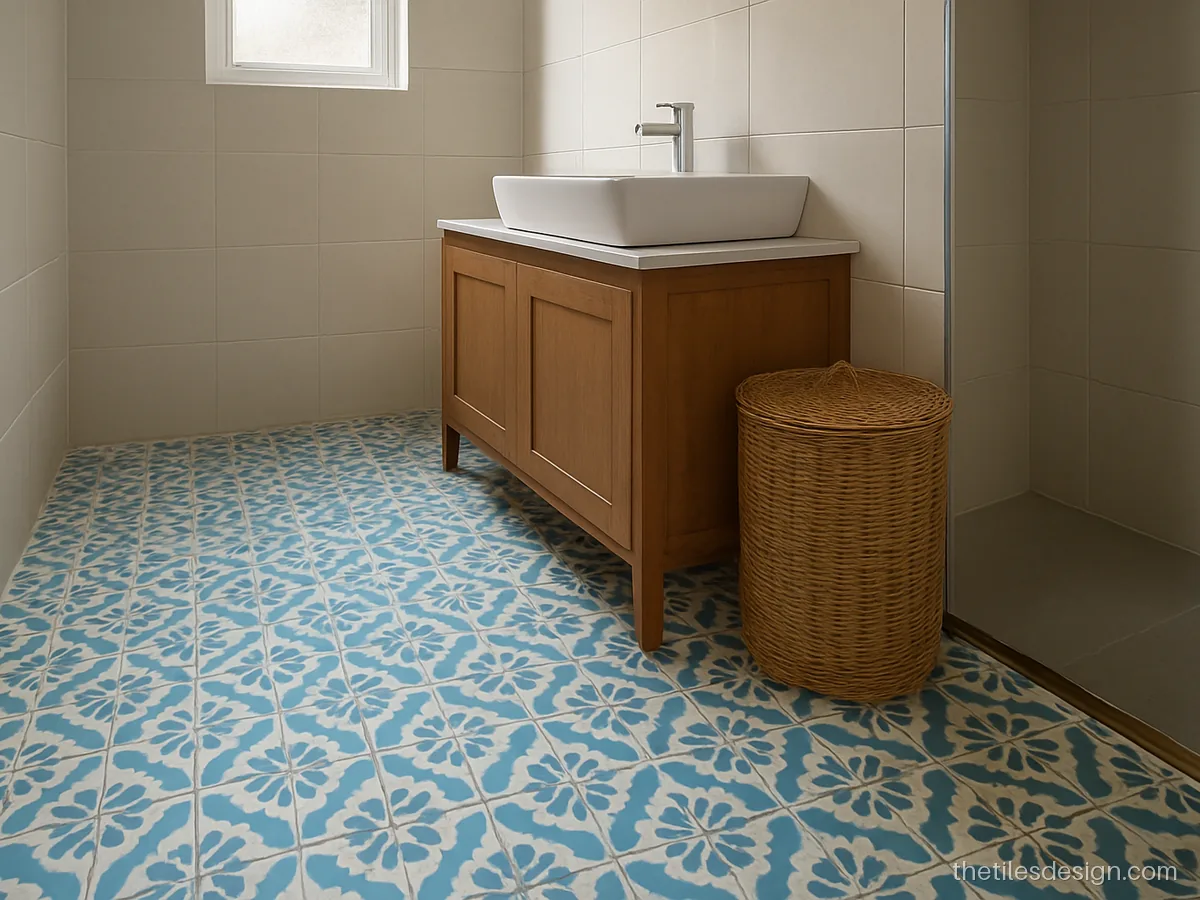
- Basin area
Blue and white patterned tiles in the dry area by the basin give colour while the shower floor stays plain grey.
Fitter's tip: Change to plain anti-skid tiles inside the shower. Put a brass strip where the two meet.

- Size
- 200 x 230 mm hex
- Finish
- Matt
- Best for
- Modern bathroom
Hexagon Moroccan tiles give a fresh shape. Grey shades suit modern bathrooms with black fittings.
Fitter's tip: Hexagons waste more in cutting. Buy about 15 percent extra and from one batch.
Moroccan Kitchen Backsplash and Wall Tiles
Moroccan wall tiles behind the counter give a plain kitchen a strong look. Use glazed ceramic, not raw cement tiles, as oil stains cement.
- Size
- 200 x 200 mm
- Finish
- Glossy
- Best for
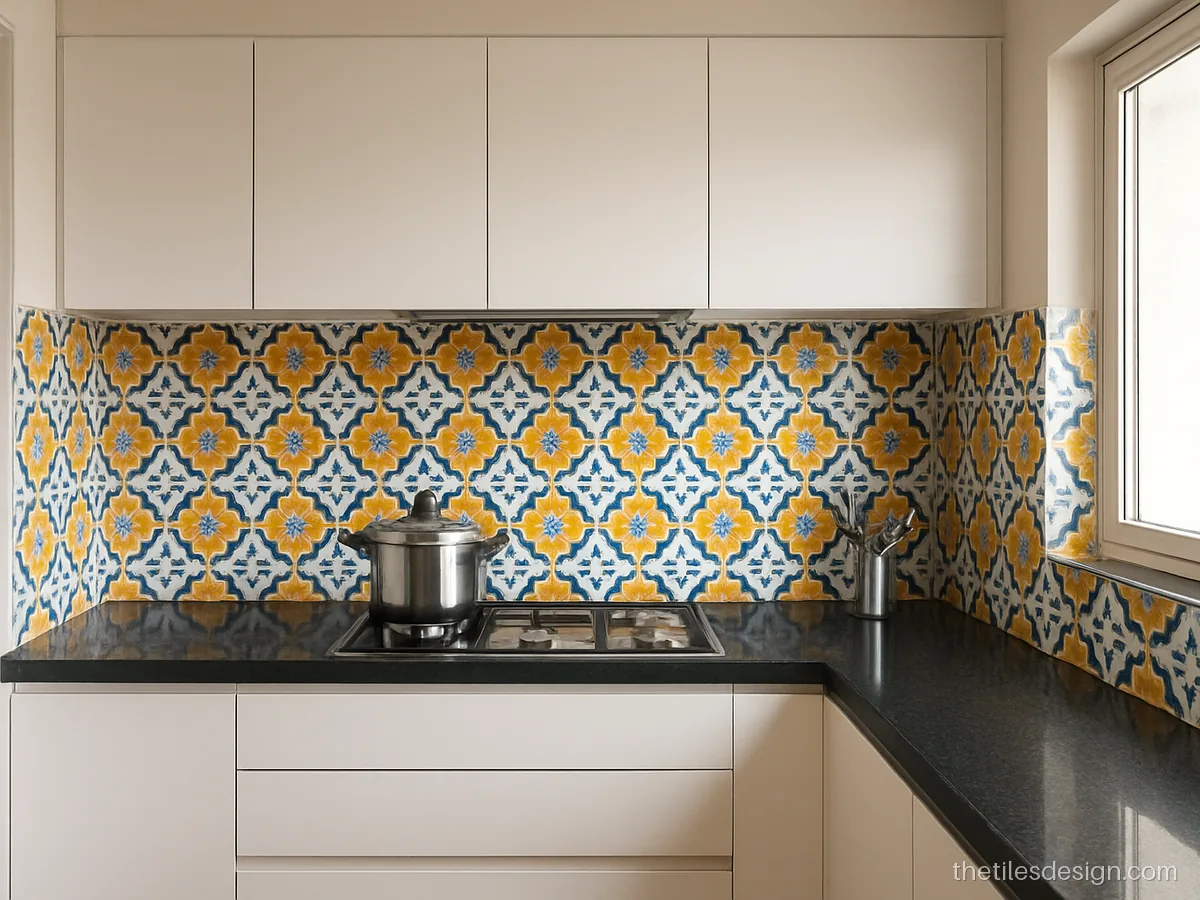
- Kitchen backsplash
Yellow and blue patterns brighten a kitchen with white cabinets. The glaze wipes clean after tadka splashes.
Fitter's tip: Start the pattern from the hob centre so the design looks balanced where you look most.
- Size
- 100 x 100 mm
- Finish
- Uneven glossy
- Best for
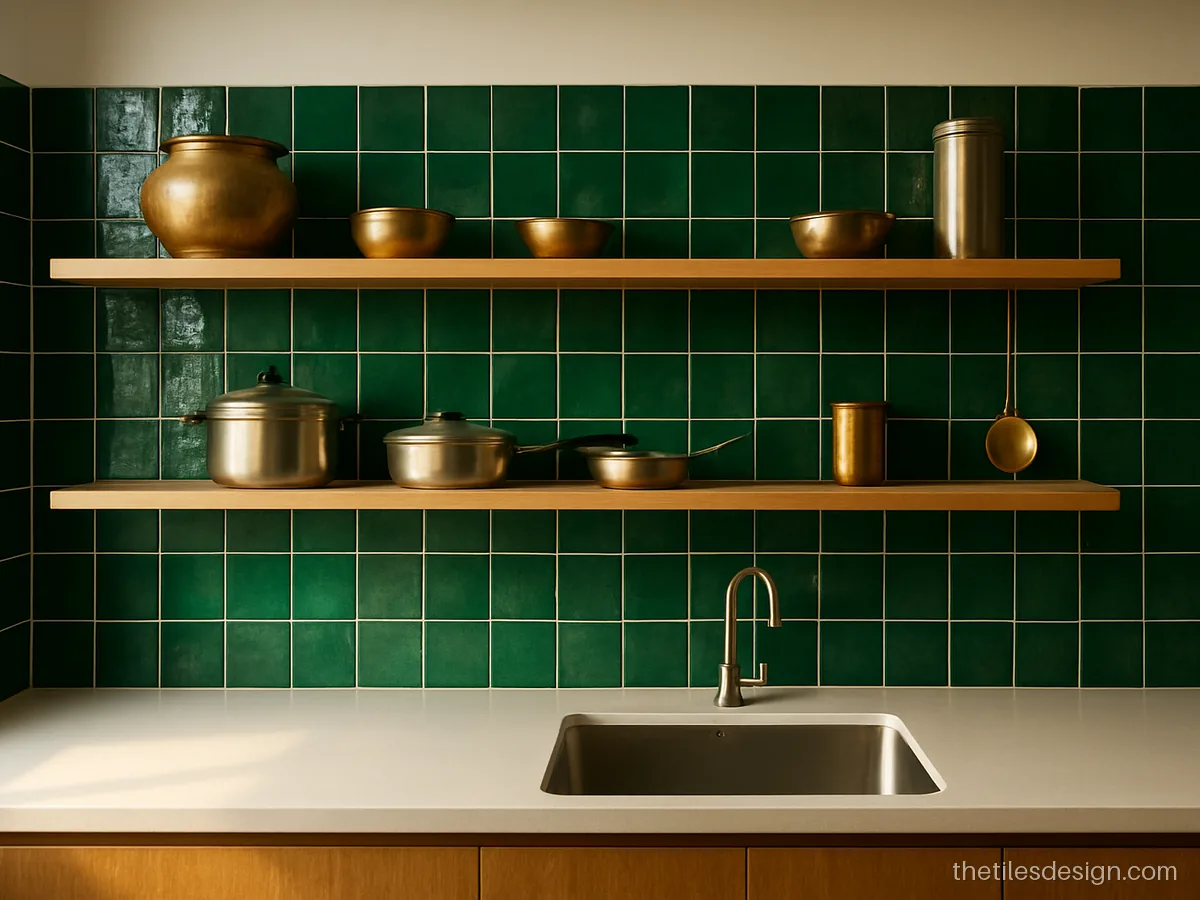
- Open shelf wall
The Moroccan tile texture of zellige is a wavy glaze that shines unevenly. Green looks fresh with wooden shelves and brass.
Fitter's tip: Keep joints tight at 1 to 2 mm. The uneven edges are part of the look, so do not grind them.
- Size
- 200 x 200 mm
- Finish
- Satin
- Best for
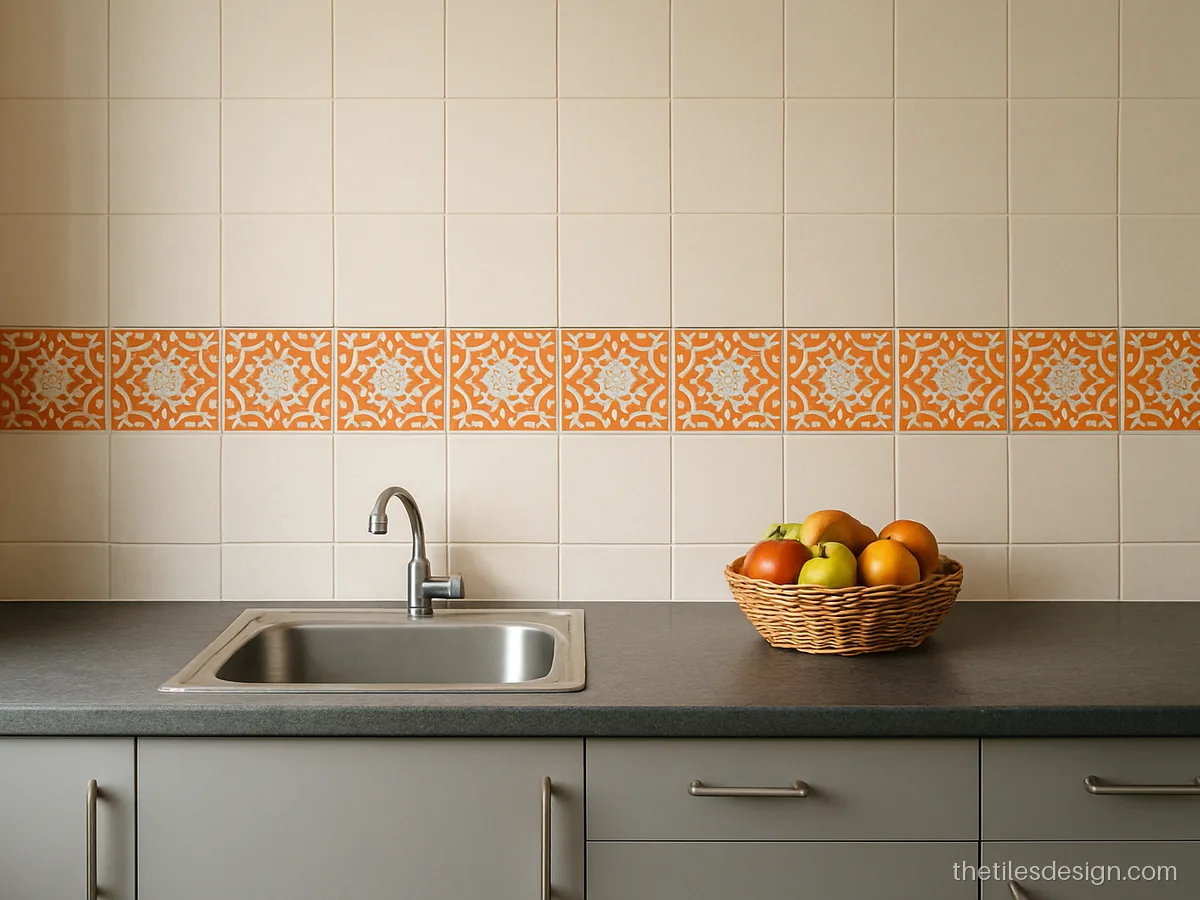
- Budget kitchen
One row of patterned tiles in orange between plain cream tiles gives the Moroccan look on a smaller budget.
Fitter's tip: Set the patterned row at eye level, about 1,200 mm from the floor, not hidden behind appliances.
Black and White Moroccan Tile Patterns
A black and white Moroccan tile never goes out of style. It suits both old style homes and modern flats.
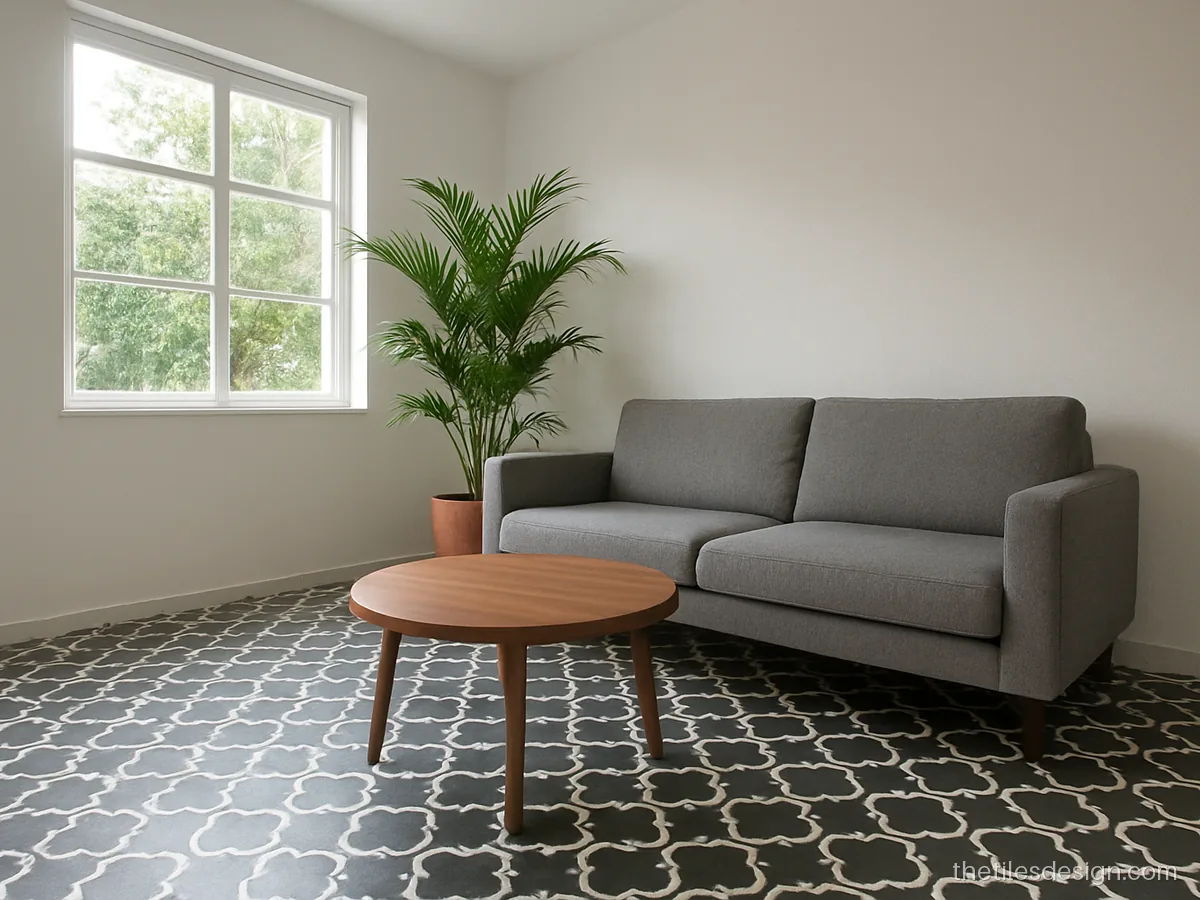
- Size
- 200 x 200 mm
- Finish
- Matt
- Best for
- Small hall
Black and white patterned tiles across a whole floor look bold. Keep walls and furniture simple next to it.
Fitter's tip: Use light grey grout. White grout gets dirty fast and black grout bleeds into white areas.
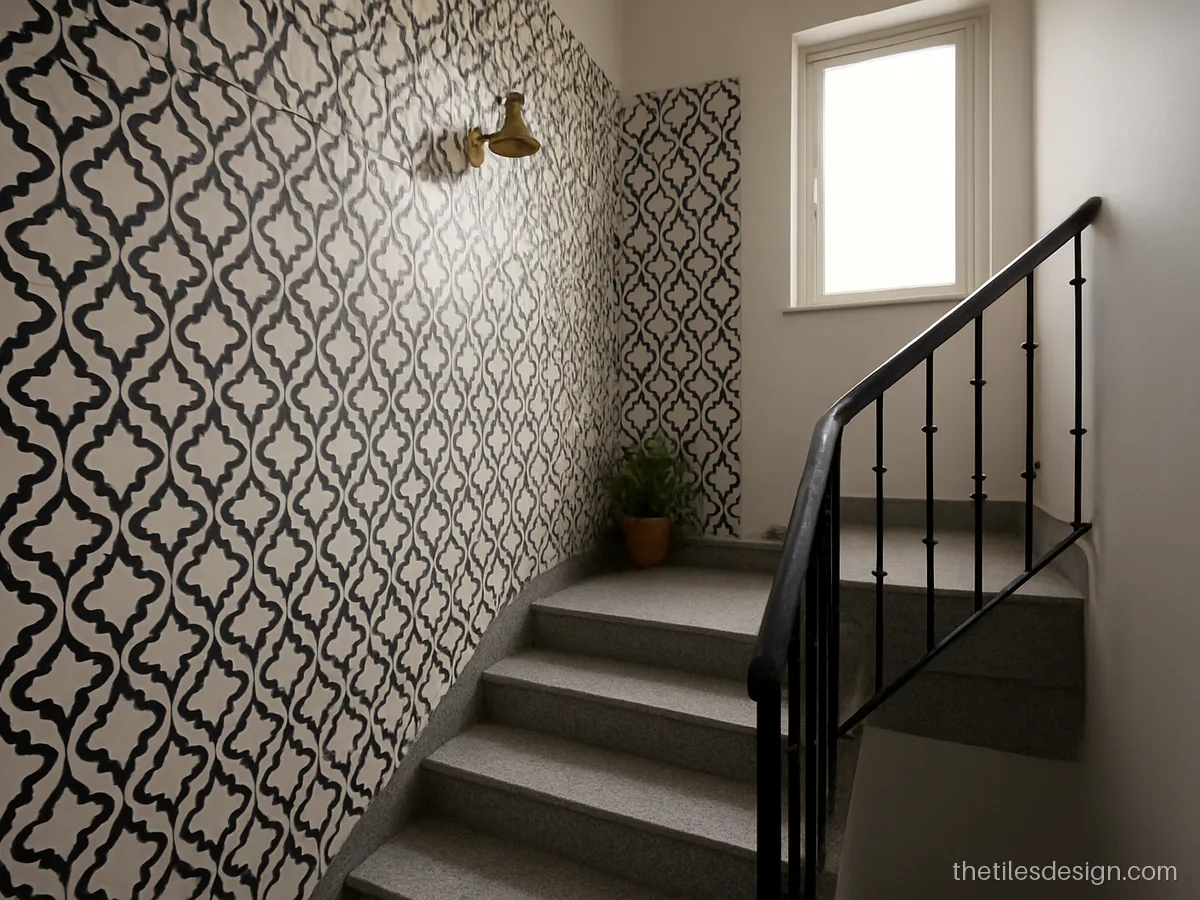
- Size
- 200 x 200 mm
- Finish
- Satin
- Best for
- Stair landing wall
A patterned wall on the stair landing gives a pleasant view each time you climb. Wall use means no wear at all.
Fitter's tip: Fix a slim metal edge trim on the open sides. It protects corners from bumps.
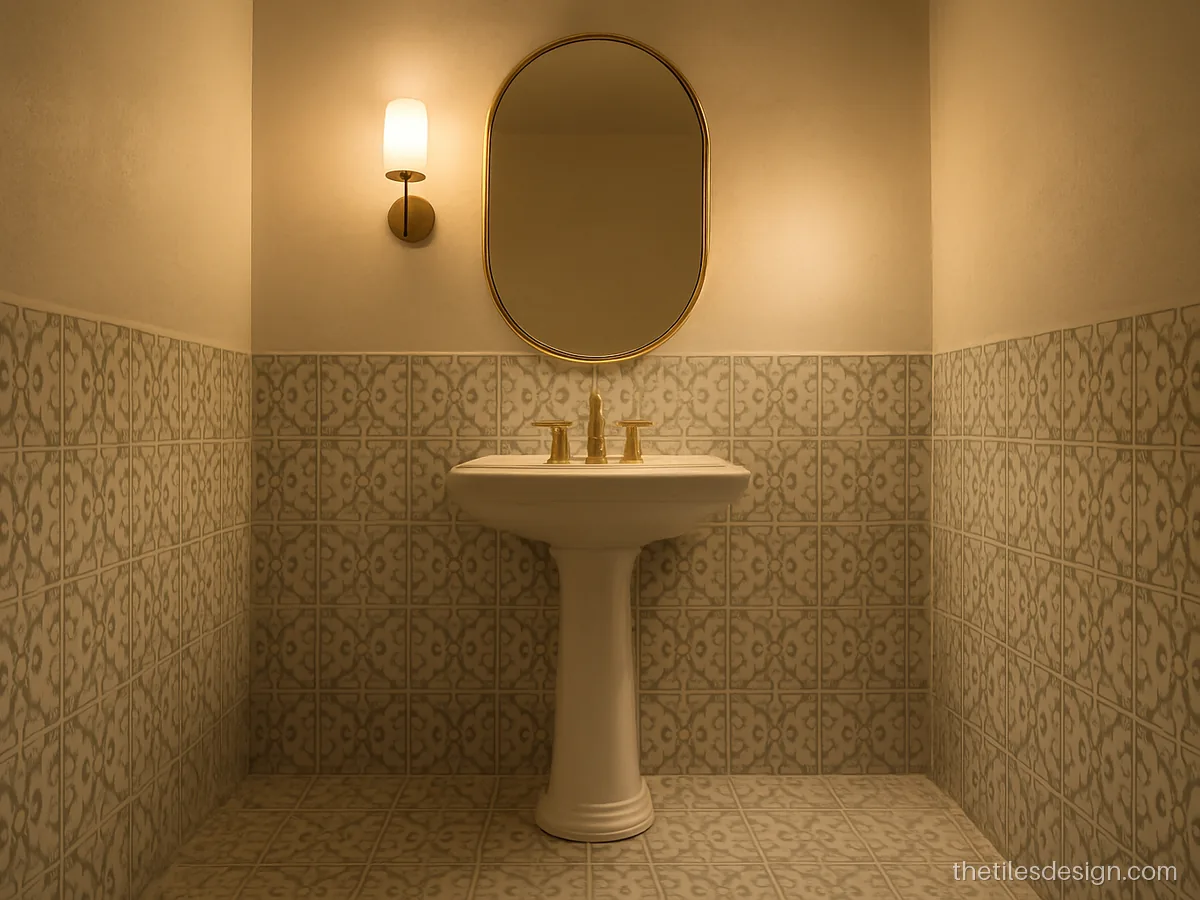
- Size
- 200 x 200 mm
- Finish
- Honed
- Best for
- Powder room
A white cement tile with a fine grey motif feels lighter than black and white. It suits small powder rooms.
Fitter's tip: Seal real cement tiles twice before grouting and once after. Unsealed cement soaks up stains.
Cement Tiles Design and Athangudi Style Floors
Athangudi tiles are cement tiles made in Tamil Nadu and dried slowly in shade. They feel cool in summer and get softer in shine with years of use.
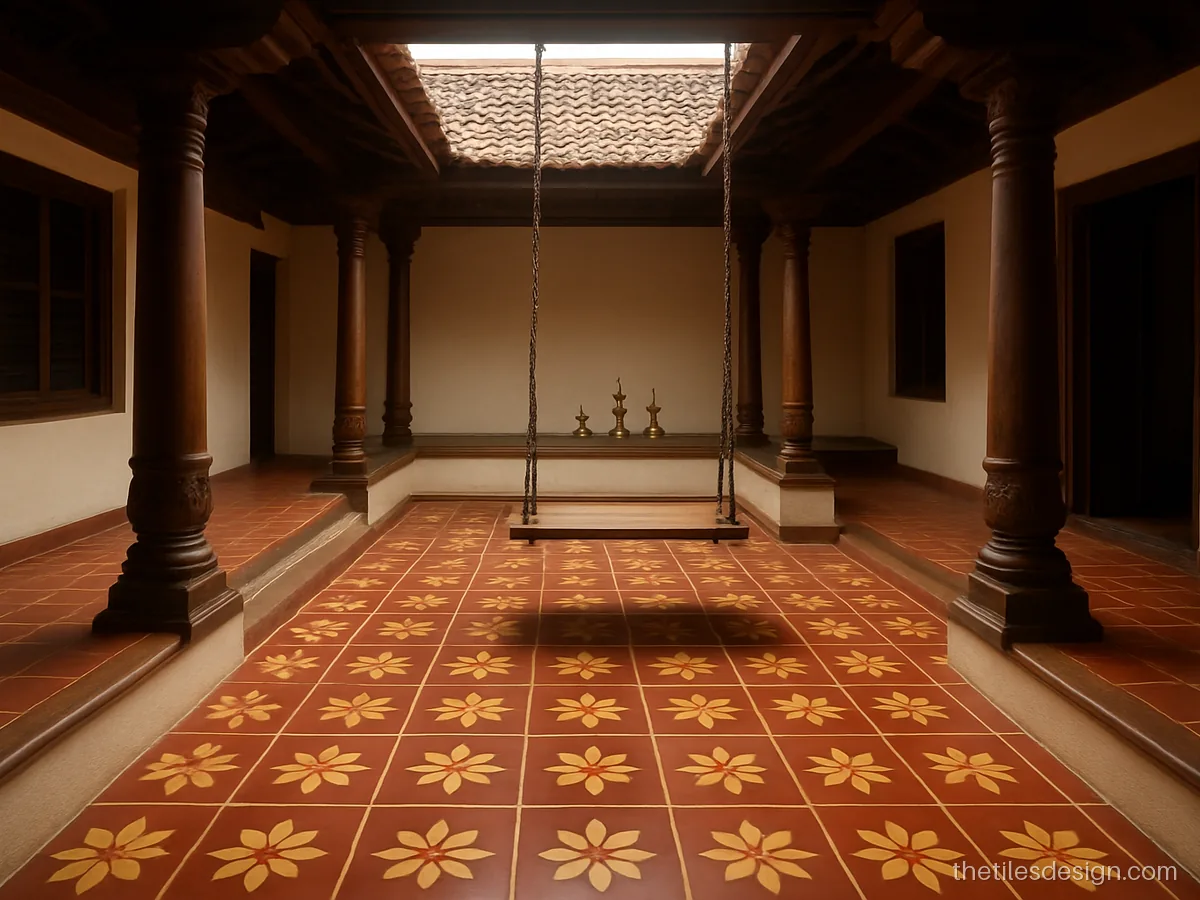
- Size
- 200 x 200 mm
- Finish
- Natural sheen
- Best for
- Courtyard home
Red and yellow Athangudi floors are a classic of Chettinad homes. They look right with wooden pillars and an open courtyard.
Fitter's tip: Lay on a cement bed, not adhesive alone. Skip acid wash and clean with coconut oil and water.
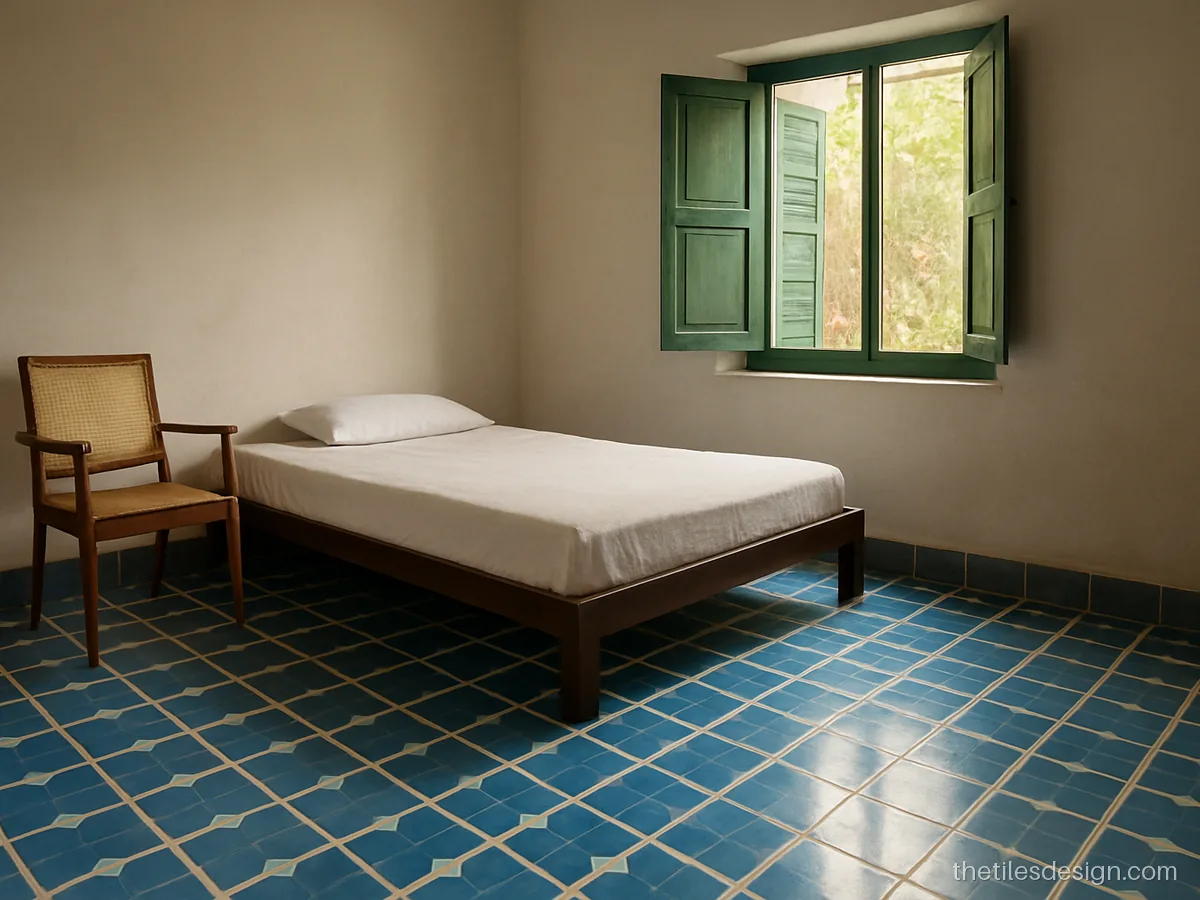
- Size
- 200 x 200 mm
- Finish
- Natural sheen
- Best for
- Bedroom floor
Blue Athangudi tiles keep a bedroom cool to walk on. Athangudi tiles in Chennai and coastal homes suit humid weather well.
Fitter's tip: Cure with water for a week after fixing. Never use sand paper or a polishing machine.
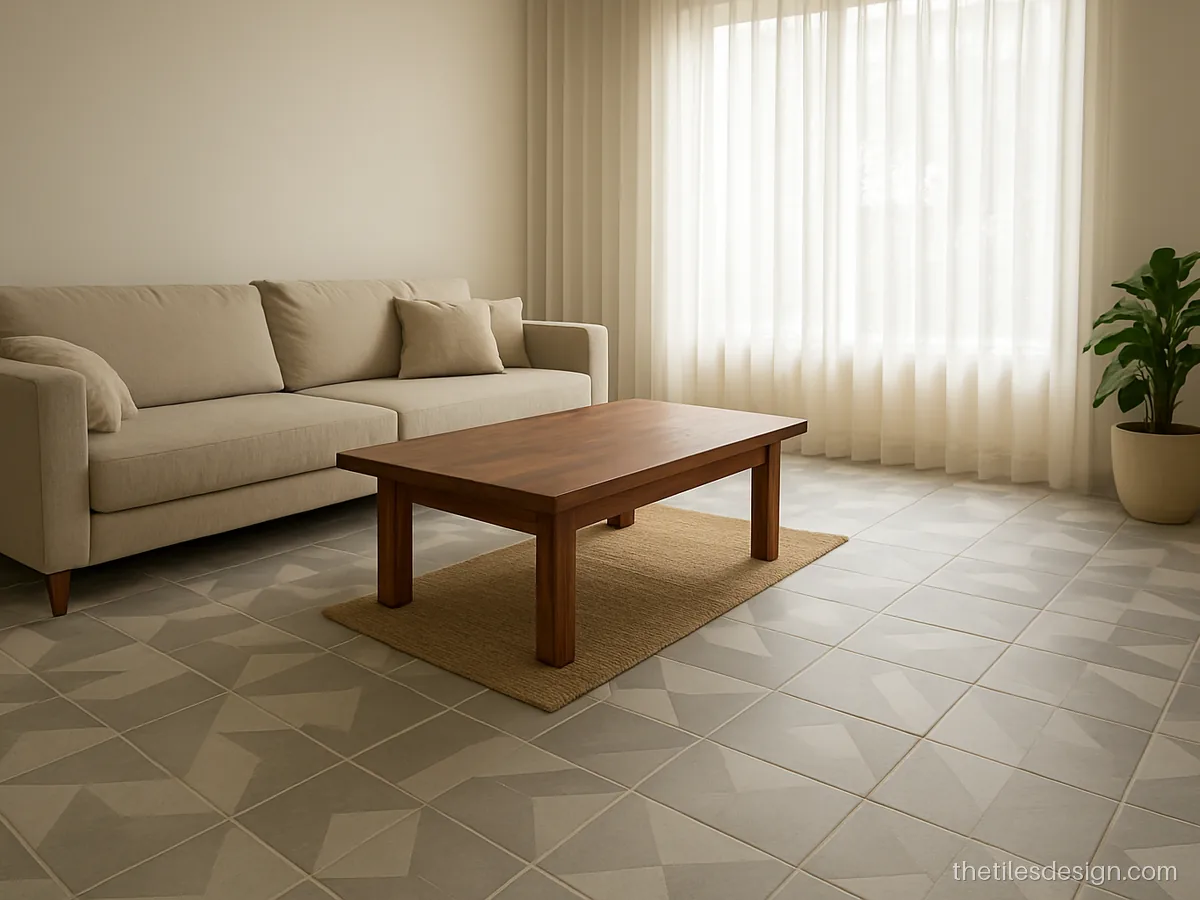
- Size
- 250 x 250 mm
- Finish
- Honed
- Best for
- Modern living room
Grey cement tiles in a modern pattern work in city flats too. You see Athangudi tiles in Bangalore villas in these quiet shades.
Fitter's tip: Keep sofa legs on felt pads. Cement tiles scratch more easily than vitrified tiles.
Cement Tile vs Ceramic Moroccan Tiles
| Point | Cement or Athangudi | Printed ceramic or vitrified |
|---|---|---|
| Feel | Cool, soft sheen | Smooth, even |
| Water | Absorbs, needs sealing | Low absorption |
| Stains | Oil and turmeric stain | Wipe off |
| Colour | Slight shade change | Exact match |
| Where | Living, bedroom, verandah | Kitchen, bathroom, anywhere |
Real cement tiles cost more because each one is moulded and dried by slow curing. Fitting costs more too, as patterns need careful setting out.
Fitting and Care for Patterned Tiles
- Lay all tiles out on the floor before fixing and fix the pattern direction.
- Start from the centre of the room and border the edges with plain tiles.
- Use 2 mm spacers and a grout colour that matches the lightest shade in the tile.
- Buy 10 to 15 percent extra, from one batch.
- Clean with plain water and a mild soap. No acid or bleach on cement tiles.
For a pattern border around a plain floor, see tiles border design. For more ideas on the main floor, see floor tiles design.
Tile questions people ask
Are Moroccan floor tiles good for the whole house?
Usually not. A whole house in pattern looks busy. Use them in one or two areas, like a foyer, a bathroom or a kitchen wall, and keep the rest plain.
Which is better, cement tile or ceramic Moroccan style tiles?
Ceramic or vitrified is easier for kitchens and bathrooms because it does not stain. Cement tiles feel cooler and age well in living rooms and verandahs, but need sealing.
What size are Moroccan tiles?
Most are 200 x 200 mm. You also find 100 x 100 mm, 150 x 150 mm and hexagons. Small sizes look more like the real handmade tiles.
How do I clean Athangudi tiles?
Mop with plain water. Once a month, add a few drops of coconut oil to the water to keep the sheen. Do not use acid, strong phenyl or polishing machines.
Do Moroccan tile patterns suit a small bathroom?
Yes, on the floor with plain light walls. Choose a soft two colour pattern so the room does not feel crowded. Our bathroom tiles design page has more layouts.