Terracotta Tiles Design for Floors, Walls and Courtyards
15 designs Styles, colours and patterns Updated 8 Oct 2026
Terracotta tiles are made of baked red clay, the same material as our old roof tiles and matkas. They keep rooms cooler, look warm and earthy, and get a soft patina over the years.
Natural clay tiles absorb water, so they need sealing in kitchens, bathrooms and open terraces. Glazed terracotta and porcelain look-alikes are easier to clean. This gallery covers terracotta floor tiles, wall cladding, brick tiles, clay jaali panels and courtyard floors, and we note the size, surface and a site tip under each photo. For outside walls, also see outdoor wall tiles.
Terracotta Floor Tiles
A terracotta floor is cool under bare feet and suits farmhouses, ground floor rooms and verandahs. Seal it so oil and turmeric do not soak in.
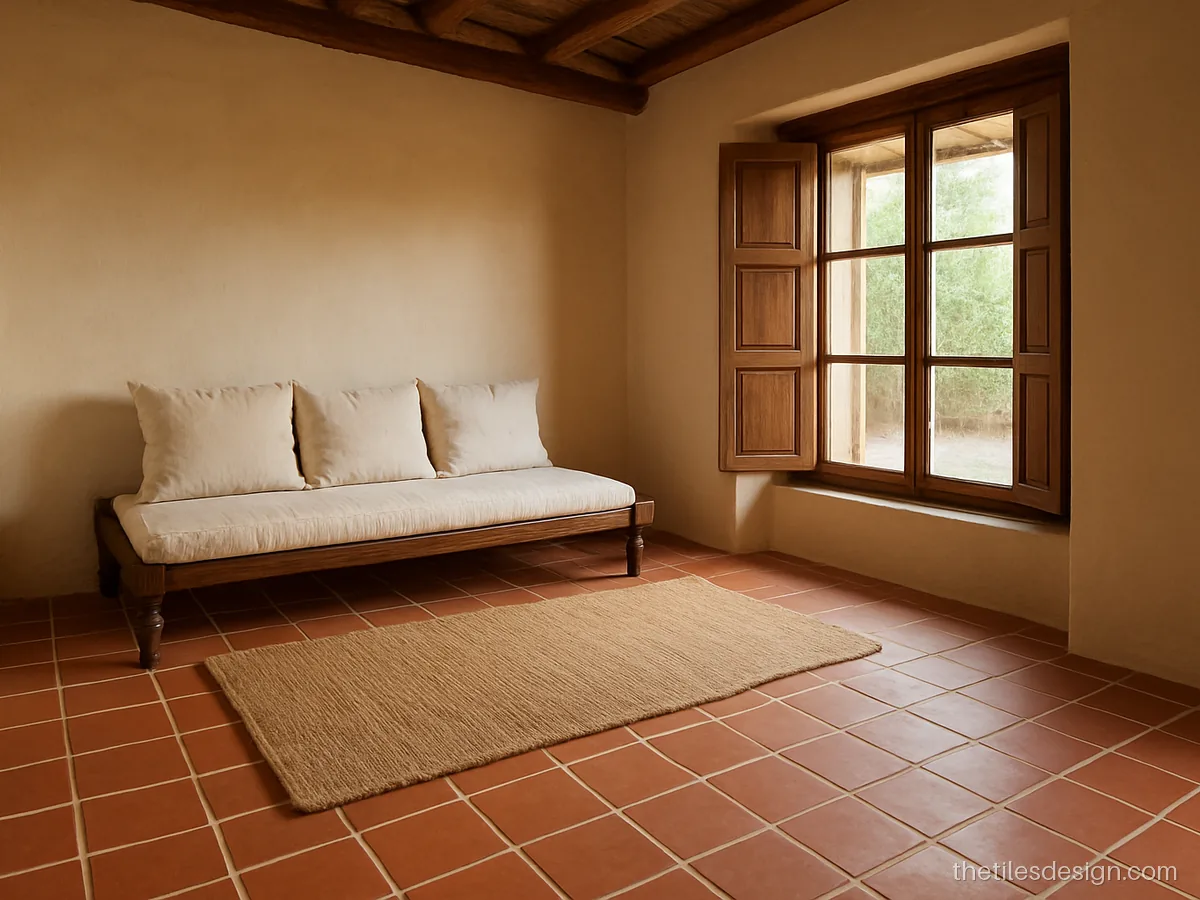
- Size
- 300 x 300 mm
- Finish
- Sealed matt
- Best for
- Ground floor rooms
Plain square clay floor tiles give a farmhouse feel. The colour changes slightly from tile to tile, which is part of the charm.
Fitter's tip: Soak clay tiles in water for an hour before fixing so they do not suck water out of the mortar.
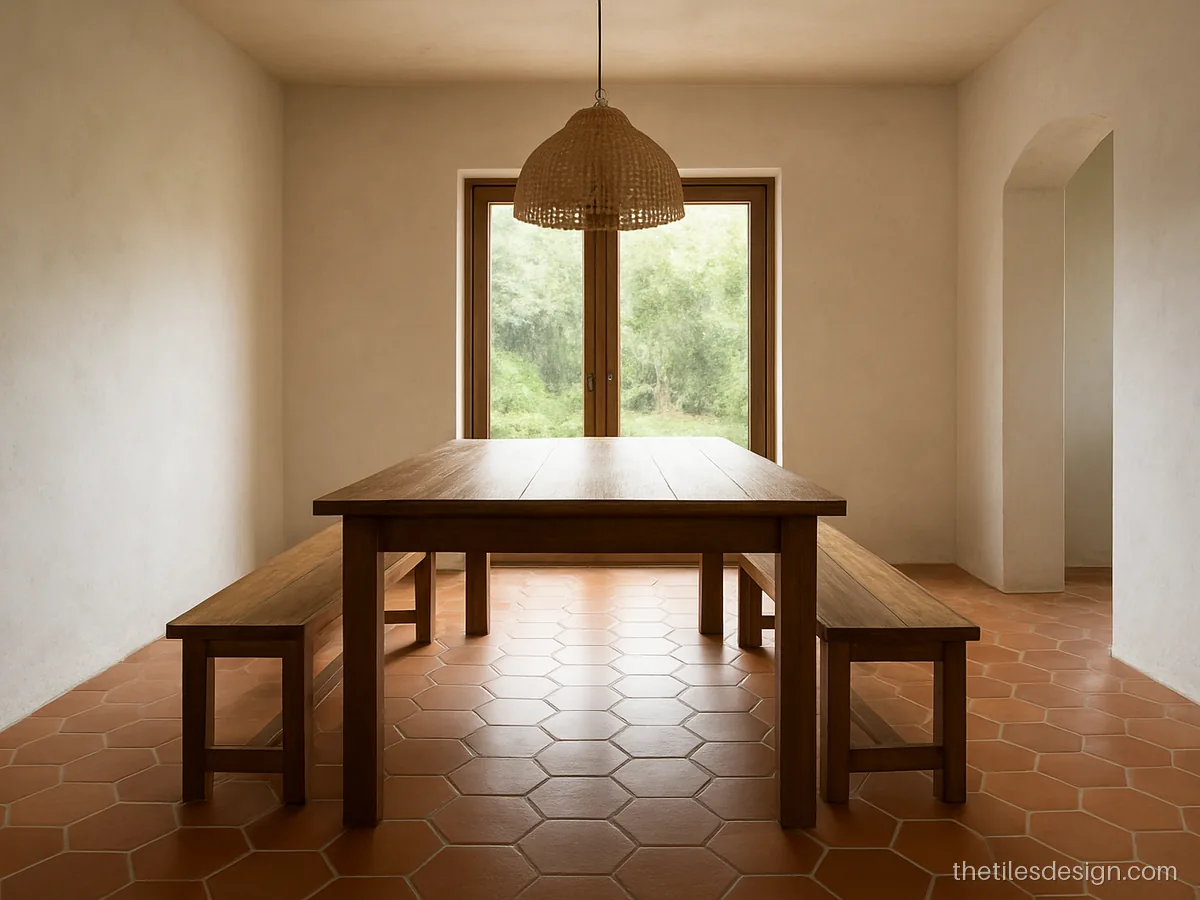
- Size
- 200 mm hex
- Finish
- Waxed
- Best for
- Dining area
Hexagon terracotta adds shape to a plain floor. It pairs well with white walls and wooden furniture.
Fitter's tip: Wax the floor twice a year. Wipe spills quickly, as clay soaks up dal and oil.
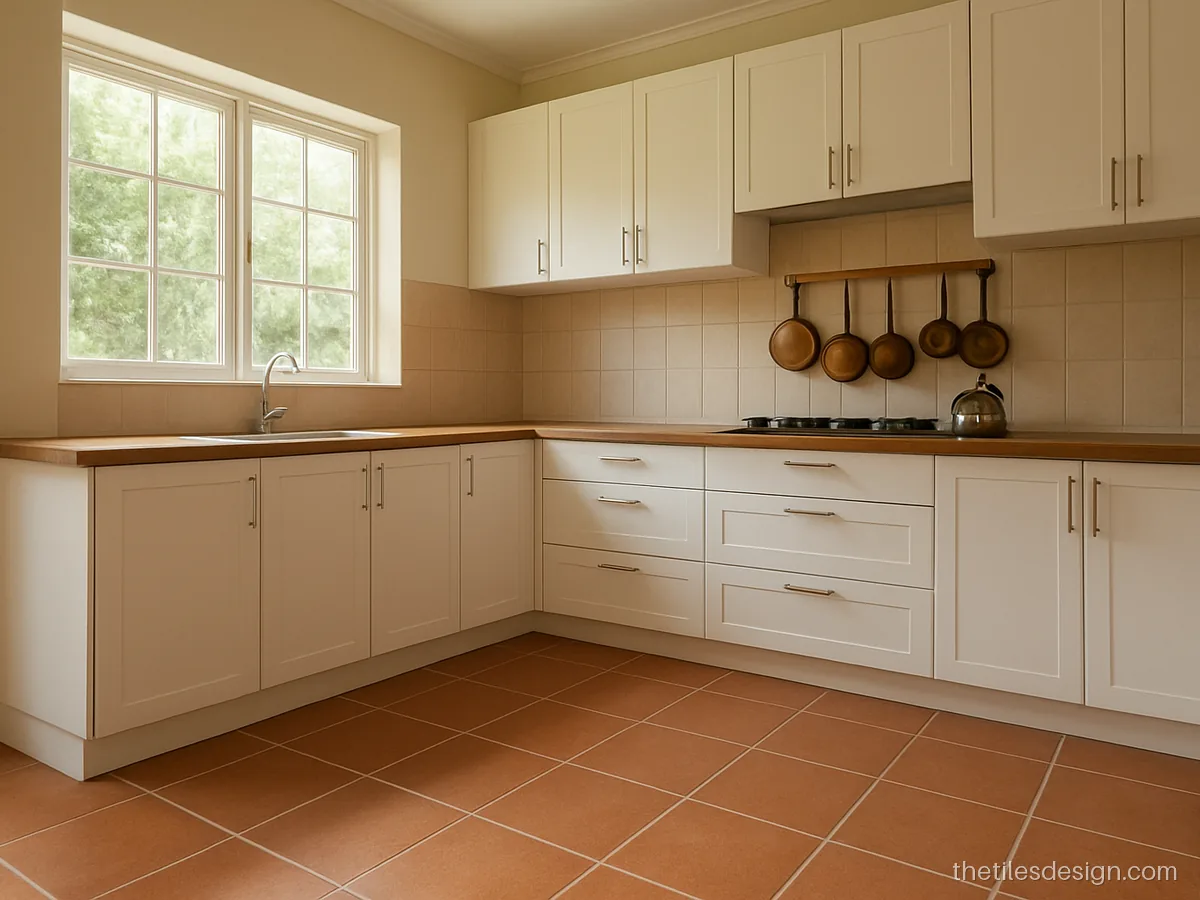
- Size
- 600 x 600 mm
- Finish
- Matt
- Best for
- Kitchen floor
Porcelain tiles printed with a terracotta tiles texture give the clay look without the sealing. Better for a busy kitchen.
Fitter's tip: Use 2 mm joints and beige grout. Thin joints hide dirt and make the floor easy to mop.
Terracotta Wall Tiles Design
Terracotta wall tiles bring warmth to a living room or a front wall. Indoors they need no sealing, as walls do not get wet.
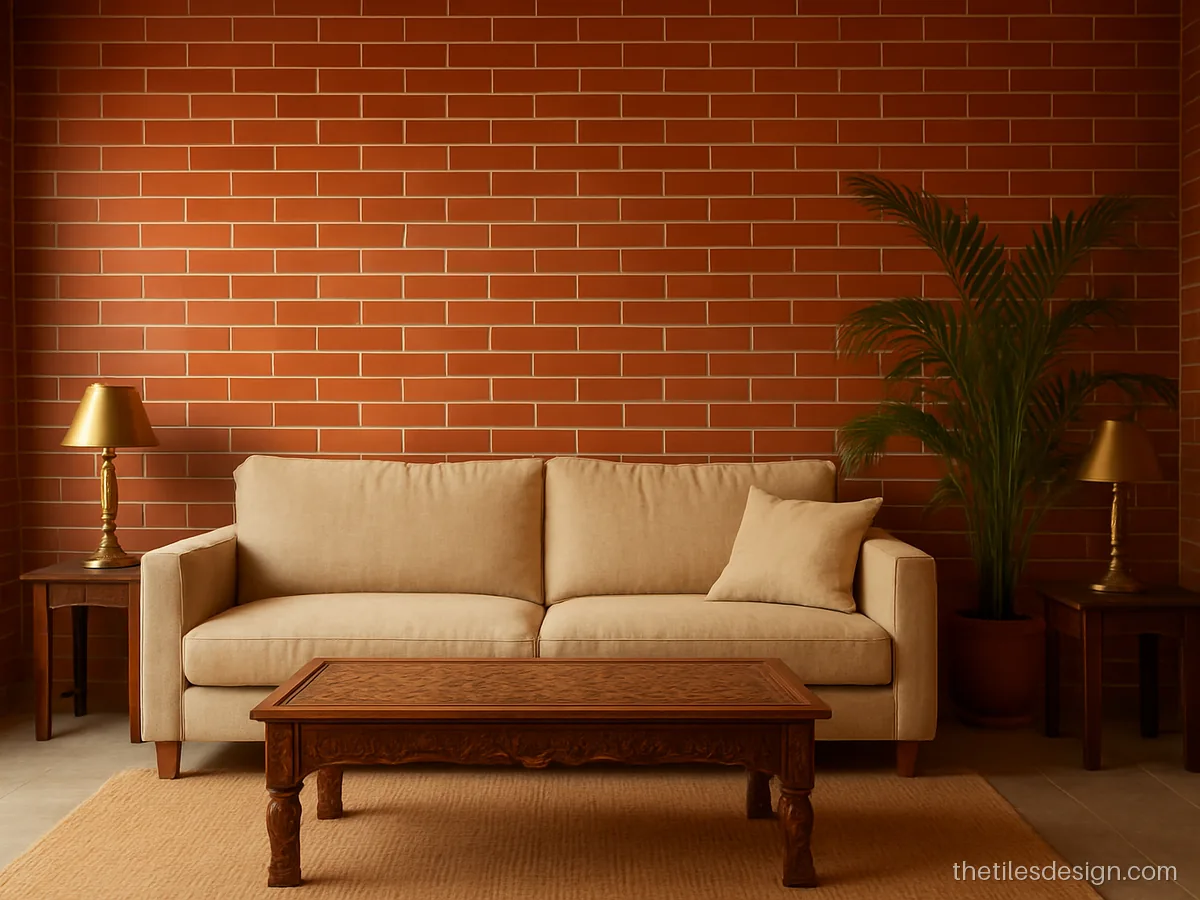
- Size
- 60 x 240 mm
- Finish
- Natural
- Best for
- Living room wall
Thin terracotta wall cladding tiles behind the sofa make a warm feature wall. The rest of the room stays white.
Fitter's tip: Use cream grout and keep 8 to 10 mm joints for a handmade look.
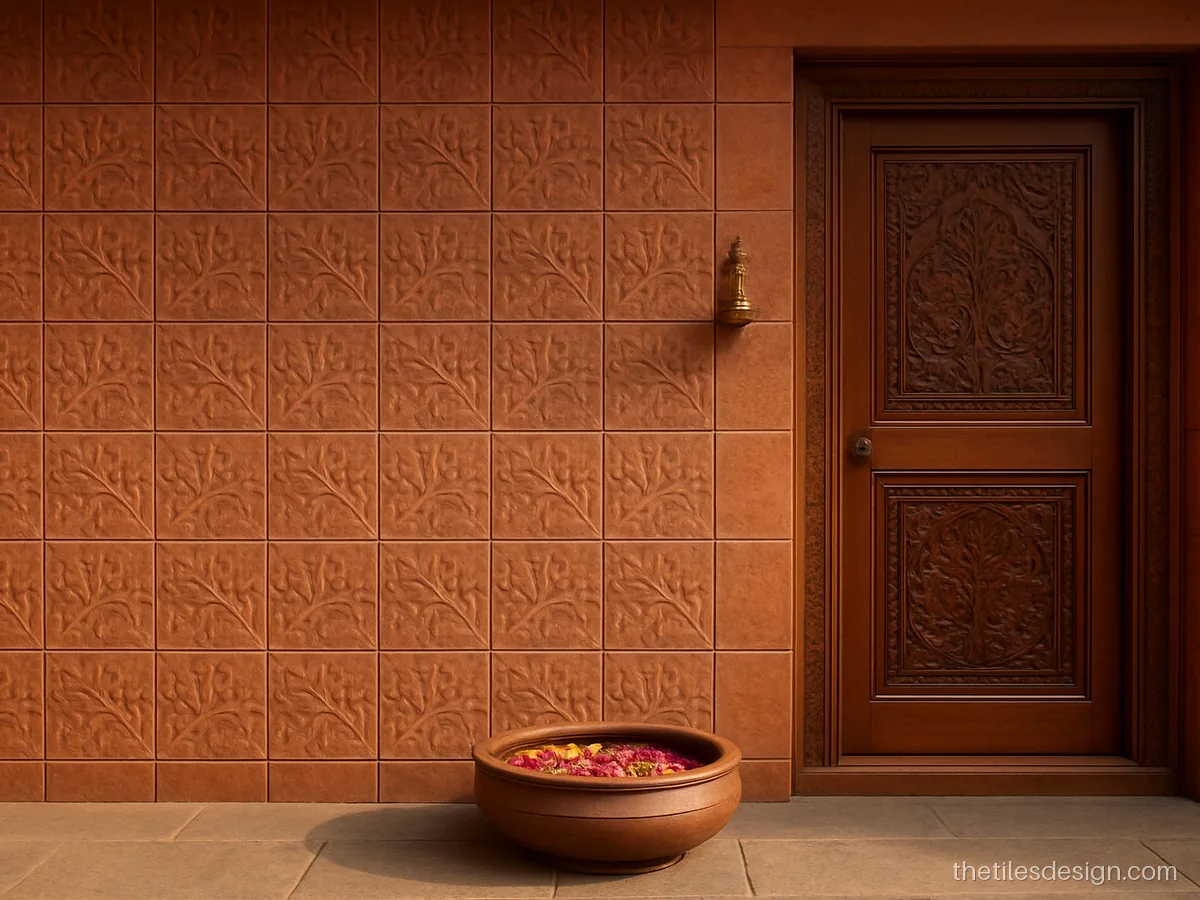
- Size
- 300 x 300 mm
- Finish
- Natural relief
- Best for
- Entrance wall
Decorative terracotta tiles with a leaf relief turn an entrance wall into a quiet art piece. Use them in a small area only.
Fitter's tip: Fix relief tiles with adhesive on the full back. Do not drill near the raised parts.
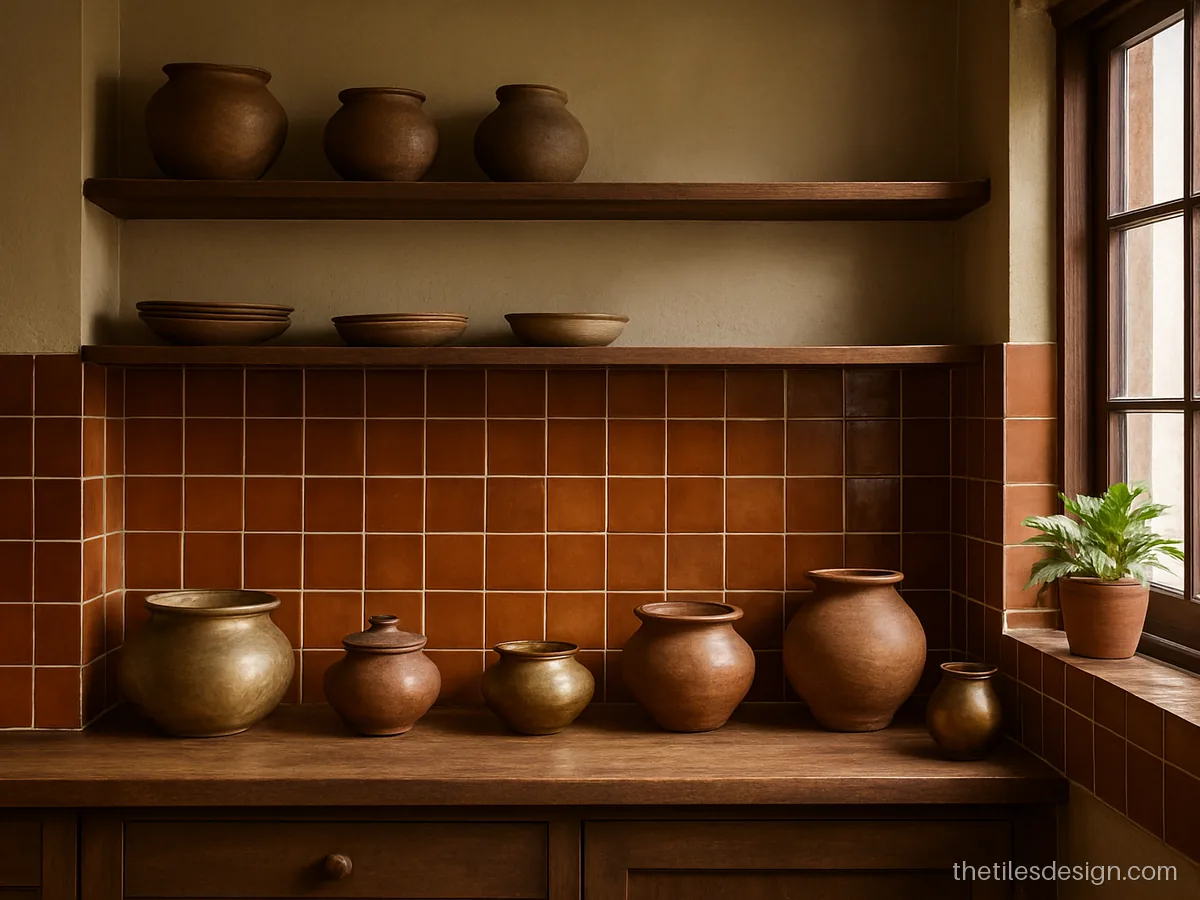
- Size
- 100 x 100 mm
- Finish
- Glazed
- Best for
- Rustic kitchen
Glazed terracotta has a clay body under a shiny coat, so it wipes clean. Good for a rustic kitchen backsplash.
Fitter's tip: Epoxy grout behind the hob is a must. Clay joints soak up oil otherwise.
Brick Tiles and Exposed Brick Look Walls
Brick tiles are thin slices of fired clay, about 10 to 20 mm thick, that give an exposed brick wall without the weight. Red, white and grey brick tiles all work indoors and outside.
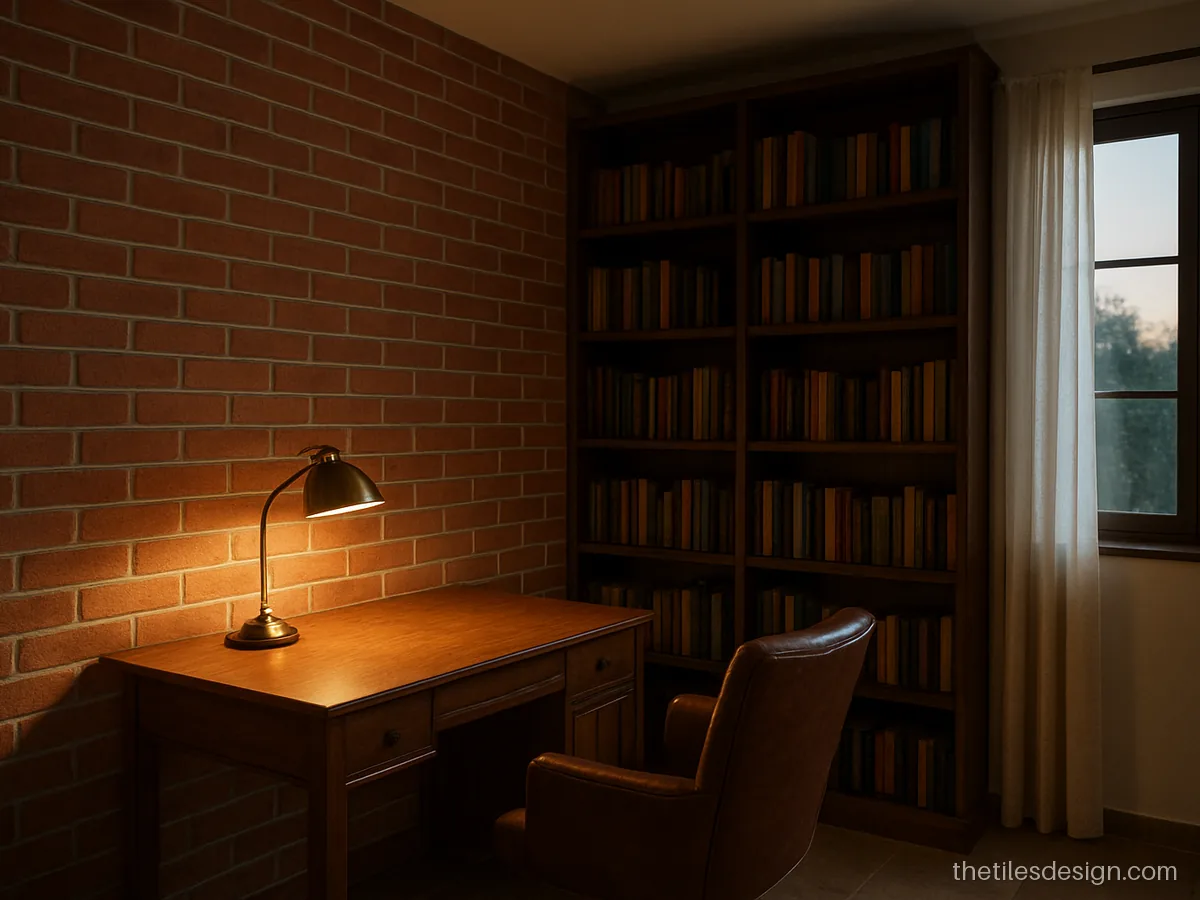
- Size
- 65 x 230 mm
- Finish
- Wire cut
- Best for
- Study room
Red brick wall tiles in a study feel cosy and focused. Pair with dark wood shelves and warm lights.
Fitter's tip: Use a tile with corner pieces for the edges, so the wall looks like solid brick.
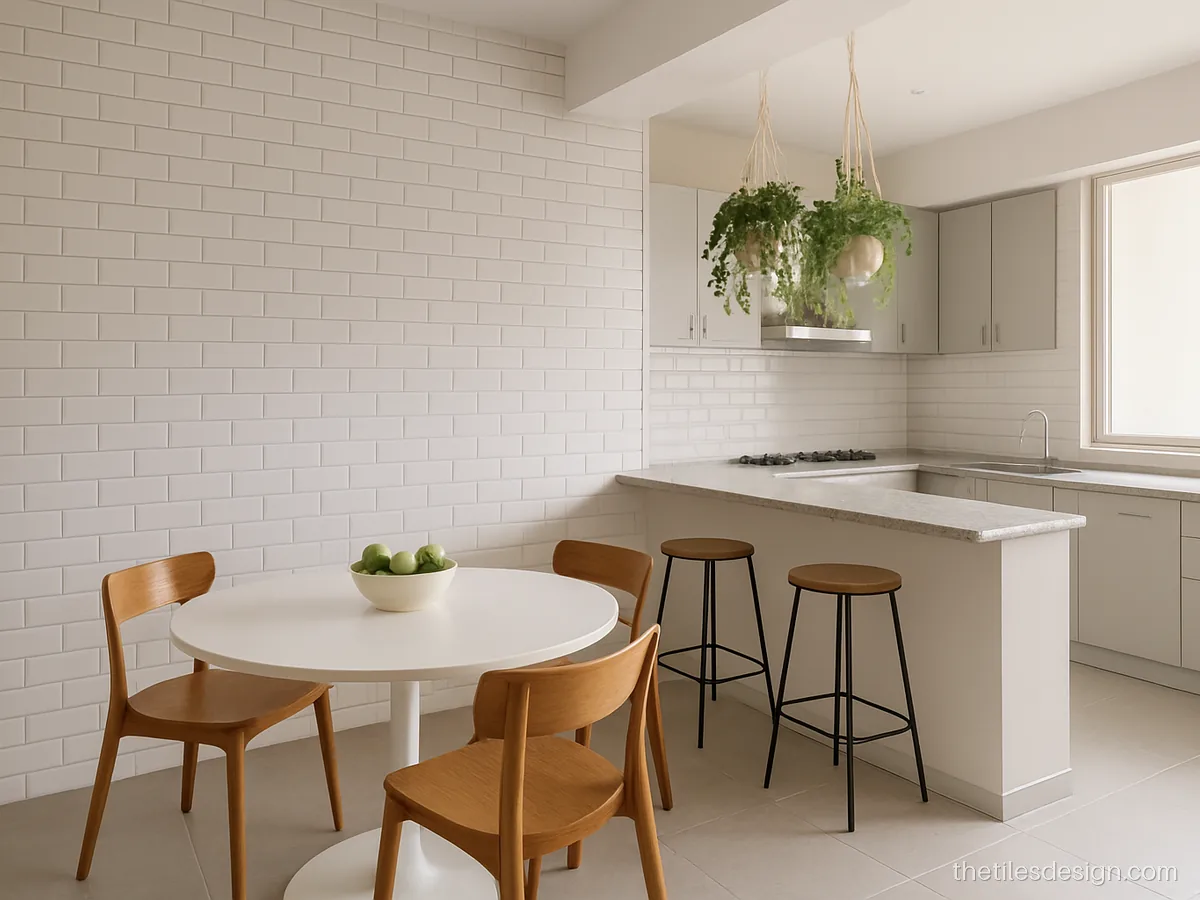
- Size
- 65 x 230 mm
- Finish
- Matt glazed
- Best for
- Small flats
White brick tiles give texture while keeping a small flat bright. They suit Scandinavian style rooms.
Fitter's tip: Glazed white brick tiles stay white. Painted clay bricks need repainting every few years.
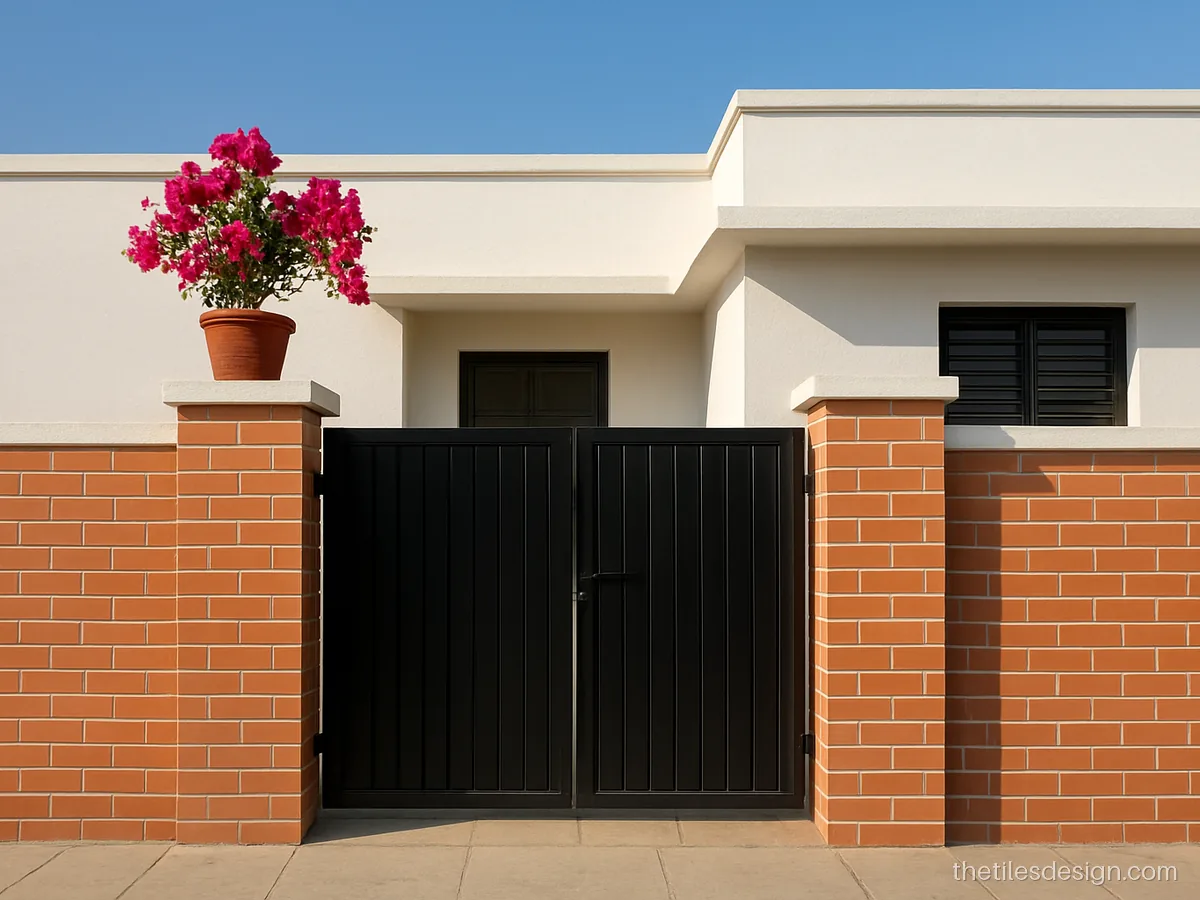
- Size
- 50 x 230 mm
- Finish
- Natural
- Best for
- Front wall
Terracotta brick cladding on pillars and a part of the front wall gives a solid, earthy look that takes sun and rain well.
Fitter's tip: Apply a clear water repellent coat outside. It stops green moss in the monsoon.
Clay Jaali Panels
Clay jaali blocks let air and light in while giving privacy. Our grandparents used them to keep homes cool, and they suit stairs, balconies and utility areas today.
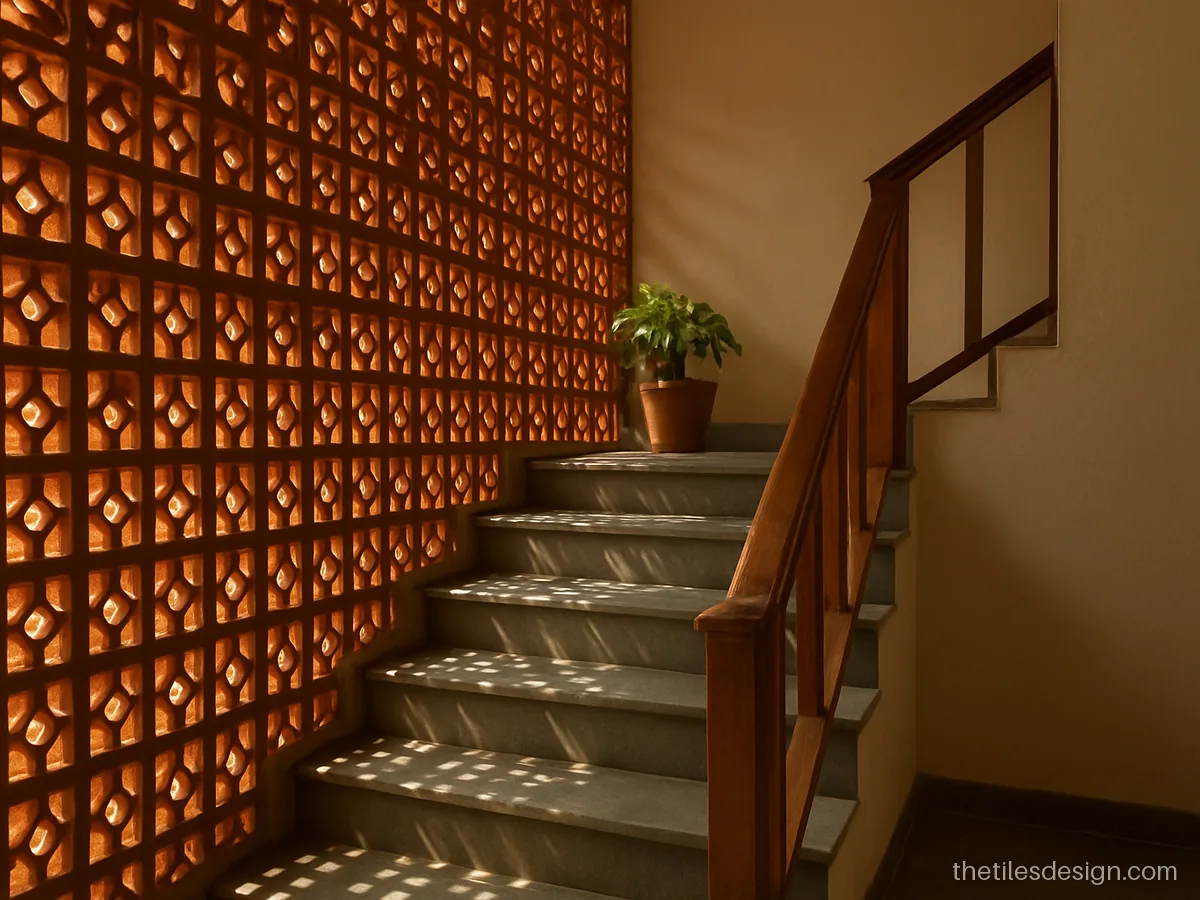
- Size
- 200 x 200 mm block
- Finish
- Natural
- Best for
- Staircase wall
A jaali wall beside the stairs throws pretty shadows and lets air flow. No grills or paint needed.
Fitter's tip: Lay jaali blocks with a steel bar every few rows for strength on tall walls.
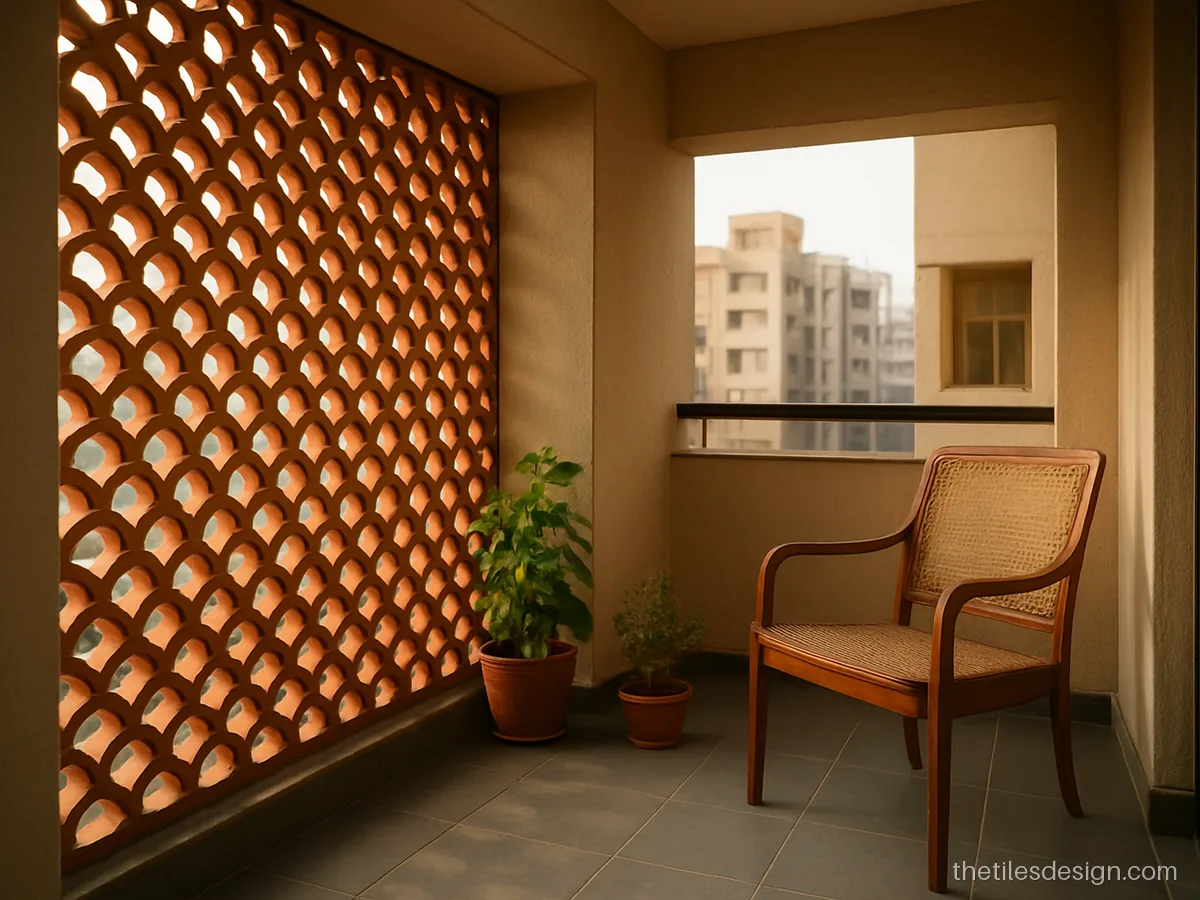
- Size
- 150 x 150 mm block
- Finish
- Natural
- Best for
- Balcony
A jaali panel gives privacy from the next building but keeps the breeze. Ideal for city flats.
Fitter's tip: Check with the building society first. Fix the panel inside the railing, tied to a steel frame.
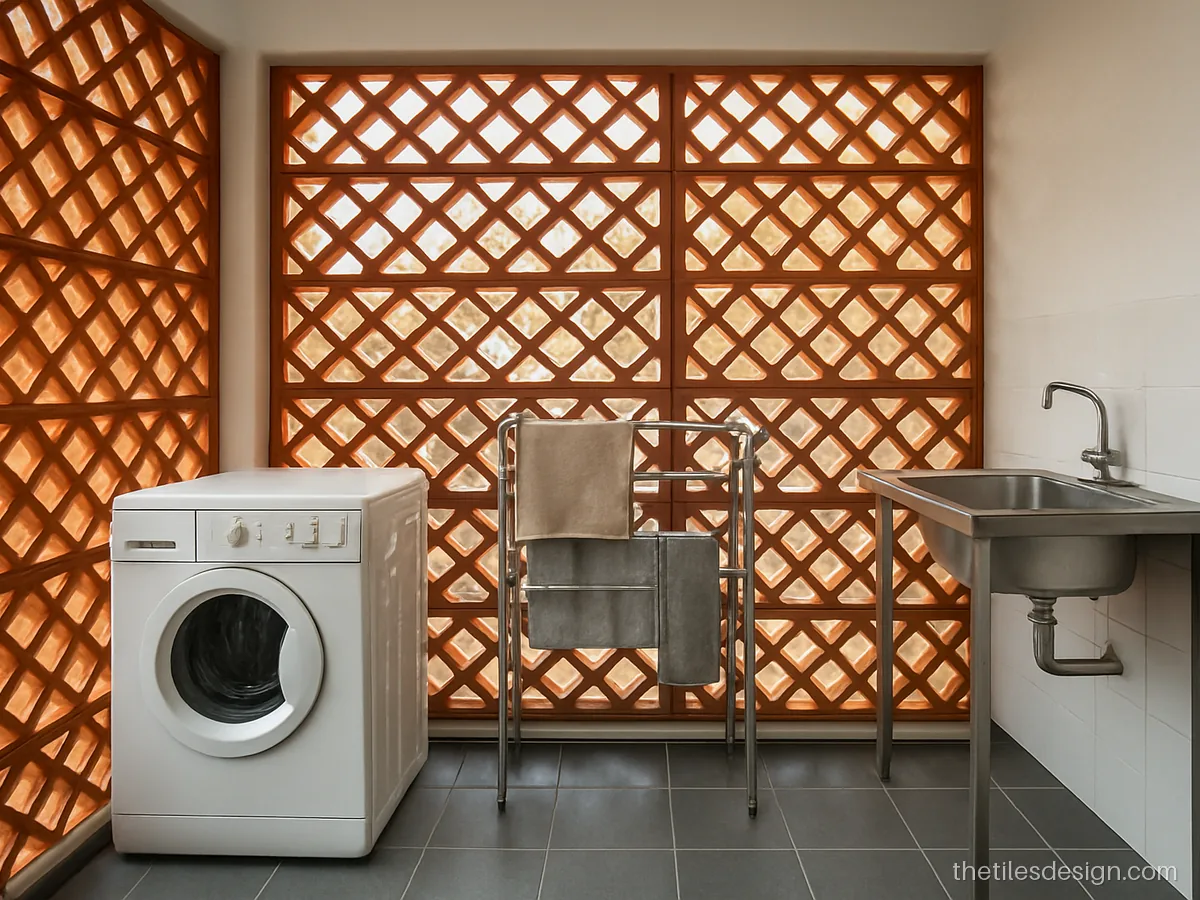
- Size
- 200 x 200 mm block
- Finish
- Natural
- Best for
- Utility area
In a utility area, clay jaali blocks dry clothes faster and let cooking smells out. Easy to clean with a brush.
Fitter's tip: Brush off dust every month and wash with plain water. No paint, it blocks the pores.
Terracotta for Balconies and Courtyards
Outside, choose thick clay tiles with a rough surface or terracotta look anti-skid tiles. Smooth clay gets slippery with green moss in the rains.
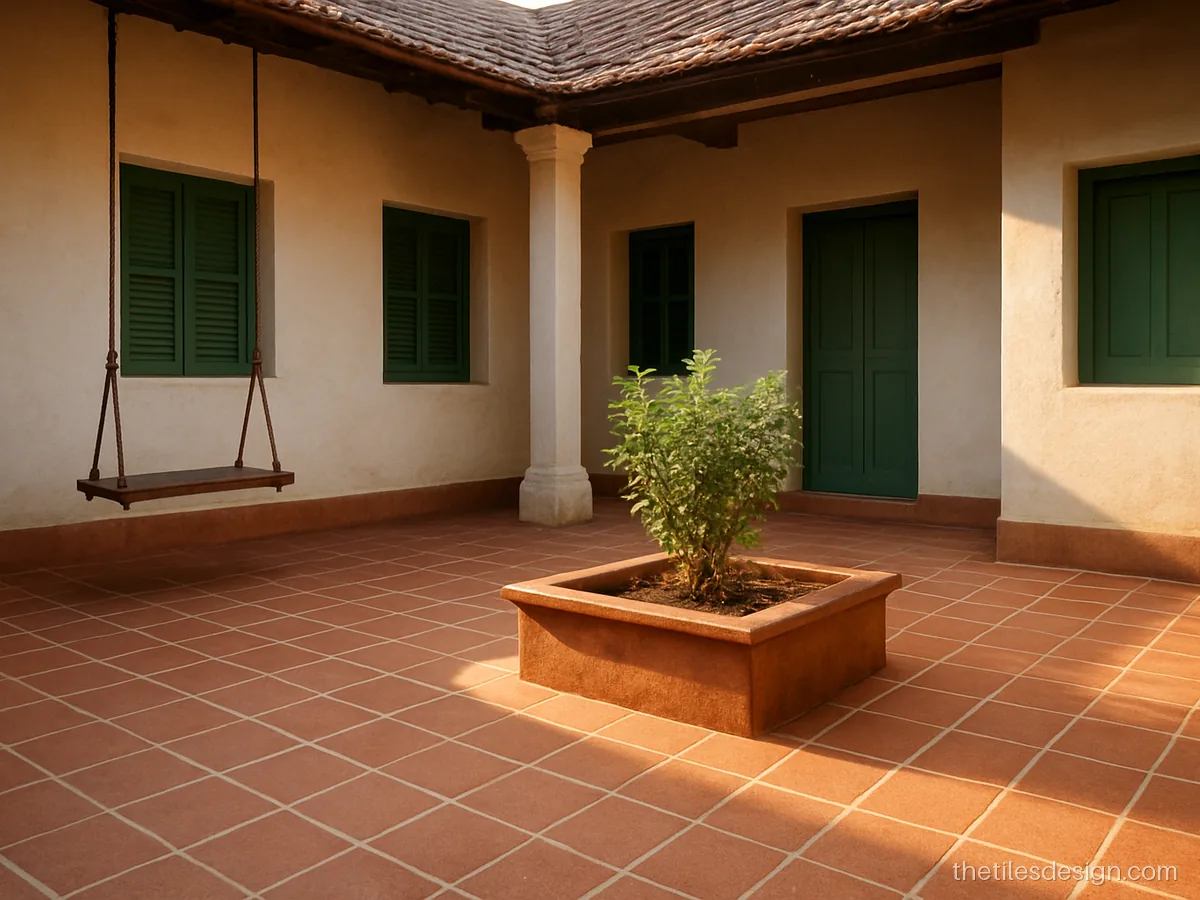
- Size
- 300 x 300 mm
- Finish
- Rough matt
- Best for
- Open courtyard
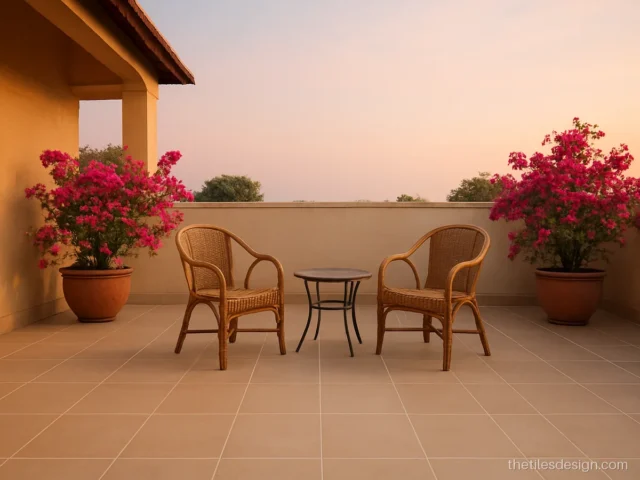
Thick red clay tiles in an open courtyard stay cooler than stone in summer sun. A rough finish keeps grip in the rain.
Fitter's tip: Slope the courtyard 1 in 100 to a drain. Scrub moss with a hard brush before the monsoon.
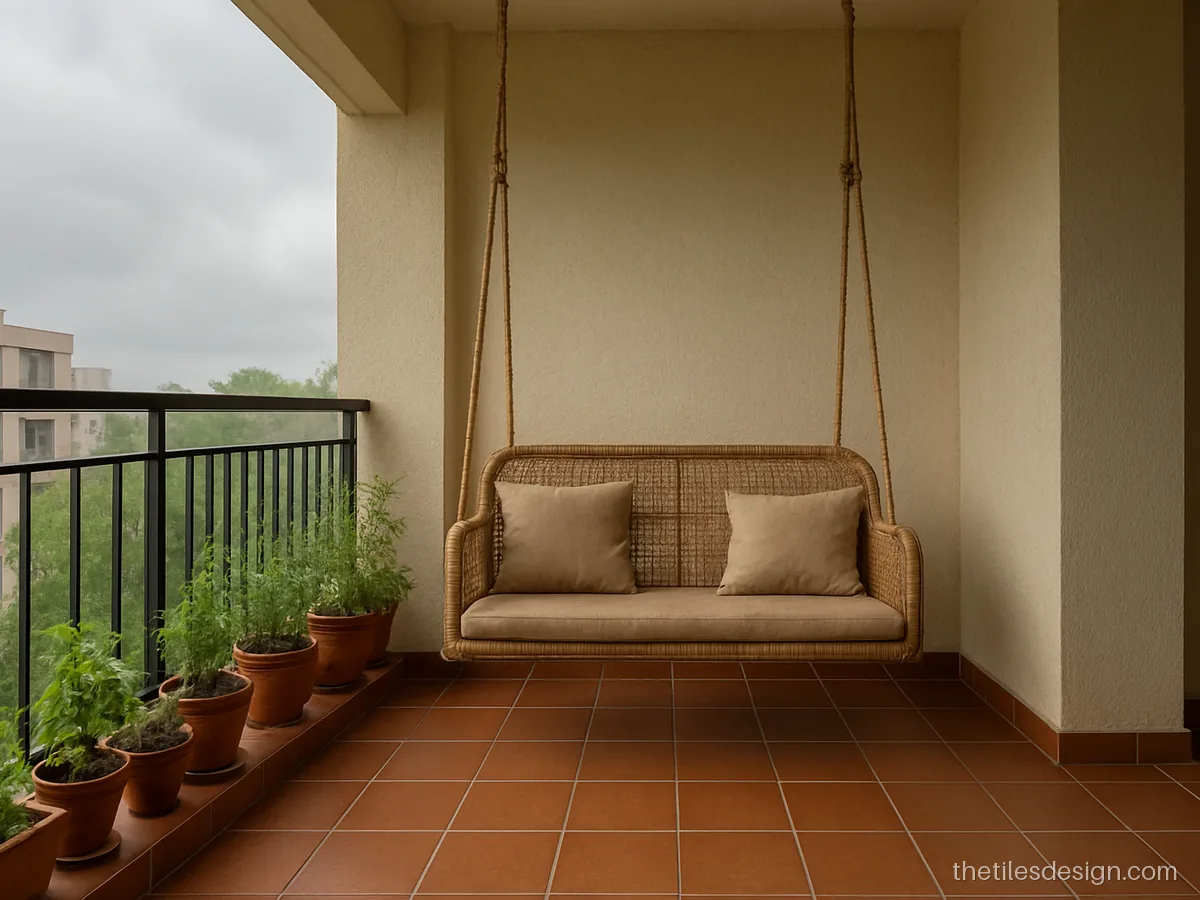
- Size
- 300 x 300 mm
- Finish
- Anti-skid
- Best for
- Balcony floor
Anti-skid tiles in a terracotta colour need no sealing and stay safe for elders when wet.
Fitter's tip: Keep the balcony slope outward to the spout. Fill joints fully so water does not seep below.
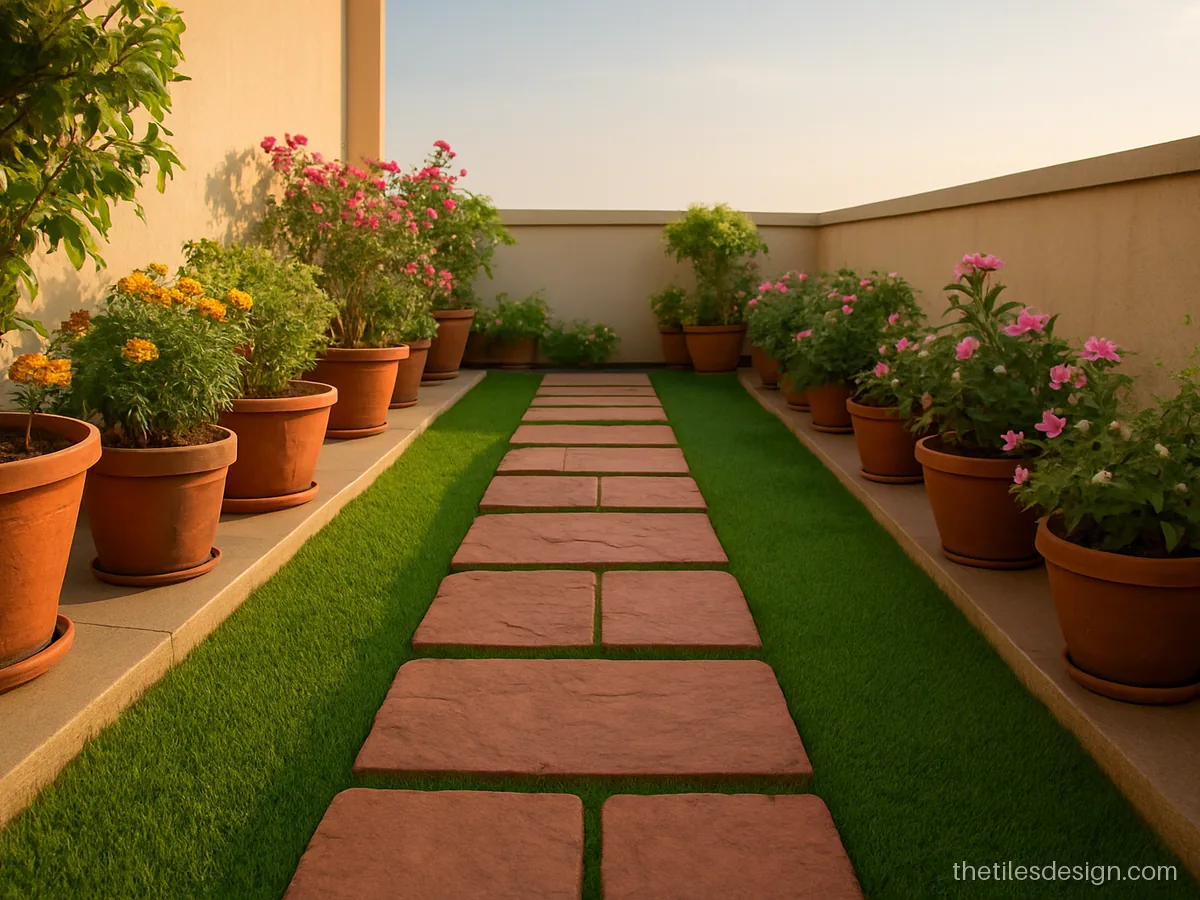
- Size
- 400 x 400 mm
- Finish
- Rough
- Best for
- Terrace garden
Terracotta stone pavers form a path between grass and plant beds on a terrace garden. They take heavy pots well.
Fitter's tip: Lay pavers over the waterproofing with a protection screed, never directly on the membrane.
Natural Clay Tiles vs Terracotta Look Tiles
| Point | Natural clay terracotta tiles | Terracotta look porcelain |
|---|---|---|
| Feel | Cool, soft, earthy | Smooth, uniform |
| Water absorption | High, needs sealing | Under 0.5 percent |
| Colour | Varies tile to tile | Even |
| Care | Seal or wax, avoid acids | Mop with water |
| Best for | Living rooms, courtyards, walls | Kitchens, bathrooms, busy areas |
Handmade shapes, thick pavers and relief tiles cost more. Sealing and waxing add to the labour cost too.
Fitting and Care for Terracotta
- Soak natural clay tiles before fixing, and seal them before grouting so the grout does not stain them.
- Keep wider joints, 5 to 10 mm, for the handmade look.
- Use a pH neutral cleaner. Acid cleaners eat the clay surface.
- Buy 10 percent extra. Natural clay changes shade between lots, so buy all at once.
For the warm colour choices, see tiles colour design. For terraces, see terrace roof tiles.
Tile questions people ask
Are terracotta floor tiles good for Indian homes?
Yes, in living rooms, bedrooms and courtyards. They keep the floor cool and look warm. Seal them well, and use terracotta look porcelain in kitchens and bathrooms.
Are clay tiles for wall use heavy?
Thin cladding tiles weigh much less than real bricks, so most walls can take them. Fix them with tile adhesive on a sound plaster.
Do terracotta wall tiles fade in the sun?
Natural clay colour does not fade, because it is the clay itself. Some painted or printed look-alikes do fade, so use natural terracotta outside.
What is the terracotta tiles wall cladding thickness?
Most cladding is 10 to 20 mm thick. Thicker tiles give a stronger shadow and a more real brick look, but need a stronger adhesive.
How do I stop moss on a terracotta floor outside?
Slope the floor so water drains away, apply a water repellent sealer and scrub with a hard brush before and after the monsoon. Avoid shady spots that never dry.
Can I use brick tiles in a bathroom?
Only glazed brick tiles, and only on walls away from direct shower water. Natural clay soaks up water and soap, which leaves marks.