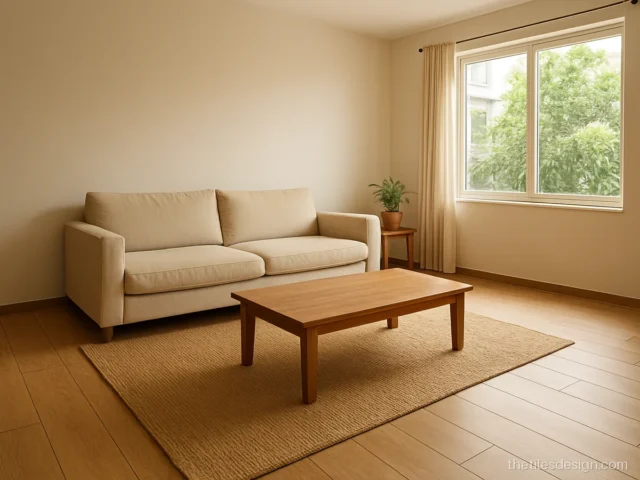
Tile Sizes and Types of Tiles: A Simple Guide
12 designs Sizes and types guide Updated 8 Oct 2026
Tile sizes decide how a room looks, how many joints you see and how much cutting the fitter does. This guide explains the common tile sizes in India in mm and feet, the different types of tiles, and which size suits which room. It also covers ceramic vs vitrified tiles, finishes, thickness and how many spare tiles to buy.
Keep it open on your phone at the shop or on site. Fitters talk about tile sizes in feet, boxes are marked in mm, and the chart below helps you switch between the two. For room ideas, see our floor tiles design and wall tiles design galleries.
Types of Tiles: Ceramic, Vitrified and Porcelain
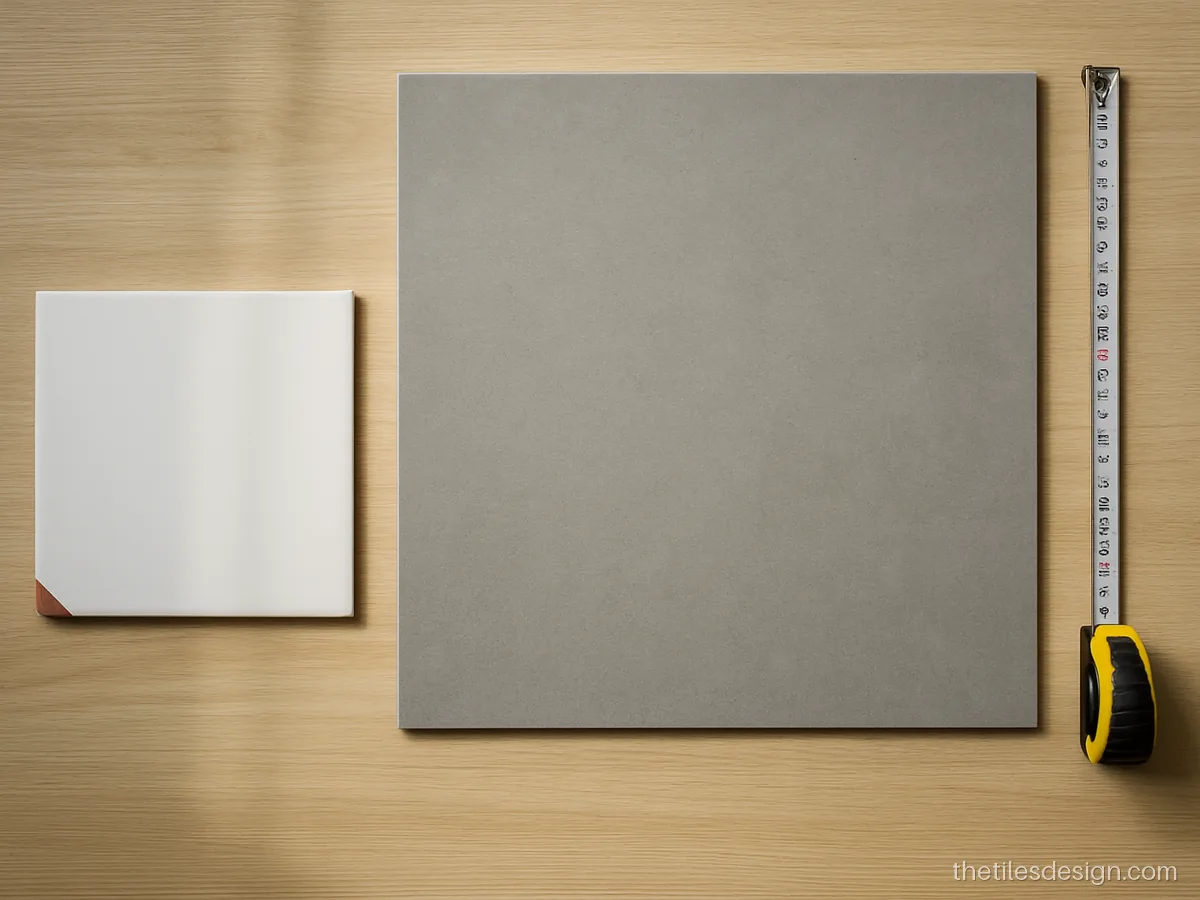
These flat lays show the main types of tiles side by side, so you can see the body, the glaze and the thickness before you buy. Turn a tile over at the shop and look at the edge.
- Size
- 300 x 600 vs 600 x 600
- Finish
- Glossy and matt
- Best for
- Comparing tile types
The ceramic tile on the left has a red clay body under a white glaze. The vitrified tile on the right is grey right through and much denser.
Fitter's tip: Tap both tiles with a coin; a clear ring means a dense, well fired body.
- Size
- 600 x 600 mm samples
- Finish
- Glossy, satin, matt
- Best for
- Floor tile choice
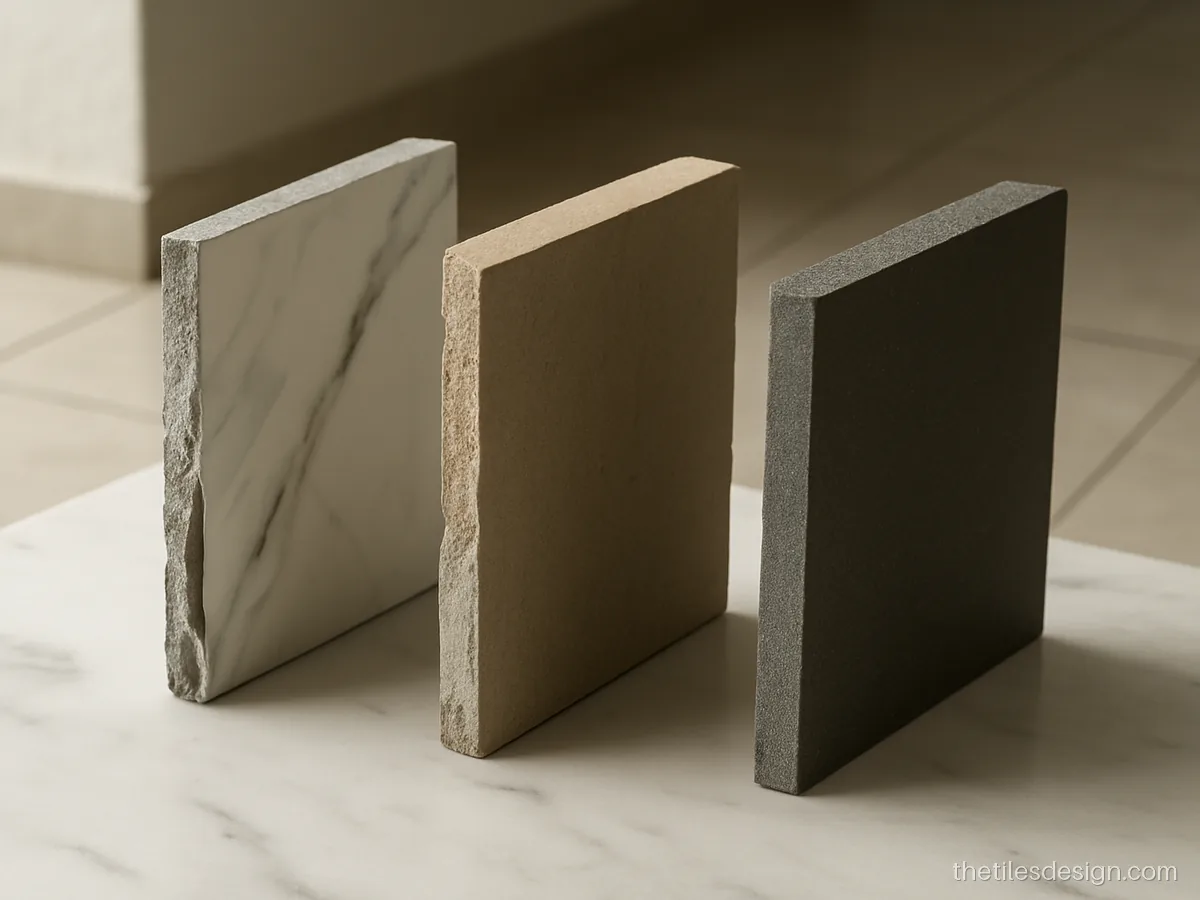
Cut samples make the difference clear: GVT has a thin printed glaze, double charge has a thick colour layer, and full body is one colour all through.
Fitter's tip: For shops and stairs, pick full body or double charge so chips do not show a different colour.
- Size
- Mixed sample sizes
- Finish
- Mixed finishes
- Best for
- Material comparison
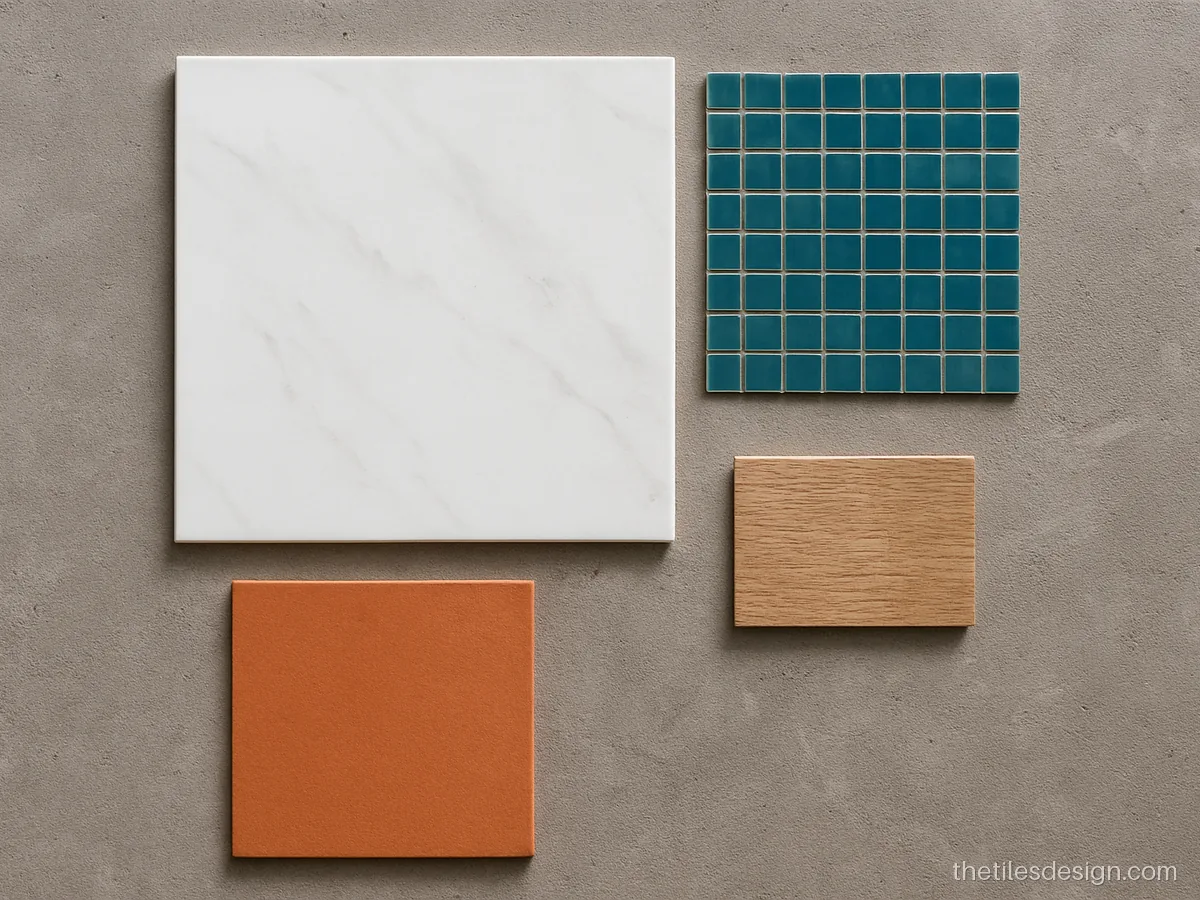
Porcelain, terracotta and mosaic each have their own job: porcelain for big floors, terracotta for warm outdoor areas, and mosaic for small wet niches.
Fitter's tip: Ask for a loose sample of each type and test it with water and oil at home before ordering.
2x2 Tiles and Other Floor Tile Sizes
The 600 x 600 mm tile, which everyone calls the 2 x 2, is the most common floor tile size in India. Smaller and squarer sizes still have a place in wet and outdoor areas.
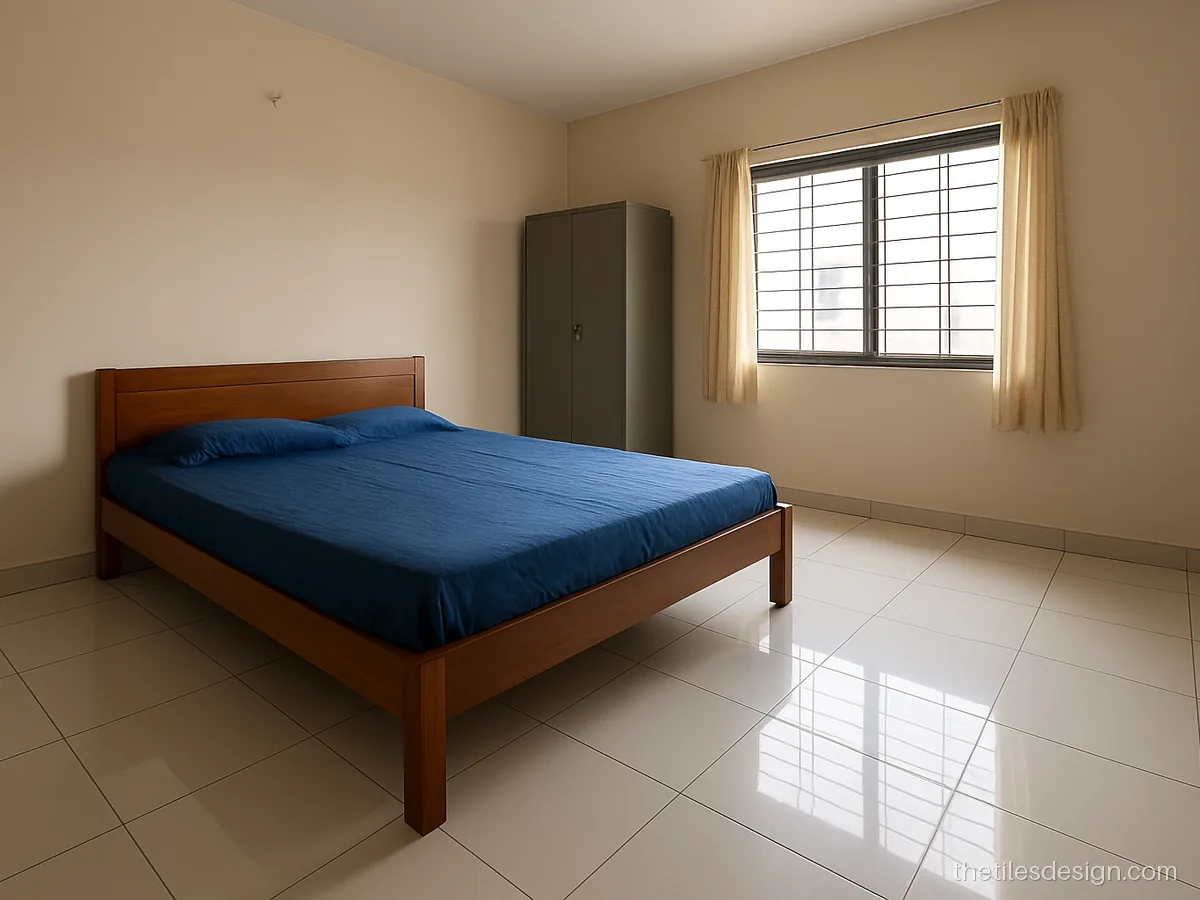
- Size
- 600 x 600 mm (2 x 2 ft)
- Finish
- Satin
- Best for
- Bedrooms 10 to 14 ft
A 2x2 white tile floor suits a 10 x 12 ft bedroom well. The size gives few cuts and is easy for any fitter to lay flat.
Fitter's tip: Start from the room centre so cut pieces at both walls are the same width.
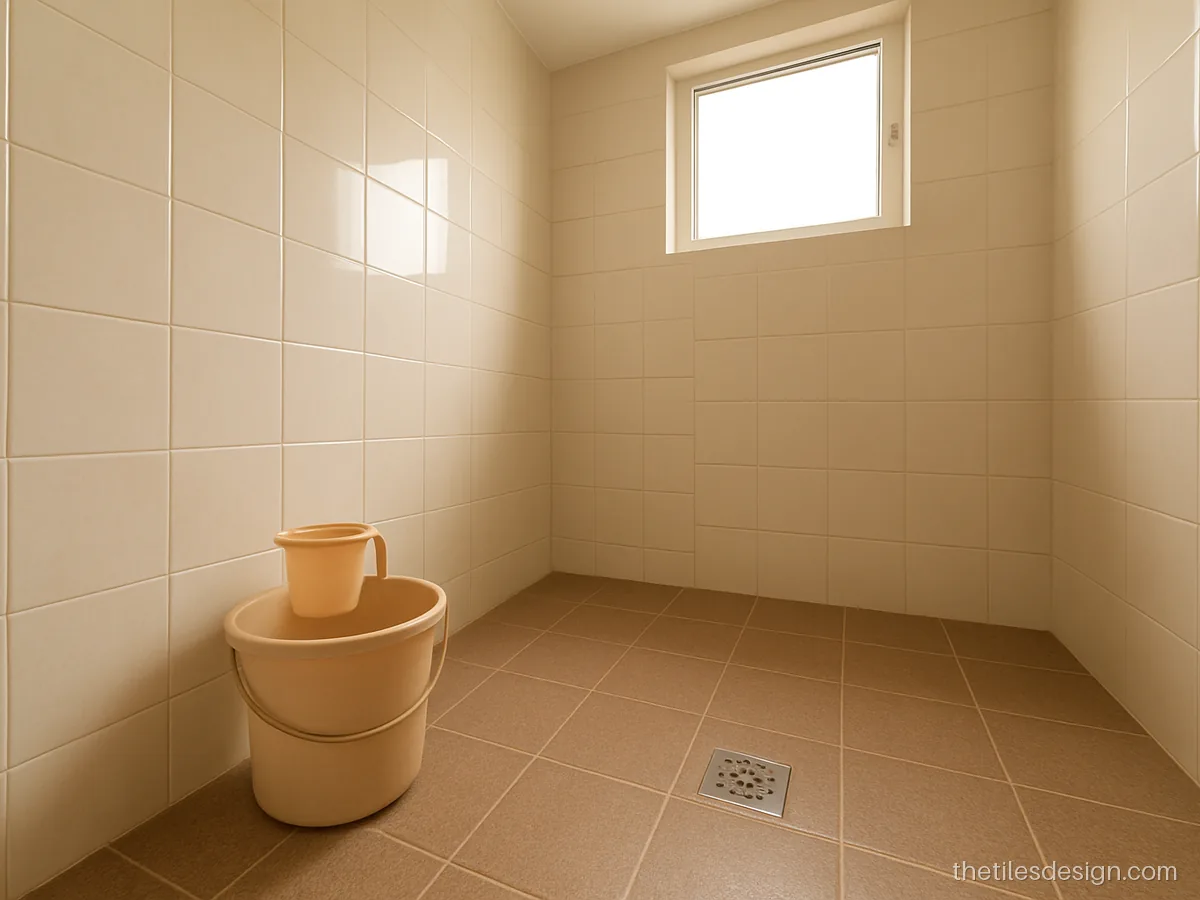
- Size
- 300 x 300 mm (1 x 1 ft)
- Finish
- Anti-skid
- Best for
- Bathroom floors
The 1 x 1 ft tile is the best bathroom tiles size for floors. More joints mean more grip and an easier slope towards the drain.
Fitter's tip: Fill joints with epoxy grout and check the slope with a level before the adhesive sets.
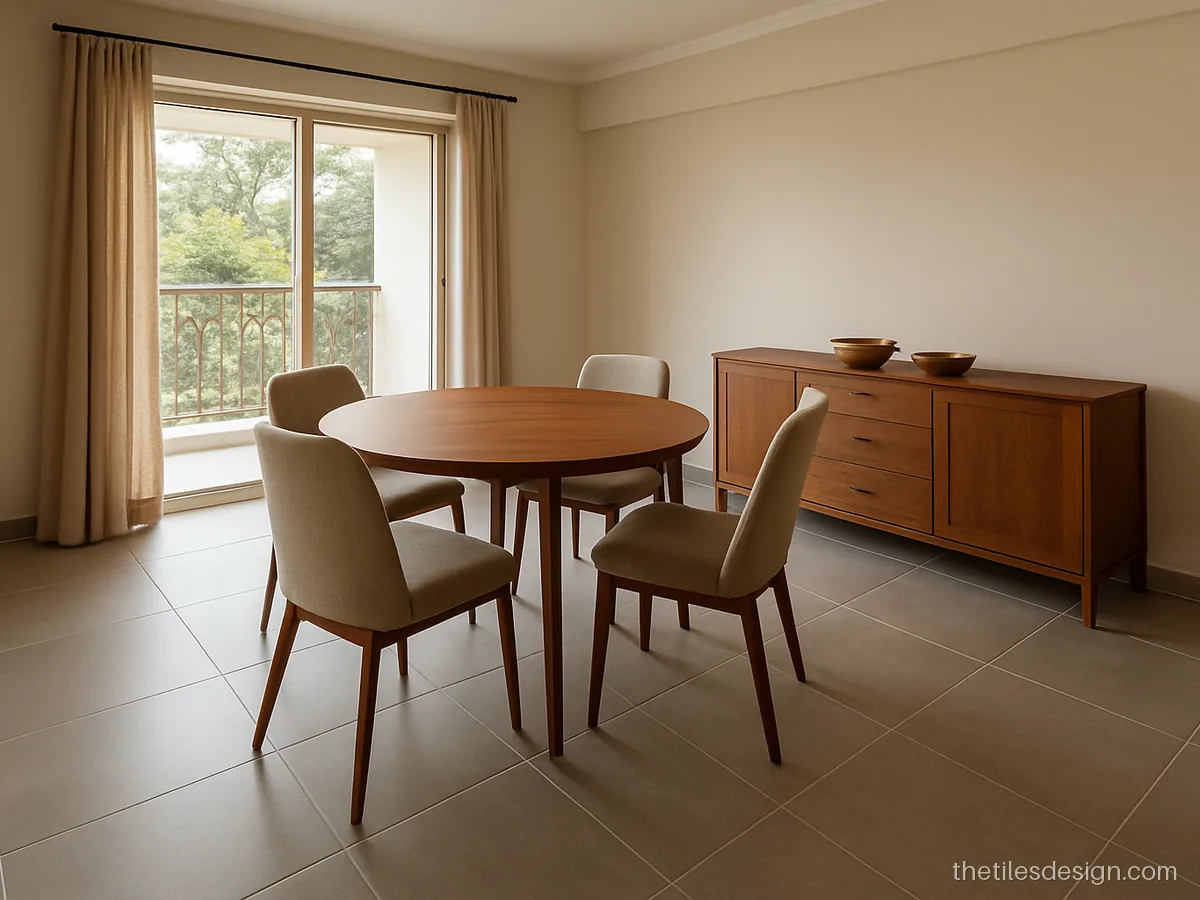
- Size
- 800 x 800 mm
- Finish
- Matt
- Best for
- Open dining areas
800 x 800 mm tiles sit between the 2 x 2 and the big slabs. They suit open dining and living areas of 14 ft or more.
Fitter's tip: Check that all boxes carry the same batch and shade code before opening any of them.
2x4 Tiles Design and Big Size Tiles
The 600 x 1200 mm tile, which shops list as tiles 2 x 4 ft, is now the standard for halls. Larger slabs go further, but they need a bigger room, a flat base and an experienced fitter.
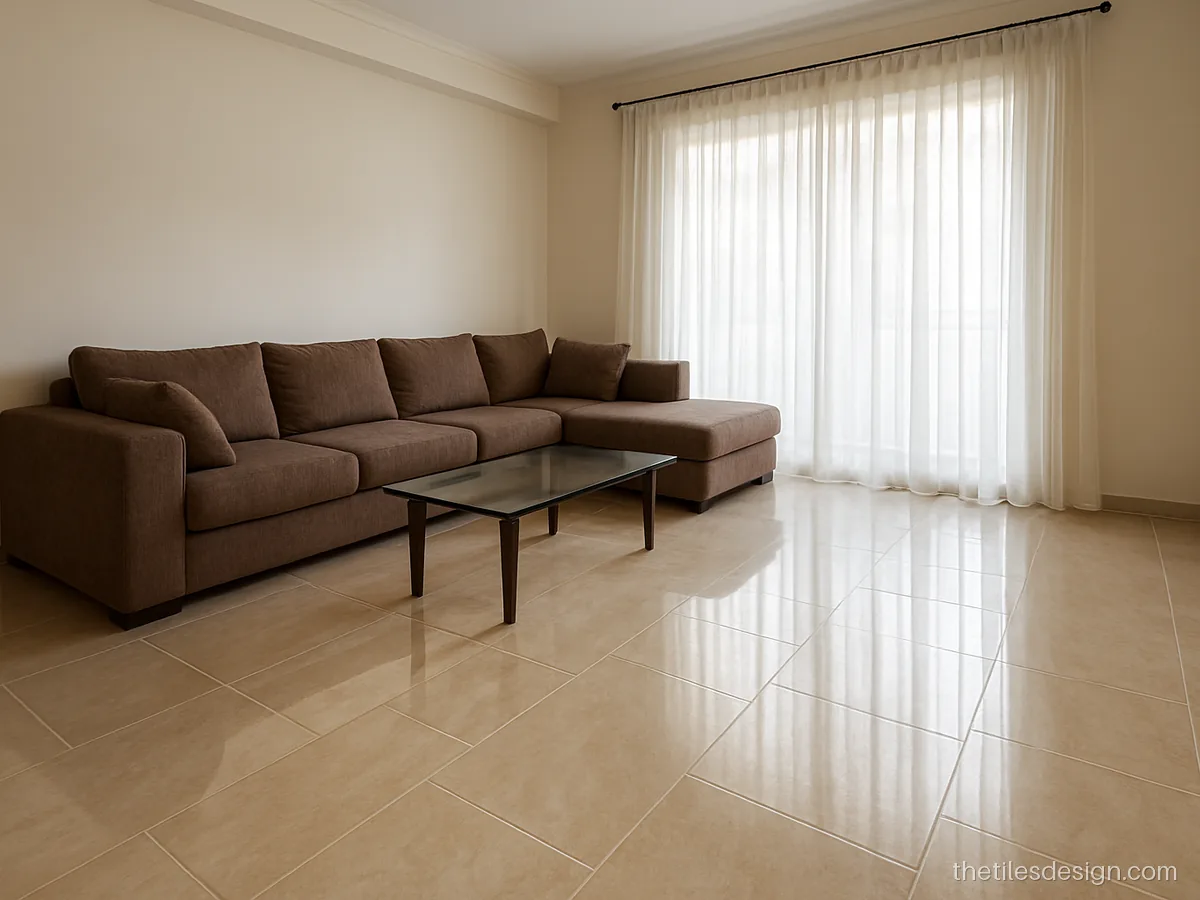
- Size
- 600 x 1200 mm (2 x 4 ft)
- Finish
- Glossy
- Best for
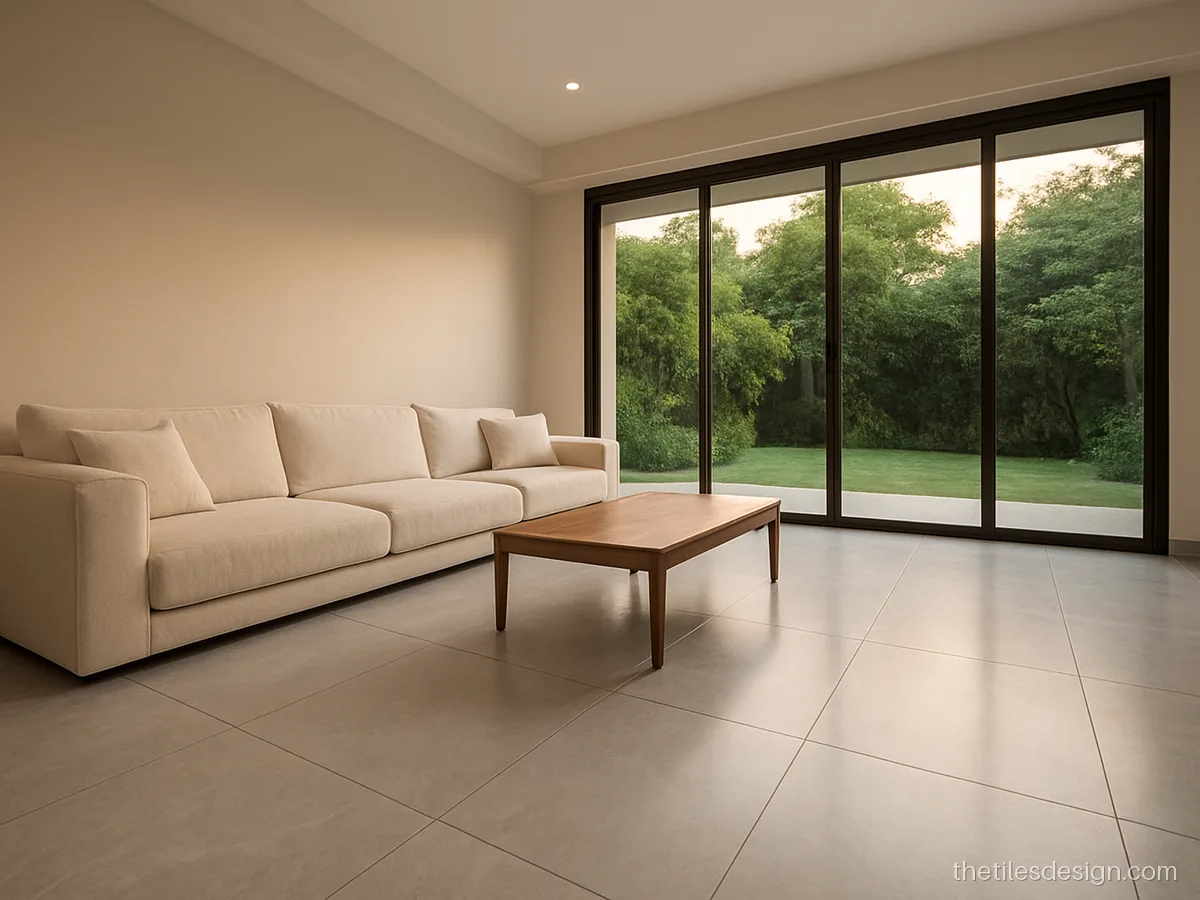
- Halls 12 ft and above
These 2 x 4 tiles in beige marble print cut the number of joints by half compared to 2 x 2, so the hall looks bigger.
Fitter's tip: Lay 2 x 4 tiles with a one third offset and use levelling clips at every joint.
- Size
- 800 x 1600 mm
- Finish
- Satin
- Best for
- Large living rooms
800 x 1600 mm slabs give very few joints in a large room. They are heavy, so two fitters handle each piece.
Fitter's tip: Back-butter every slab with adhesive so no hollow spots remain under the corners.
- Size
- 1200 x 1800 mm
- Finish
- High gloss
- Best for
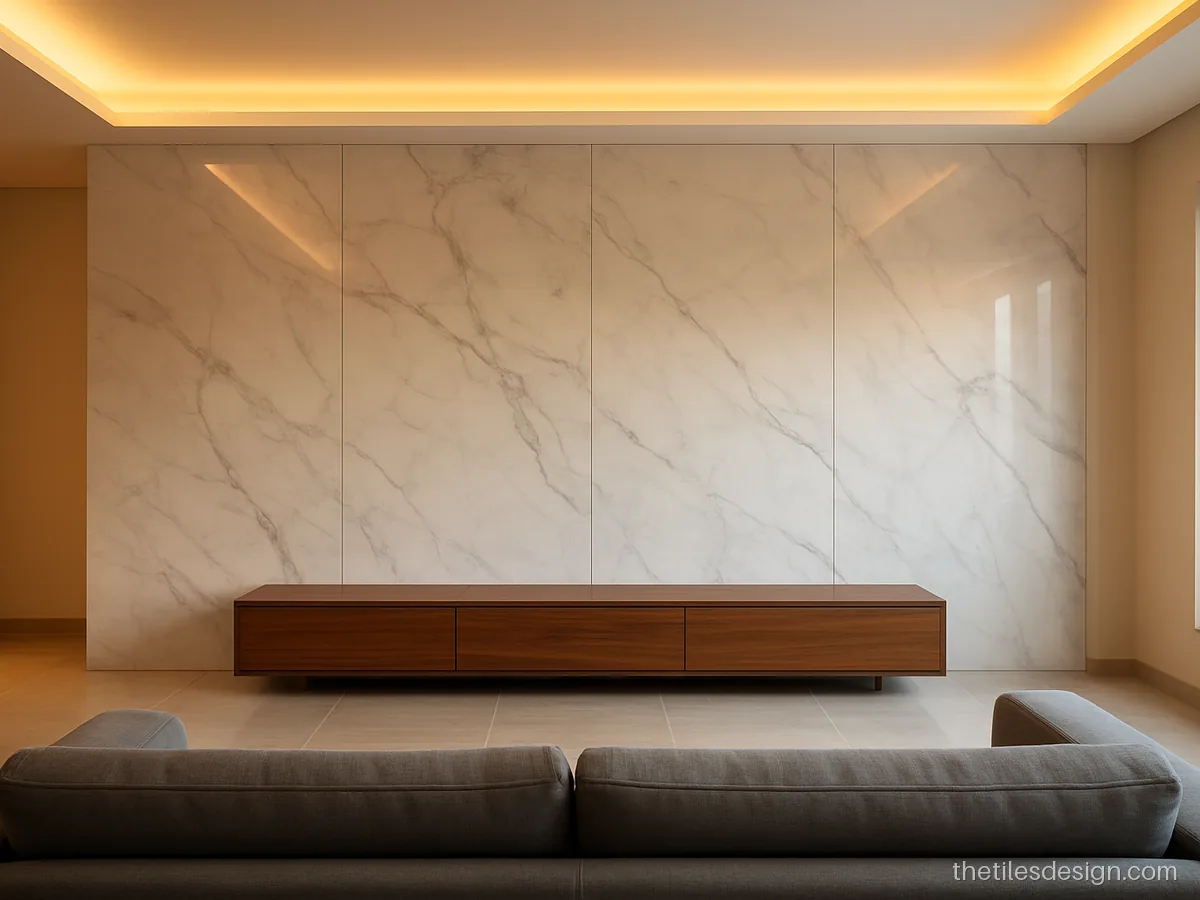
- Feature walls
The biggest tile size most homes use is the 1200 x 1800 mm slab. On a wall, two or three slabs look like one sheet of marble.
Fitter's tip: Fix wall slabs with special slab adhesive and mechanical support until it sets.
Wall, Kitchen and Bathroom Tiles Size
Wall tiles are smaller and thinner than floor tiles. Ceramic wall tiles of 300 x 450 and 300 x 600 mm are the standard, with subway, plank and patterned sizes for special looks.
- Size
- 300 x 450 mm
- Finish
- Glossy
- Best for
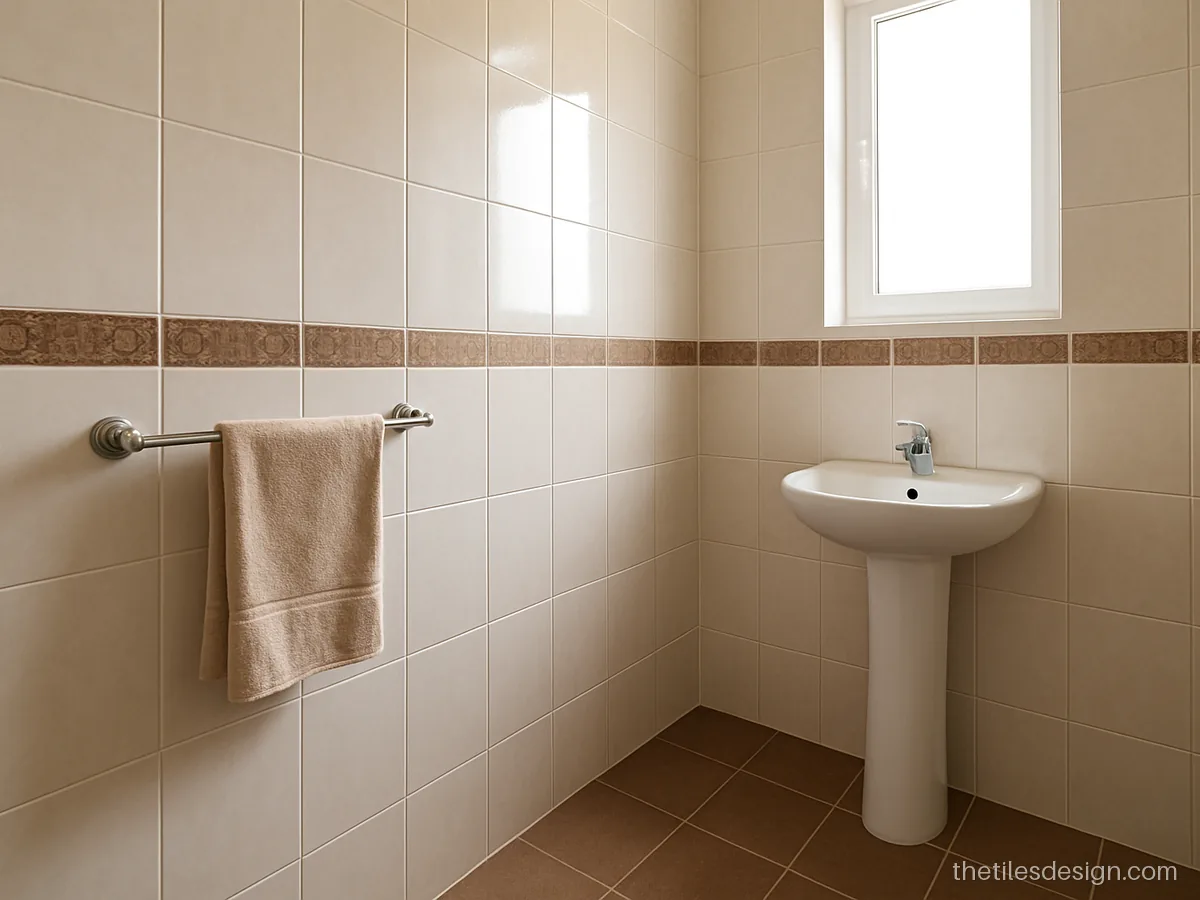
- Bathroom walls
The 300 x 450 mm ceramic tile is a common bathroom wall size. A darker highlighter row at eye level breaks up a plain wall.
Fitter's tip: Set the highlighter row height first, then work full tiles up and down from it.
- Size
- 100 x 300 mm
- Finish
- Glossy
- Best for
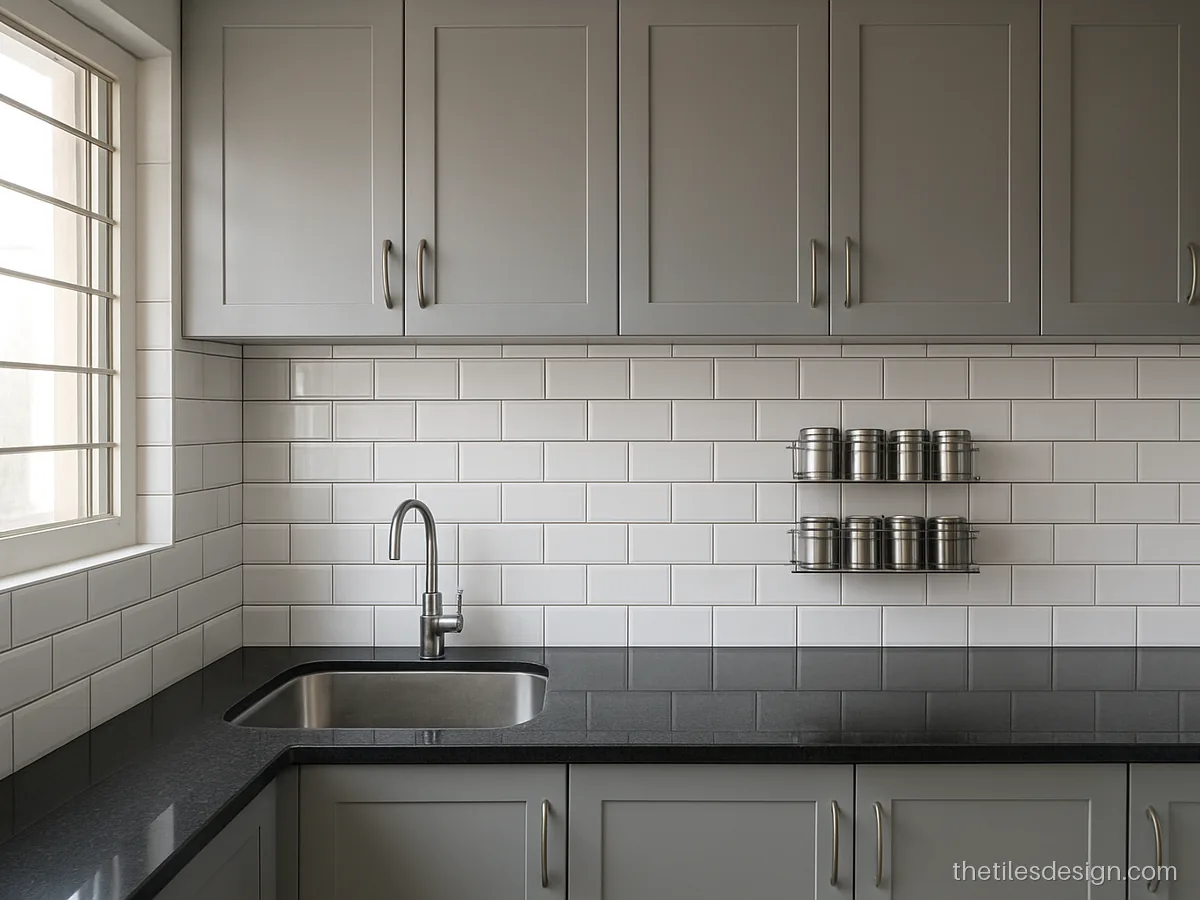
- Kitchen walls
Subway tiles of 100 x 300 mm suit kitchen walls with many switches and corners, because small pieces cut neatly around them.
Fitter's tip: Plan the first row from the counter top so full tiles sit at the visible edge.
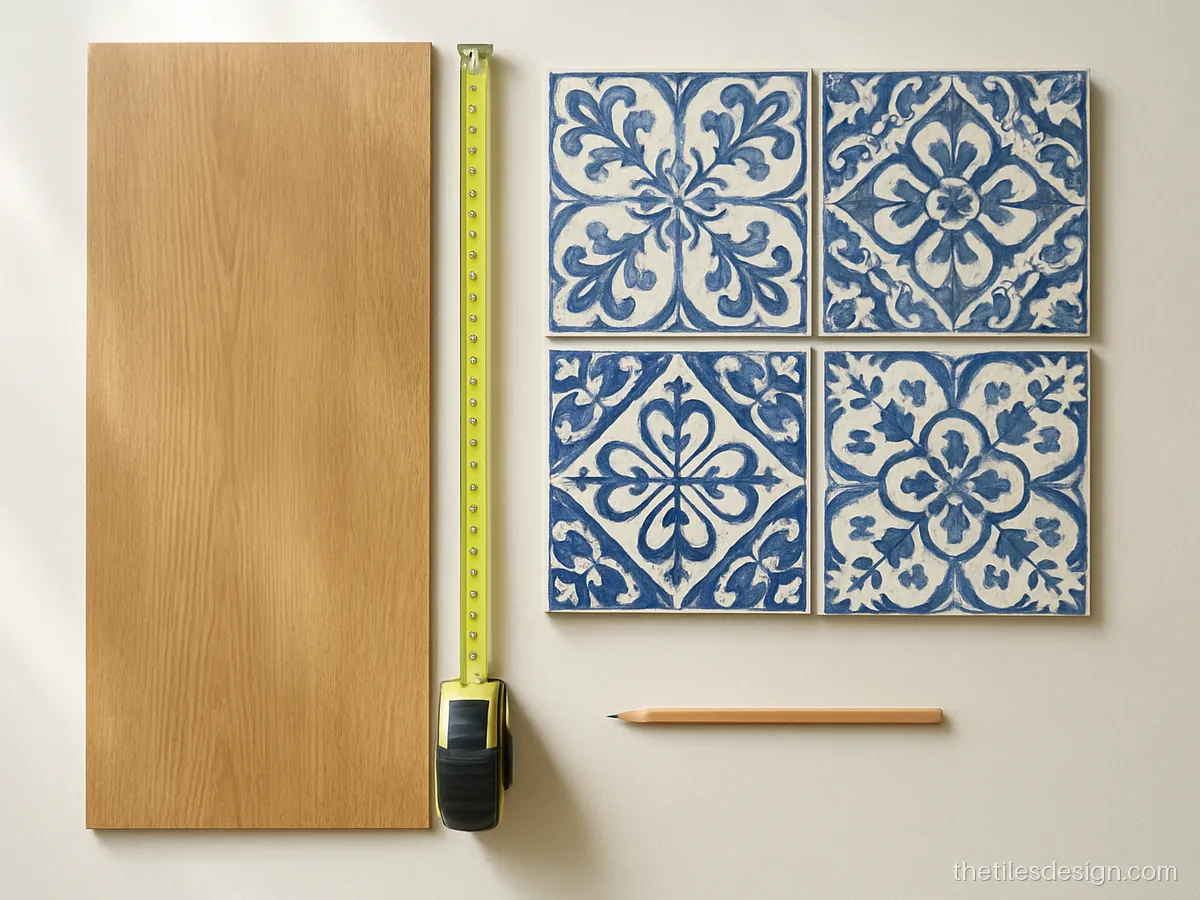
- Size
- 200 x 1200 and 200 x 200
- Finish
- Matt
- Best for
- Bedrooms and accents
Plank tiles of 200 x 1200 mm and patterned 200 x 200 mm tiles are the two special sizes you will see most in shops right now.
Fitter's tip: Plank and patterned tiles need more cutting, so add about 15 percent extra to your order.
Tile Meaning and the Different Types of Tiles in India
In simple words, a tile is a thin, flat piece of fired clay, stone or glass that covers a floor or wall. The tile meaning has not changed in hundreds of years, but the types of tiles in Indian shops have. Here are the ones you will meet:
- Ceramic tiles: clay fired at lower heat. They absorb more water, are lighter and softer, and are used mainly on walls.
- Vitrified tiles: clay and minerals fired at very high heat until the body turns almost glass like. Water absorption is under 0.5 percent. Used on floors.
- Glazed vitrified (GVT) and polished glazed (PGVT): a printed pattern sealed under a clear glaze. Most marble, wood and stone looks are GVT.
- Double charge: two layers of colour pressed together, giving a thick top that lasts in busy areas.
- Full body: colour right through the tile, so wear and chips hardly show.
- Porcelain: a very dense vitrified body, used for big slabs and outdoor tiles.
- Natural stone, terracotta and mosaic: marble, granite, kota and sandstone; baked clay tiles; and small glass or stone pieces on mesh.
The vitrified meaning comes from "vitreous", which means glass like. That glassy body is why vitrified tiles are hard and resist stains.
Tile Sizes Chart: mm, Feet, Inches and cm
Boxes show tile sizes in mm. Fitters and contractors in India usually say feet. Use this chart for quick conversion. Sizes are rounded; actual tiles are a few mm smaller so the joint fits.
| Size in mm | In cm | In feet | In inches | Common use |
|---|---|---|---|---|
| 100 x 300 | 10 x 30 | 4 in x 1 ft | 4 x 12 | Subway, kitchen walls |
| 200 x 200 | 20 x 20 | 8 x 8 in | 8 x 8 | Moroccan and patterned |
| 300 x 300 | 30 x 30 | 1 x 1 | 12 x 12 | Bathroom floors, terraces |
| 300 x 450 | 30 x 45 | 1 x 1.5 | 12 x 18 | Bathroom walls |
| 300 x 600 | 30 x 60 | 1 x 2 | 12 x 24 | Wall tiles, elevation |
| 600 x 600 | 60 x 60 | 2 x 2 | 24 x 24 | Bedroom, kitchen floors |
| 600 x 1200 | 60 x 120 | 2 x 4 | 24 x 48 | Halls, living rooms |
| 800 x 800 | 80 x 80 | about 2.6 x 2.6 | 32 x 32 | Open living and dining |
| 800 x 1600 | 80 x 160 | about 2.6 x 5.2 | 32 x 63 | Large halls |
| 1200 x 1800 | 120 x 180 | 4 x 6 | 47 x 71 | Slabs, feature walls |
| 200 x 1200 | 20 x 120 | 8 in x 4 ft | 8 x 47 | Wood look planks |
Whether you say 2 x 4 or 4 x 2 tiles, it is the same 600 x 1200 mm tile. The first number is just the side you name first.
Which Tile Size Suits Which Room
Match the tile to the room size. A big tile in a small room means many cuts and waste. A tiny tile in a big hall means a busy grid of joints.
| Room | Room size | Good tile size |
|---|---|---|
| Bathroom floor | Any | 300 x 300 or 600 x 600 mm anti-skid |
| Bathroom walls | Any | 300 x 450, 300 x 600 or 600 x 1200 mm |
| Kitchen floor | Up to 10 x 12 ft | 600 x 600 mm matt |
| Kitchen wall | Backsplash | 300 x 600 mm or 100 x 300 mm subway |
| Bedroom | 10 x 10 to 14 x 14 ft | 600 x 600 or 200 x 1200 mm planks |
| Hall | 12 x 14 ft and above | 600 x 1200 or 800 x 800 mm |
| Large living | 16 x 20 ft and above | 800 x 1600 or 1200 x 1800 mm |
| Balcony and terrace | Any | 300 x 300 or 300 x 600 mm matt |
| Parking | Any | 300 x 300 mm heavy duty |
A quick test: lay three or four tiles on the floor in the shop and stand back. If the tile looks bigger than a third of the room width, choose one size down. For room by room looks, see bathroom tiles design and hall tiles design.
Ceramic vs Vitrified Tiles: The Real Difference
This is the question every home owner asks. The short answer: vitrified for floors, ceramic for walls. Here is why.
| Point | Ceramic tiles | Vitrified tiles | Porcelain |
|---|---|---|---|
| Body | Clay, often reddish | Dense, glass like | Very dense vitrified |
| Water absorption | Higher, around 3 to 10 percent | Under 0.5 percent | Very low |
| Strength | Softer, chips more | Hard, scratch resistant | Hardest |
| Weight | Light | Heavier | Heaviest |
| Cutting | Easy | Needs a good cutter | Needs skill |
| Best use | Walls, low traffic | Floors in every room | Slabs, outdoors |
Ceramic tiles still win on walls because they are lighter, easier to cut around pipes and switches, and stick well. Vitrified tiles win on floors because they do not soak up water or stains. Many homes use both: vitrified on the bathroom floor and ceramic on the bathroom walls.
Finishes and Tile Thickness
Finish: glossy reflects light and suits walls and dry halls. Matt hides dust and grips better, so it suits kitchens and bedrooms. Satin gives a soft sheen. Anti-skid and rustic finishes have a rough top for bathroom floors, balconies, terraces and parking.
Thickness changes by type and use:
- Ceramic wall tiles: about 6 to 8 mm.
- Vitrified floor tiles: about 8 to 10 mm.
- Large porcelain slabs: often 9 to 15 mm. Some thin slabs for walls are around 6 mm.
- Parking and heavy duty tiles: 12 to 20 mm.
Thicker and bigger tiles weigh more, cost more and need stronger adhesive. Full body and double charge tiles cost more than surface printed GVT. Imported marble looks and slabs over 1200 mm also push the cost up, as does the extra labour for levelling them.
How Many Spare Tiles to Buy
Always order more than the floor area. Tiles break in transport, cuts at walls waste pieces, and you will need spares for repairs years later.
- Straight grid layout: add about 10 percent.
- Offset or brick layout: add 10 to 12 percent.
- Diagonal or herringbone: add 15 percent or more.
- Large slabs: add one or two extra slabs, because one broken slab is a big gap.
Example: a 12 x 14 ft bedroom is 168 sq ft. Each 2 x 2 tile covers 4 sq ft, so you need 42 tiles. Add 10 percent and round up to 47 tiles, then round up again to full boxes.
Buy every box from the same batch. Check the shade and size code on each carton. A new batch can be a shade lighter or darker, and the difference shows clearly on a floor.
Tile questions people ask
What is vitrified tiles meaning in simple words?
Vitrified tiles are tiles fired at very high heat until the body becomes almost like glass. That makes them hard and stain resistant, and they absorb less than 0.5 percent water. That is why they are the first choice for floors.
What is the size of 2x4 tiles in mm?
A 2 x 4 tile is 600 x 1200 mm, which is about 24 x 48 inches. It is the most popular hall tile size right now. Some people call it a 4 x 2 tile, but it is the same size.
Which is the standard floor tile size in India?
The 600 x 600 mm (2 x 2 ft) tile is the standard for most bedrooms and kitchens. Halls usually get 600 x 1200 mm or larger. Bathroom floors often use 300 x 300 mm for better grip.
What is the biggest tile size for homes?
Slabs of 1200 x 1800 mm (about 4 x 6 ft) are the biggest size most homes use, and some wall slabs go even larger. They need a flat base, special adhesive and a skilled team. In small rooms they waste too much in cuts.
Which bathroom tiles size is best?
For the floor, 300 x 300 mm anti-skid tiles give the best grip and the easiest slope to the drain. For walls, 300 x 450 or 300 x 600 mm ceramic tiles are standard. Bigger 600 x 1200 mm wall tiles look modern but need more careful cutting.
Is 2x2 or 2x4 better for a hall floor?
For a hall of 12 x 14 ft or bigger, 2 x 4 tiles look better because there are fewer joints. For a smaller hall, 2 x 2 tiles give less waste and are easier to level. Both work if the fitter starts from the centre.