Parking Tiles Design Ideas for Home Parking and Porch
18 designs Outside the house Updated 8 Oct 2026
A good parking tiles design has to carry the weight of a car, stay grippy in the monsoon and still look neat from the gate. This gallery shows 18 home parking tiles ideas, from plain heavy duty grey tiles to patterned porch tiles and flamed granite.
Every picture lists the tile size, finish and a short note for your fitter. Outdoor parking tiles take far more load than indoor floors, so the thickness and the concrete base below matter as much as the colour.
If you are also redoing the front of the house, see our front wall tiles design and outdoor wall tiles pages so the parking, walls and gate look planned together.
Home Parking Tiles Design
Most home parking spaces are one or two car widths and open to sun and rain. These parking floor tiles are thick, matt and easy to hose down.
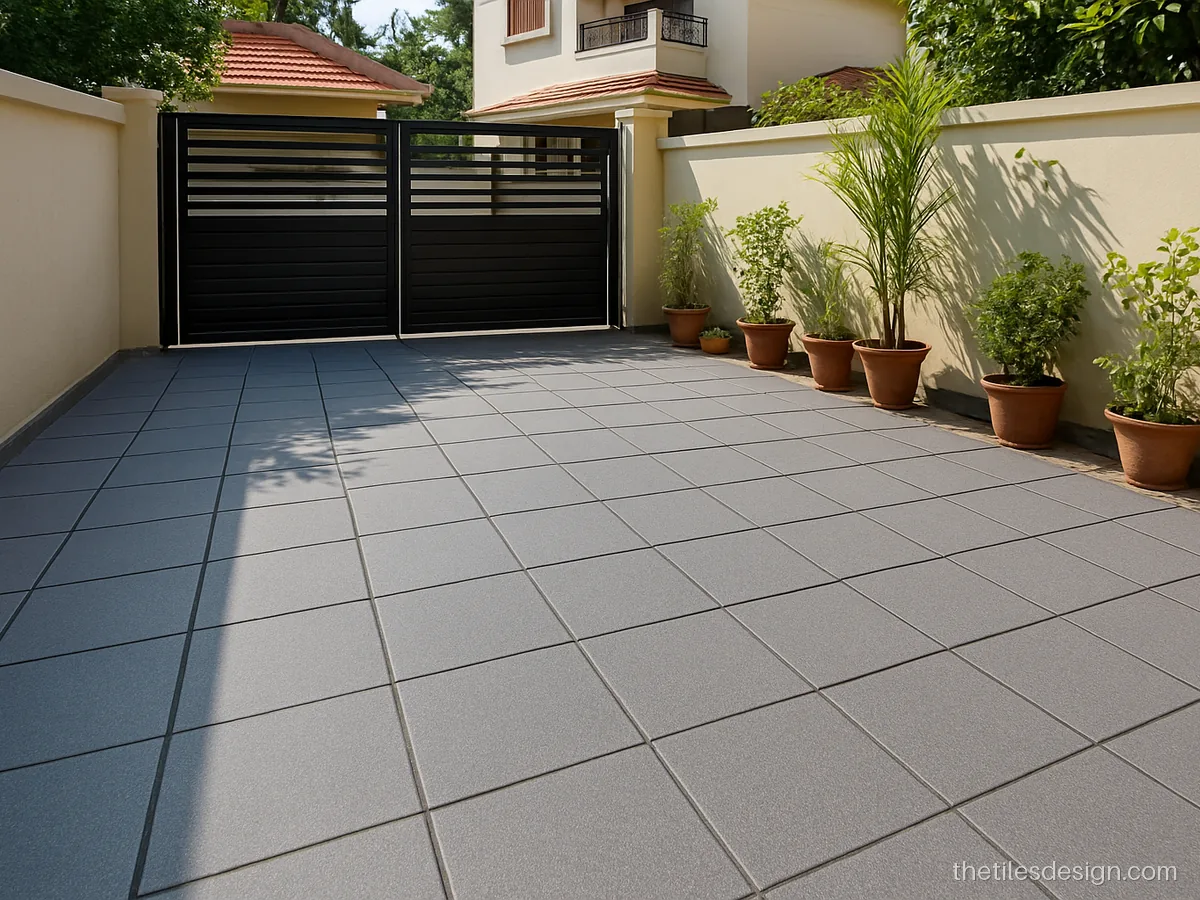
- Size
- 300 x 300 mm, 20 mm
- Finish
- Matt, anti-skid
- Best for
- Single car parking
Plain mid grey hides tyre marks and dust better than white or black. It suits a narrow parking slot beside the house that gets hard afternoon sun.
Fitter's tip: Lay on a full mortar bed over a firm concrete base, never on loose sand, or tiles crack under tyres.
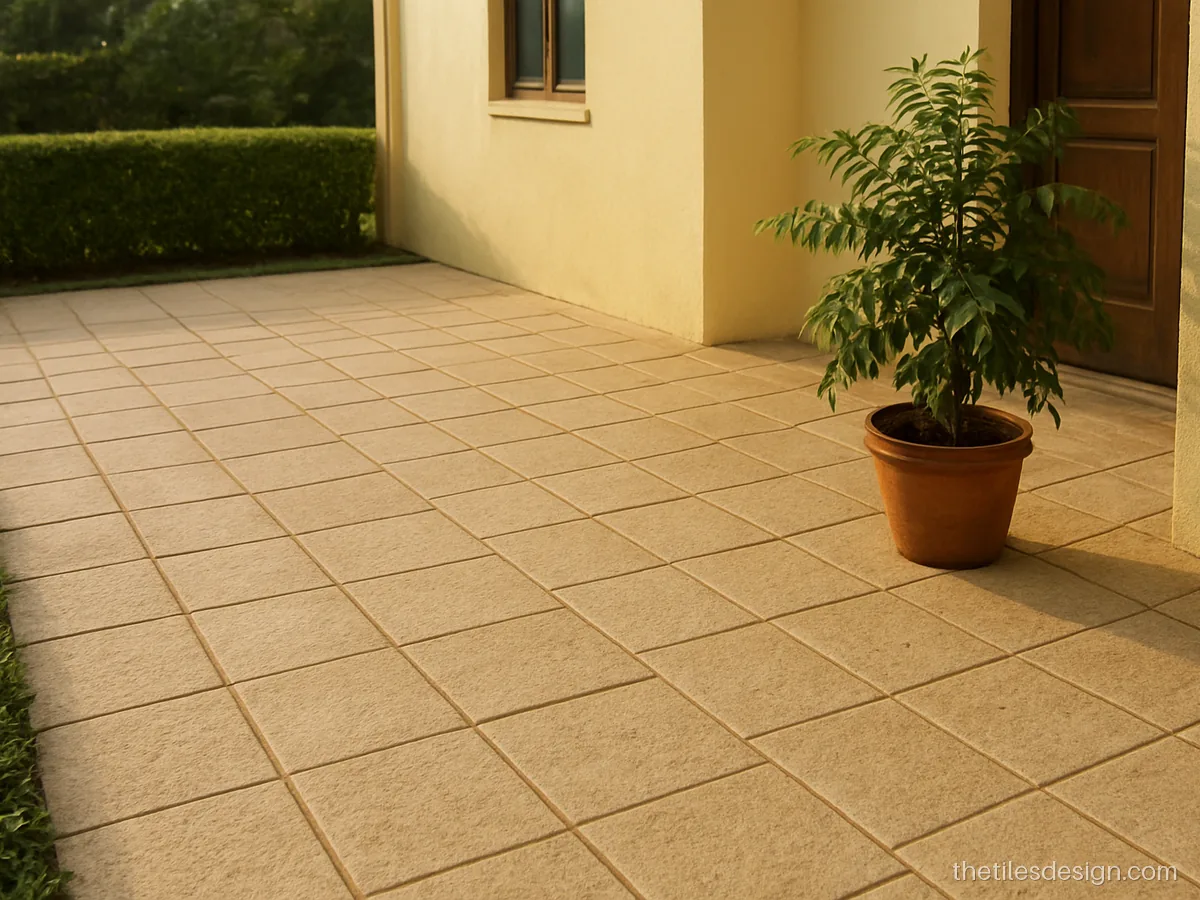
- Size
- 400 x 400 mm (16 in)
- Finish
- Rustic textured
- Best for
- Open front yard
The 400 x 400 mm size, about 16 x 16 inch, is a common parking tile in many towns. A warm beige rustic face looks soft next to a cream house and does not show dried mud.
Fitter's tip: Keep a 3 mm joint and fill it with sand coloured cement grout so dust lines blend in.
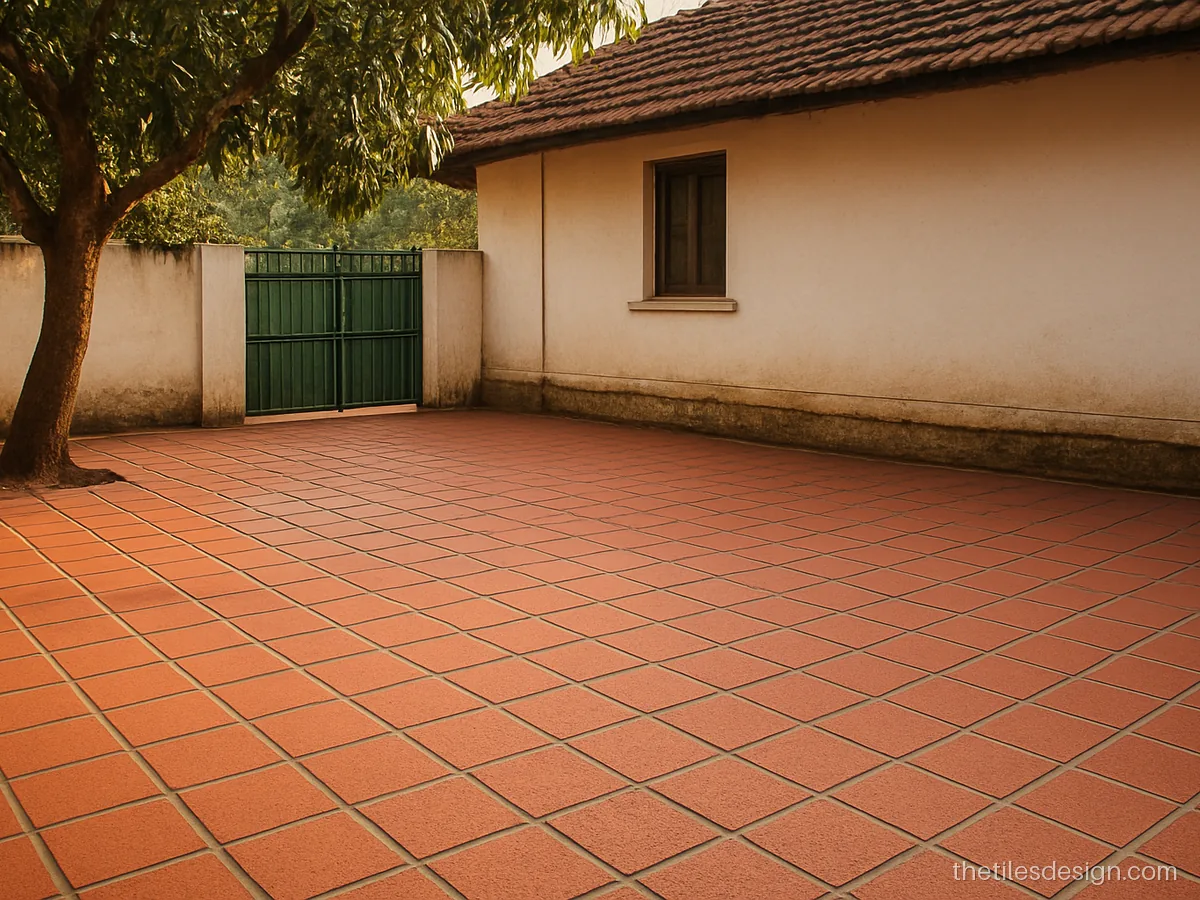
- Size
- 300 x 300 mm, 25 mm
- Finish
- Textured cement
- Best for
- Budget house parking
Cement tiles for parking are pressed concrete with a coloured top layer. They take heavy load well, cost less than vitrified and the red tone suits older bungalow homes.
Fitter's tip: Seal cement tiles once after fitting and again every two to three years so engine oil does not soak in.
Heavy Duty Car Parking Tiles
Car parking tiles take the turning load of tyres, so thickness counts. Pick 15 to 25 mm heavy duty vitrified or concrete tiles, not the normal 9 mm tiles used indoors.
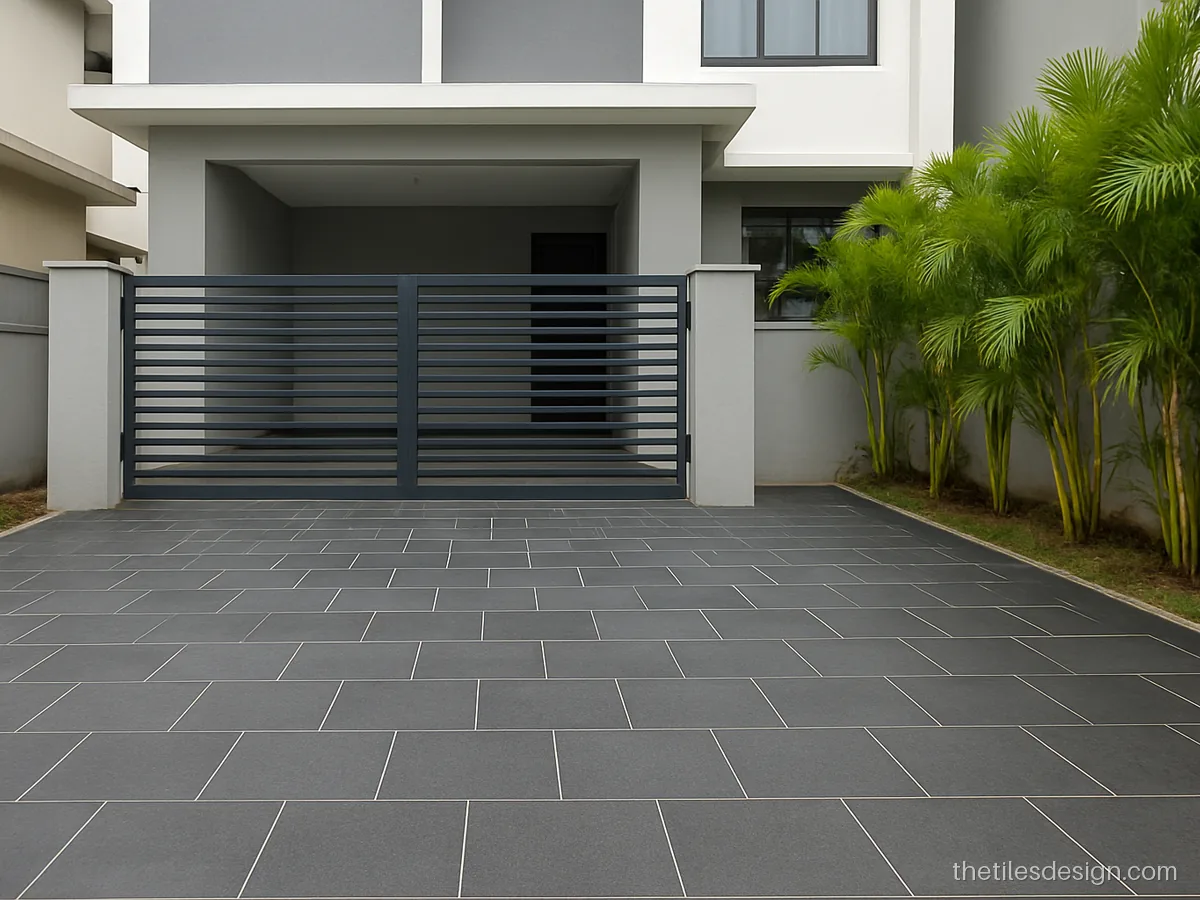
- Size
- 300 x 600 mm, 20 mm
- Finish
- Sandblast matt
- Best for
- Two car parking
Full body vitrified tiles have the colour right through, so a chip from a dropped jack does not show a white spot. Charcoal suits a modern grey house front.
Fitter's tip: Back butter each tile with adhesive so no hollow spot is left under the wheel path.
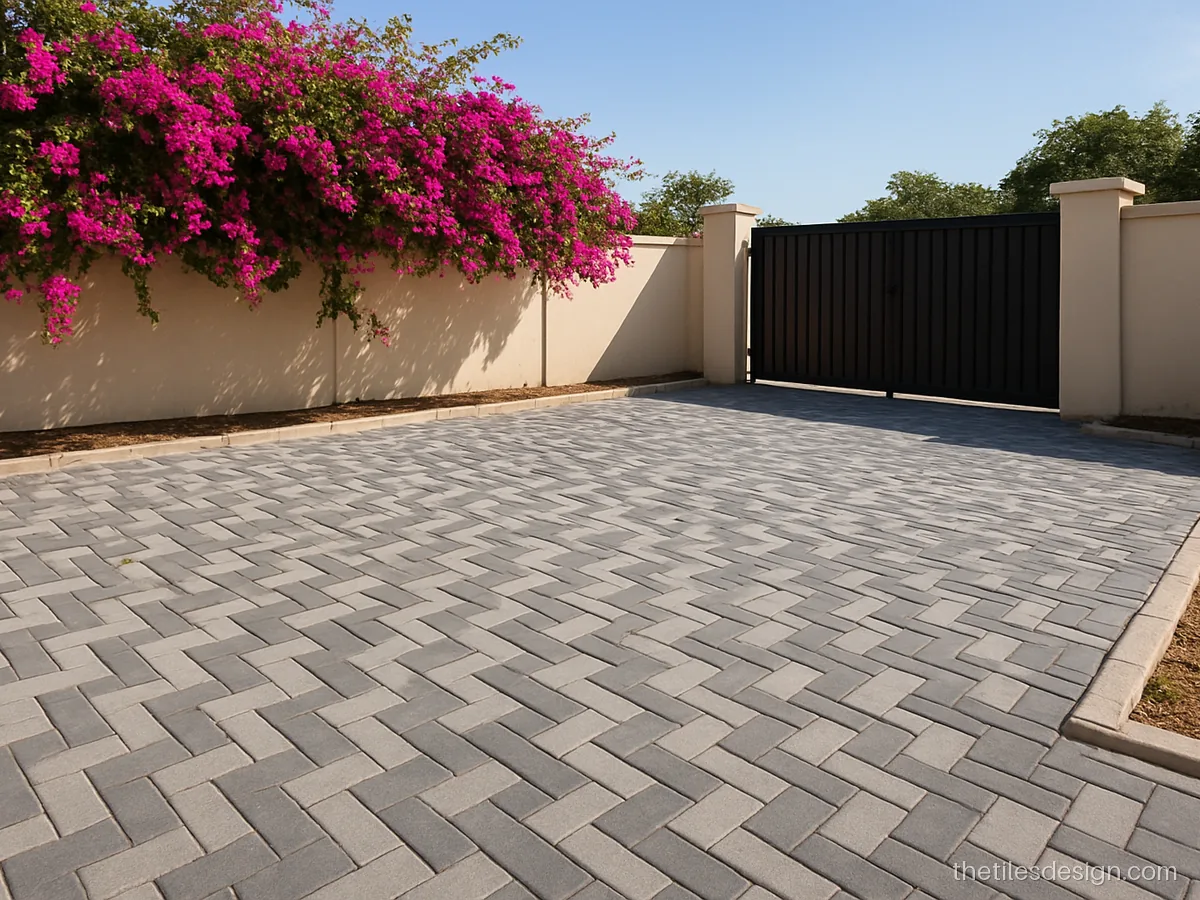
- Size
- 80 mm thick pavers
- Finish
- Rough concrete
- Best for
- Large plots
Interlocking pavers lock into each other and spread the car load. If one breaks you can lift and swap it, and rain water seeps away through the joints.
Fitter's tip: Compact the sand bed with a plate machine, sweep fine sand into the joints, then compact once more.
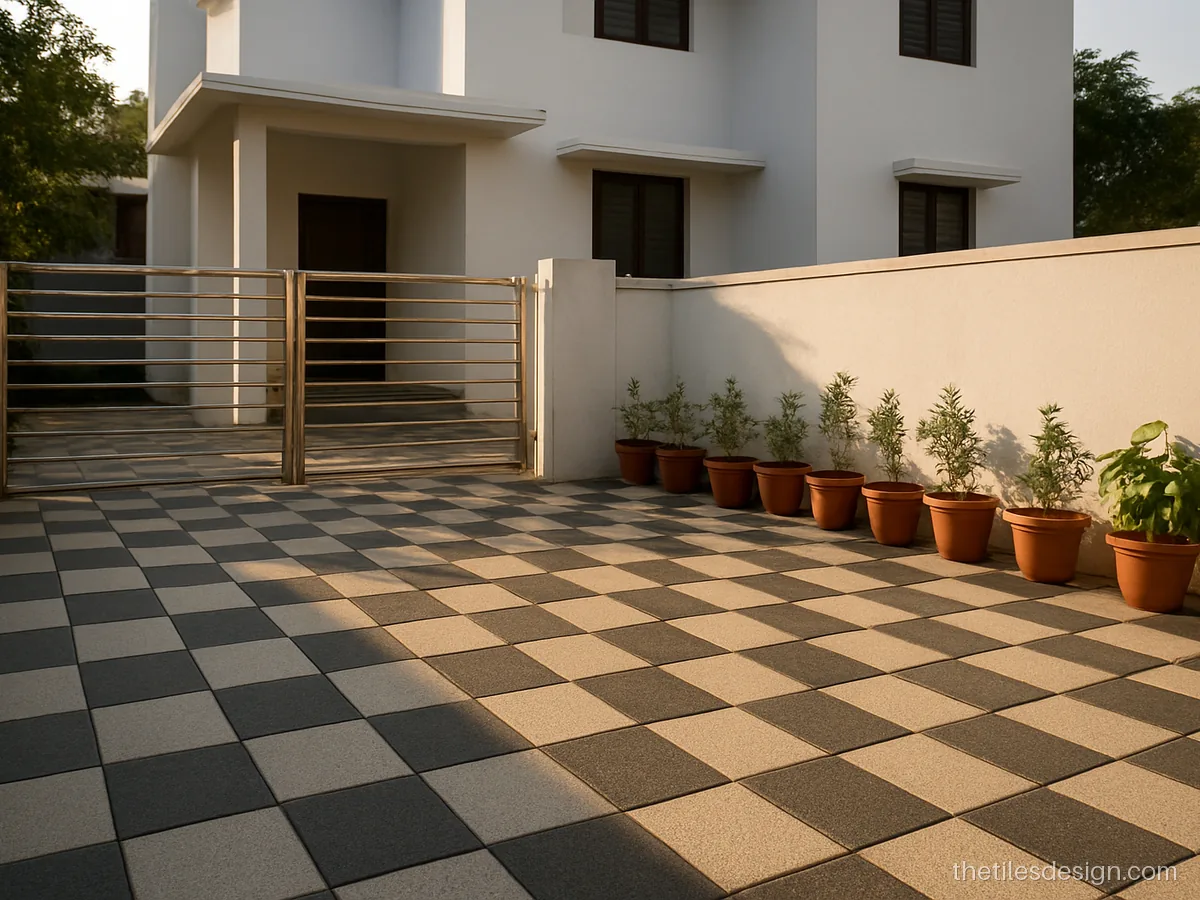
- Size
- 300 x 300 mm, 15 mm
- Finish
- Anti-skid matt
- Best for
- Wide car parking
A two colour checker hides wear and makes a wide parking look less plain. Keep the light colour a warm off-white so tyre marks do not stand out.
Fitter's tip: Snap chalk lines from the centre and lay both colours together so the checks stay square.
Porch Tiles Design for Car Porch and Walls
The car porch is the covered space under the slab near the entrance. Porch floor tiles can be a shade lighter since less rain falls there, and porch wall tiles can pick up the same tone.
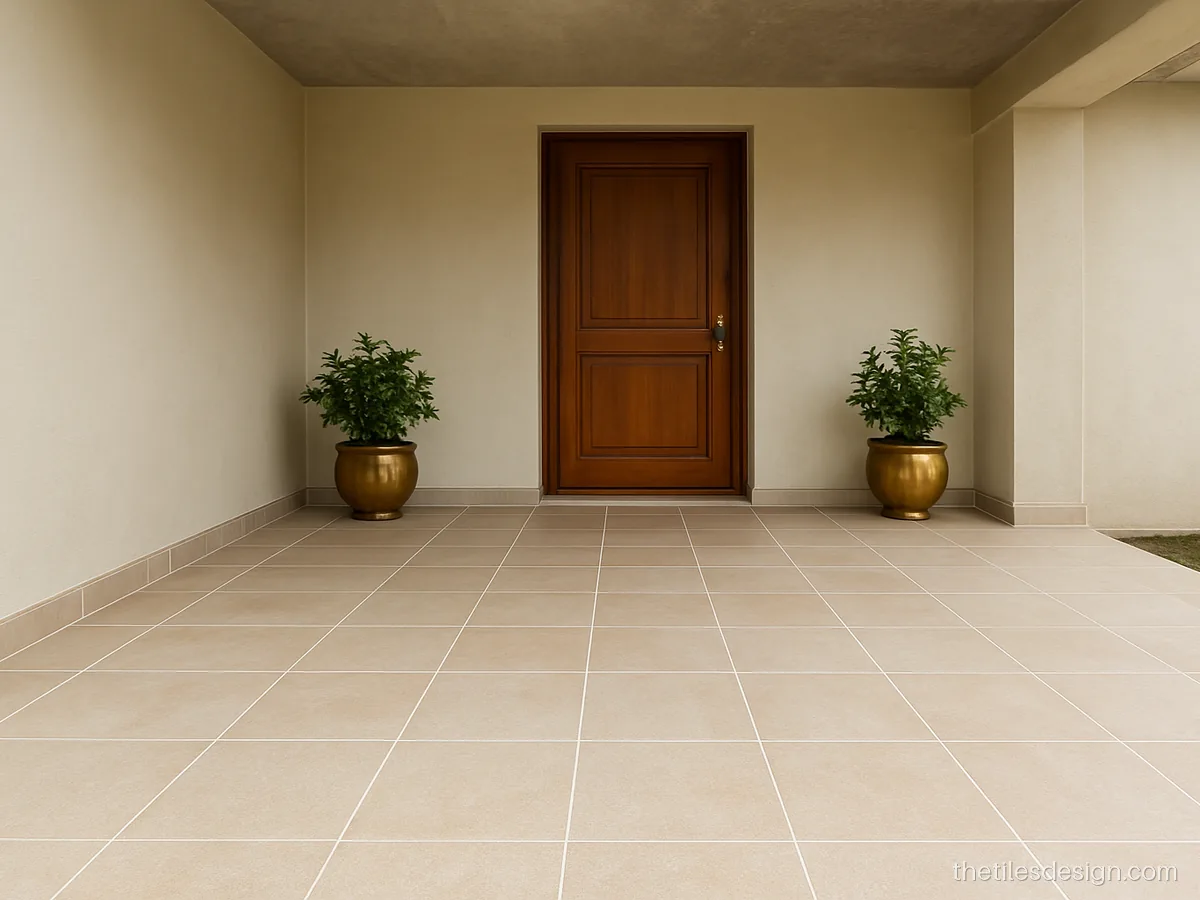
- Size
- 600 x 600 mm (2 x 2 ft)
- Finish
- Structured matt
- Best for
- Covered car porch
Under a covered porch a lighter stone look tile does not show dirt so quickly. The pale floor also bounces light into a dark porch.
Fitter's tip: Give the porch floor a slight fall towards the gate so wash water never runs into the house.
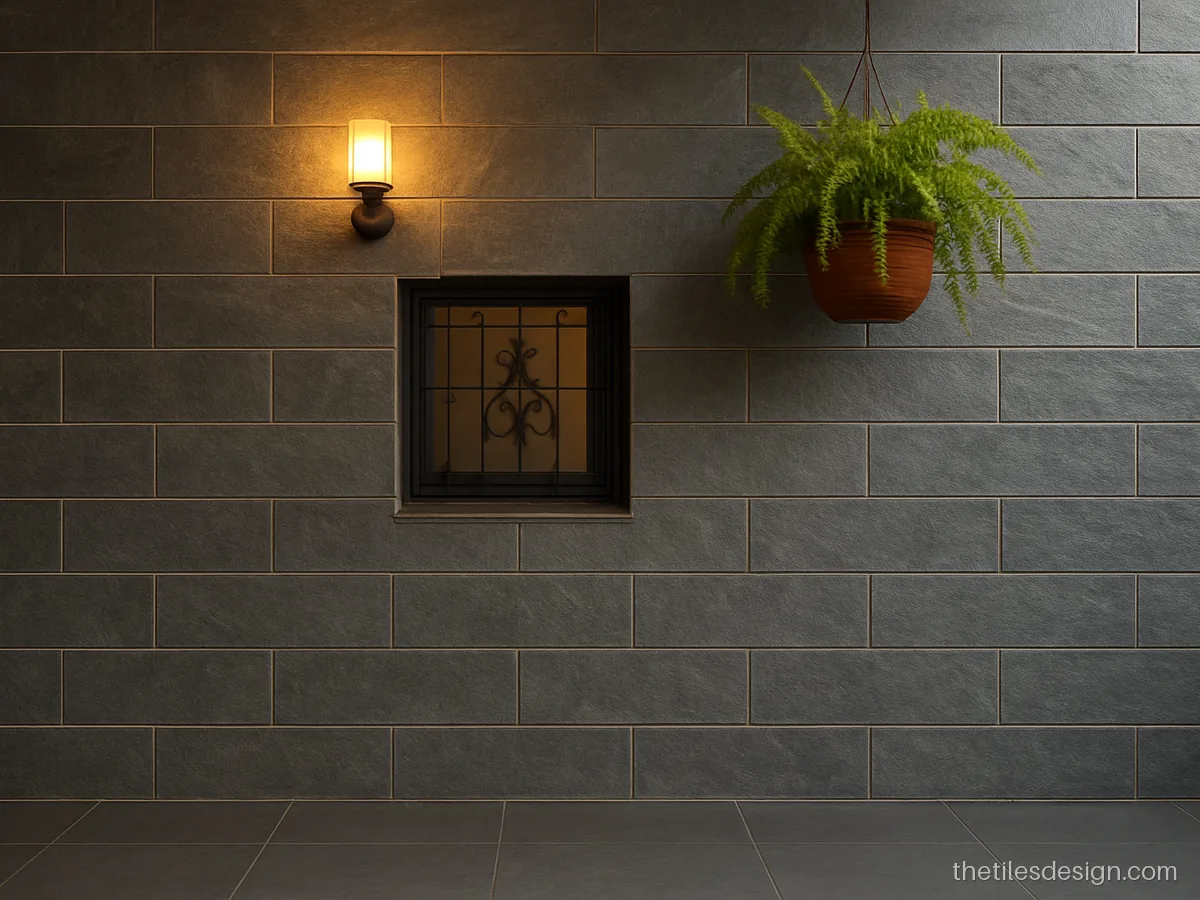
- Size
- 300 x 600 mm
- Finish
- Textured matt
- Best for
- Porch side walls
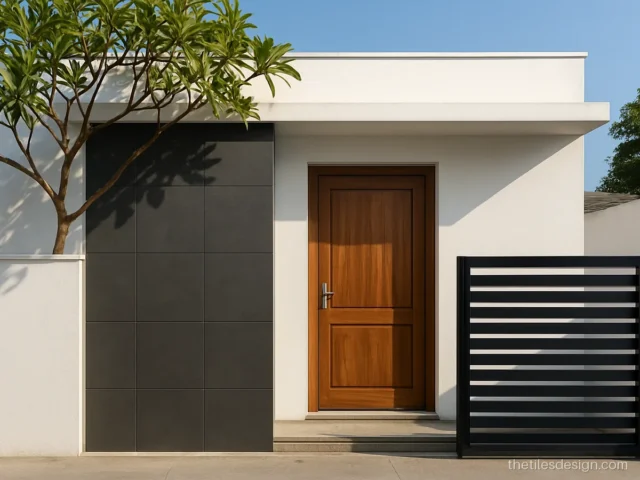
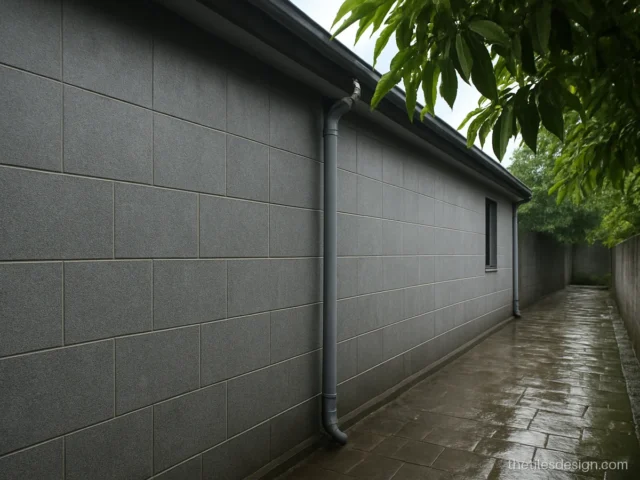
Porch wall tiles take splashes from tyres and hose pipes. A grey slate look band up to about 1.2 m hides mud splash far better than painted plaster.
Fitter's tip: Fix wall cladding with polymer adhesive, not plain cement, starting from a level batten at the bottom.
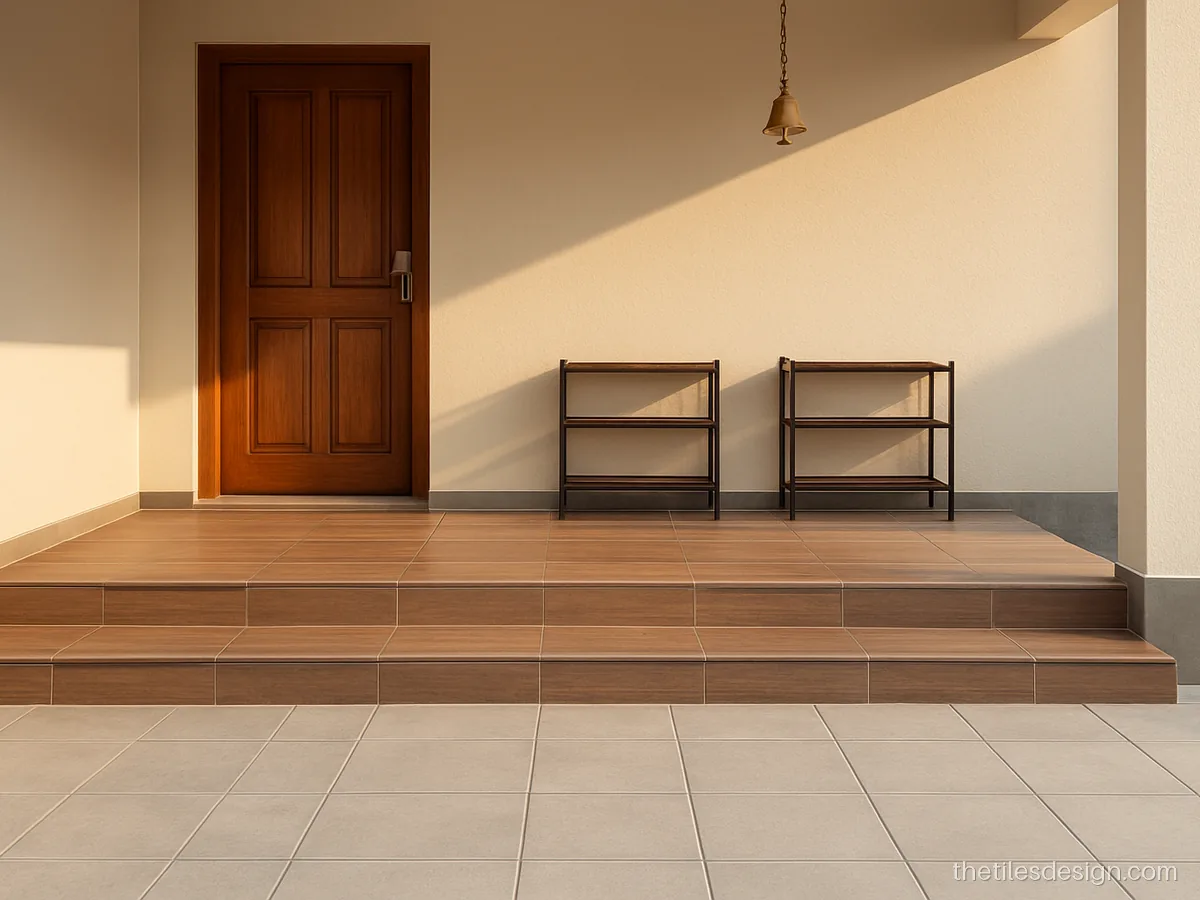
- Size
- 200 x 1200 mm planks
- Finish
- Anti-skid wood grain
- Best for
- Porch entry steps
A warm wood look band on the porch steps marks the change from parking to entrance. Keep step tiles anti-skid, as shoes are often wet in the rains.
Fitter's tip: Use a step tile with a grooved front edge so the nosing does not chip when bags are dragged up.
Latest Parking Tiles Design With Patterns
Parking tiles new design ideas right now use simple patterns built from two or three plain colours. Patterns add labour and cutting, but they hide stains well.
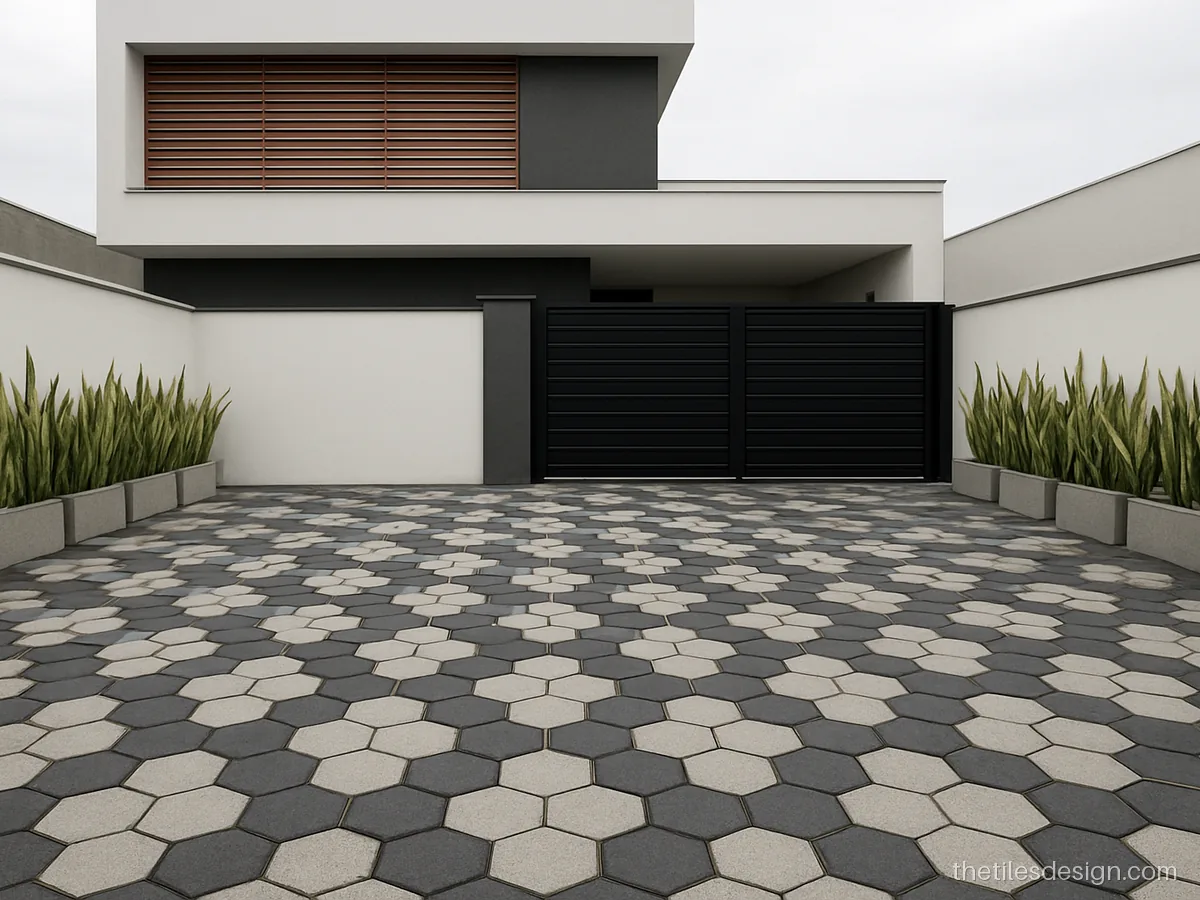
- Size
- 250 mm hexagon, 20 mm
- Finish
- Matt
- Best for
- Modern house fronts
Hexagons look modern and the extra joints give tyres more grip. Mixing two greys at random hides oil drips and water marks.
Fitter's tip: Leave half hexagons for the edges and cut them on a wet saw, not with a hand grinder.
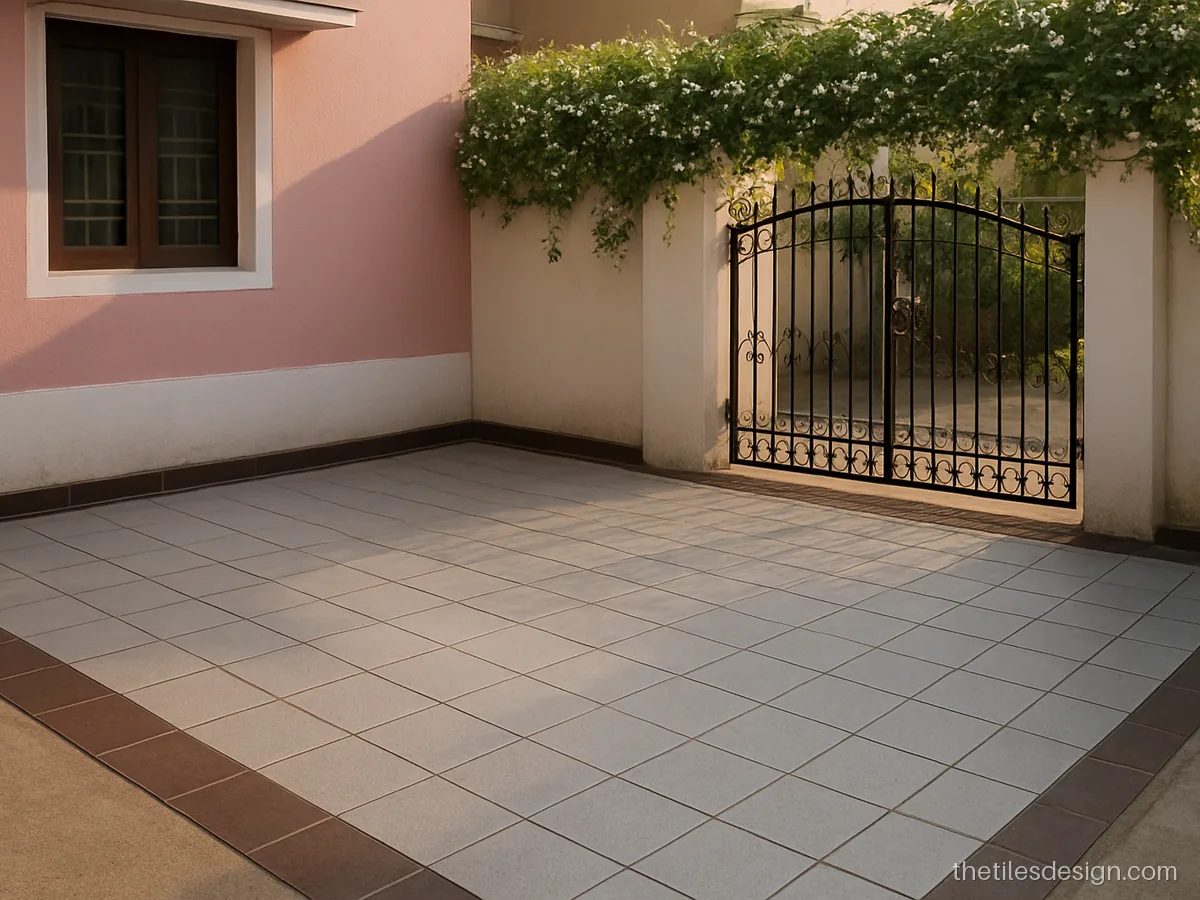
- Size
- 300 x 300 mm + border
- Finish
- Matt, anti-skid
- Best for
- Square parking areas
A dark border around the parking frames it like a rug. It also hides the uneven cuts near walls and the gate track.
Fitter's tip: Fix the border first, then fill the centre so all cut pieces end up at the inside edge.
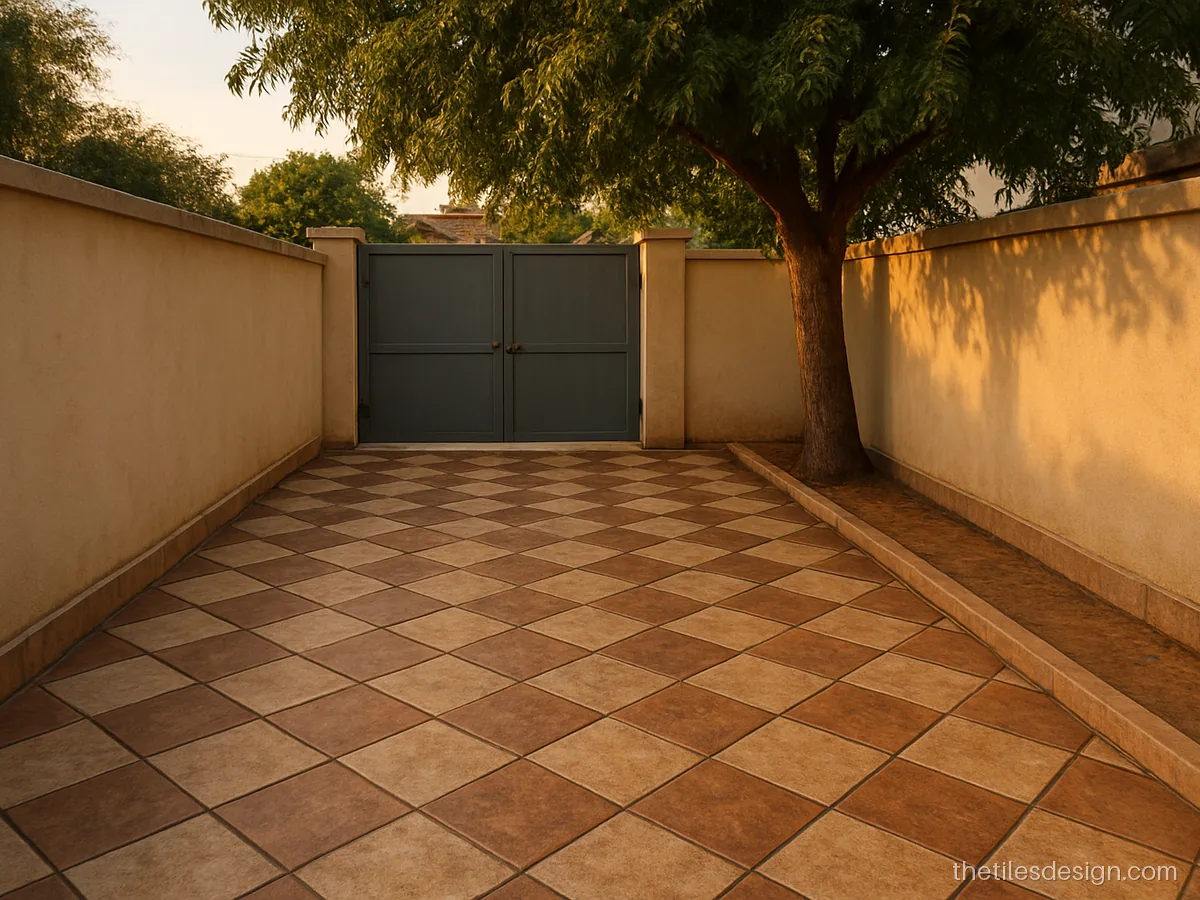
- Size
- 300 x 300 mm, 16 mm
- Finish
- Rustic matt
- Best for
- Short, deep parking
A diagonal layout makes a short parking look longer from the gate. It needs more cutting, so plan for extra boxes.
Fitter's tip: Buy about 15 percent extra for diagonal laying, since nearly every edge tile gets cut.
Granite Parking Flooring Designs and Stone
Granite and natural stone are the toughest option for parking. A flamed or leather finish stays grippy, and stone does not fade in the sun. See more stone ideas on our granite and stone flooring page.
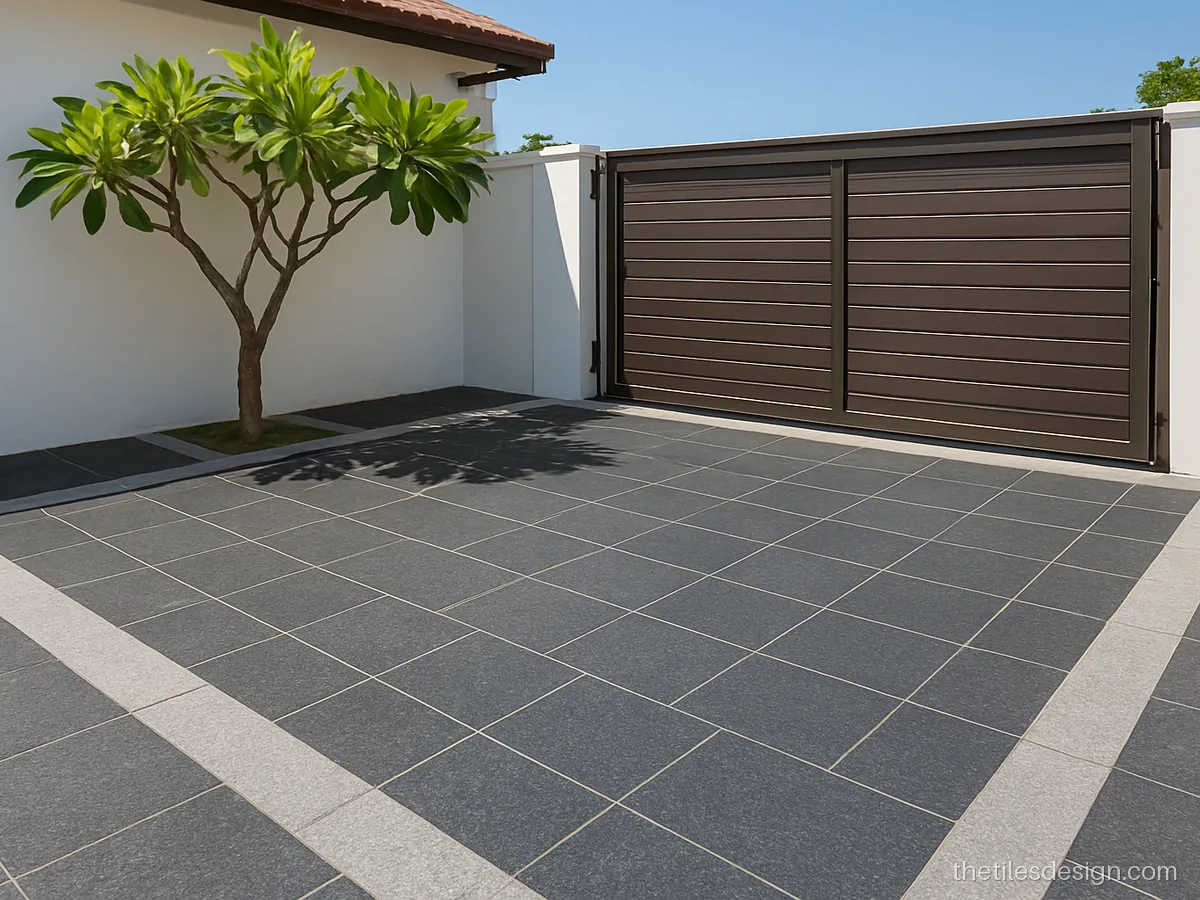
- Size
- 600 x 600 mm, 20 mm
- Finish
- Flamed granite
- Best for
- Heavy cars, SUVs
Flamed black granite has a rough, sparkly face that grips well when wet. It handles heavy cars for decades without fading.
Fitter's tip: Never use polished granite outdoors; ask for flamed or leather finish, which stays safe in rain.
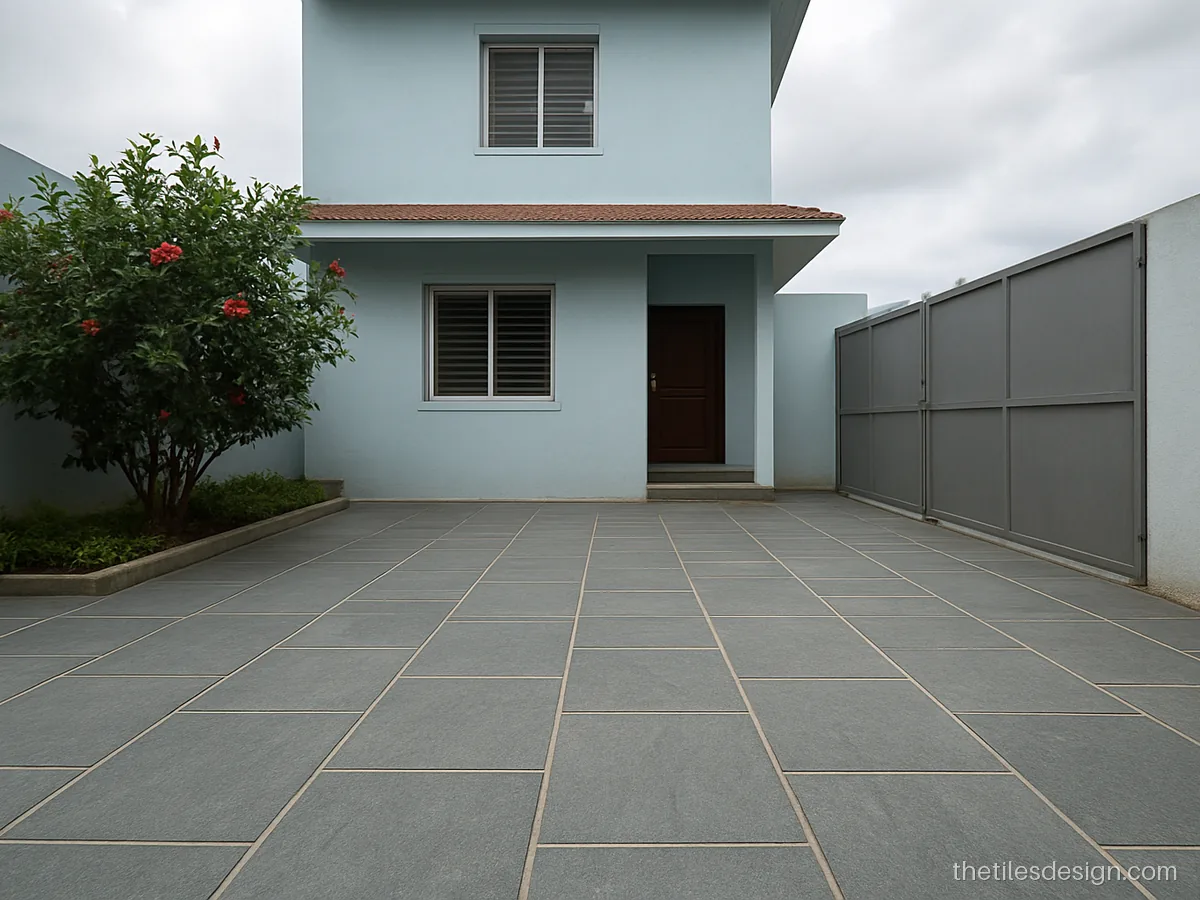
- Size
- 600 x 600 mm, 25 mm
- Finish
- Rough sawn
- Best for
- Hot, sunny plots
Kota stone is a hard, low cost natural stone that stays cool in summer. The rough sawn finish is safe for a sloped parking.
Fitter's tip: Lay Kota on a thick mortar bed and leave it unpolished outside; polish only makes it slippery.
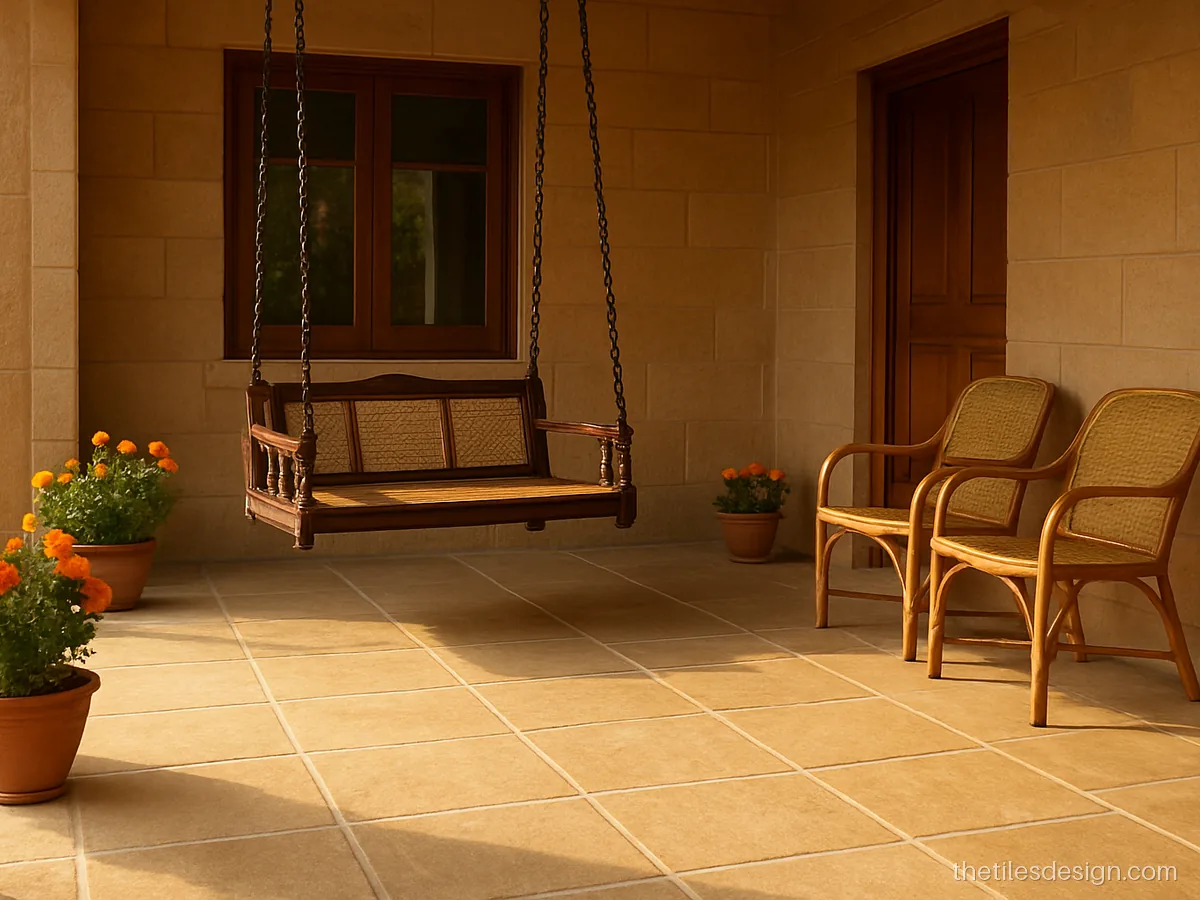
- Size
- 600 x 600 mm, 30 mm
- Finish
- Natural cleft
- Best for
- Porch and sit-out
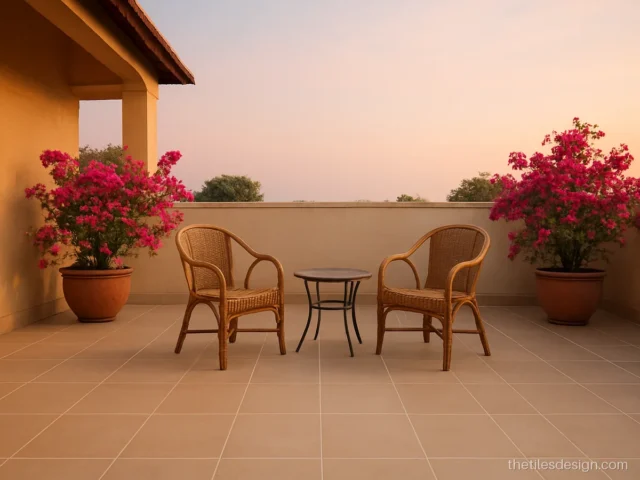
Dholpuri sandstone gives a soft beige porch floor that stays cool to bare feet. It suits porches more than open parking, since it is softer than granite.
Fitter's tip: Seal sandstone twice after laying, as it soaks up oil and tea stains quickly.
Parking and Gate Entrance Together
When the parking runs straight from the gate, plan the floor and the gate area as one design. These driveway tiles carry the same look from the road edge to the porch.
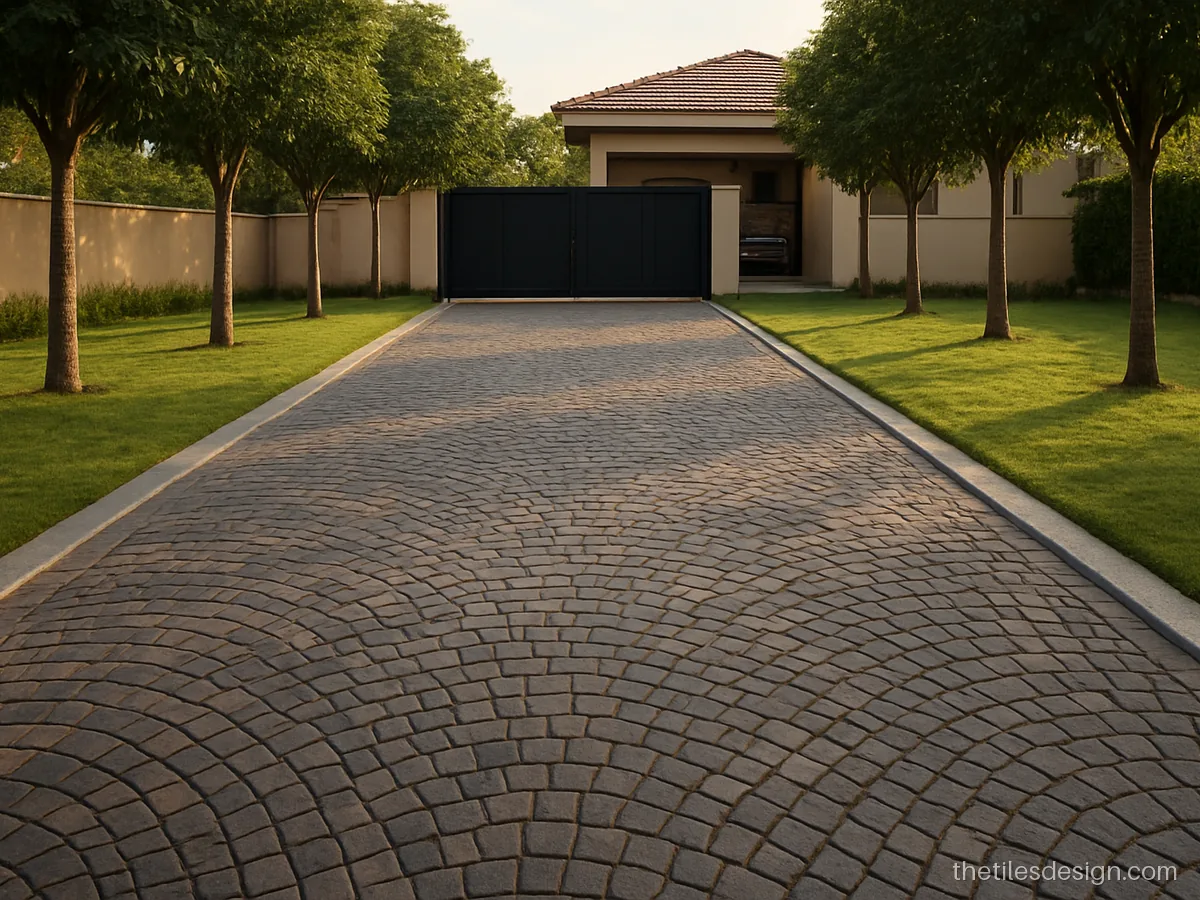
- Size
- Cobble 100 x 200 mm
- Finish
- Rough tumbled
- Best for
- Long driveways
A cobble look runs the eye from the gate to the porch and hides dust between the stones. It suits long driveways on bigger plots.
Fitter's tip: Keep a kerb or edge strip on both sides so the cobbles do not shift outwards over time.
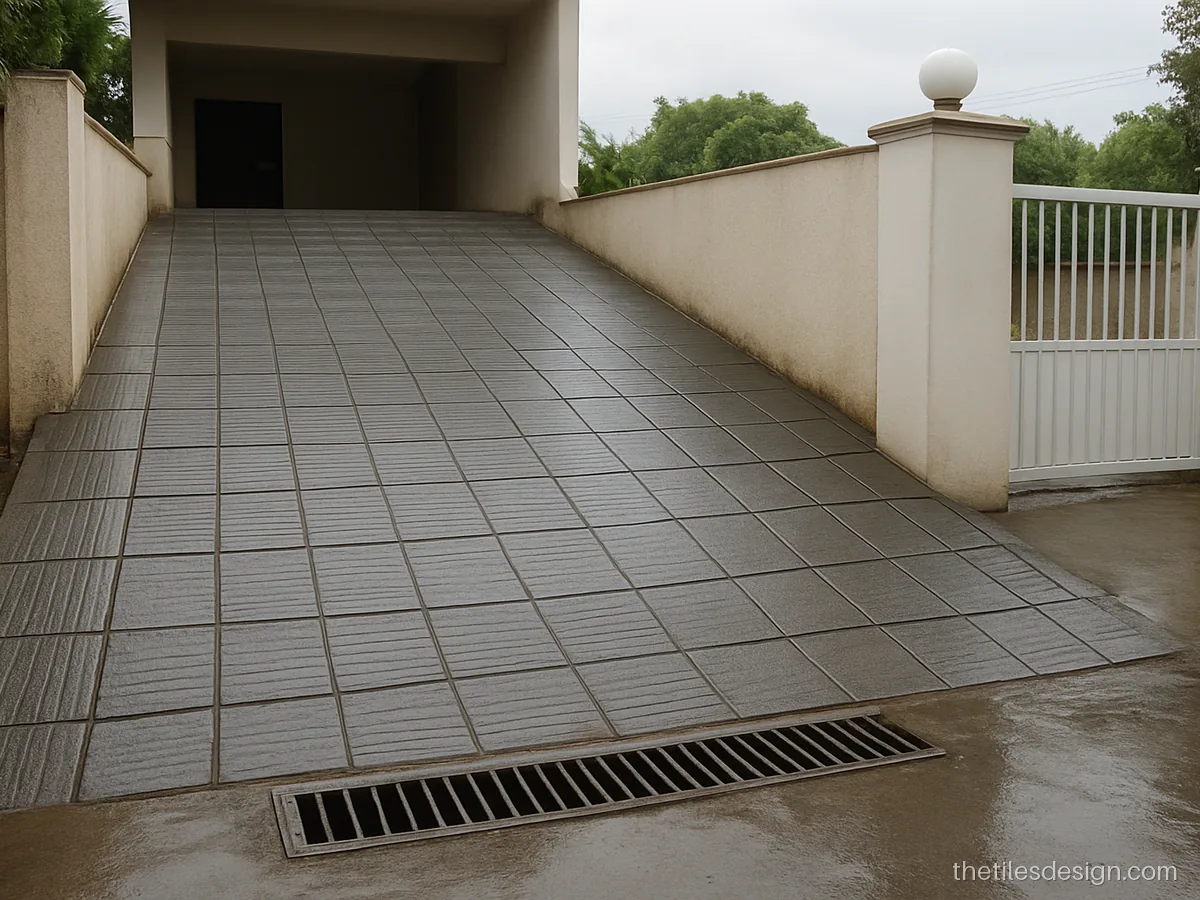
- Size
- 300 x 300 mm, 20 mm
- Finish
- Grooved anti-skid
- Best for
- Ramps and slopes
Most Indian homes have a ramp from road to plinth level. Grooved anti-skid tiles stop tyres slipping on this slope in the monsoon.
Fitter's tip: Run the grooves across the slope, not along it, so water drains off and tyres grip.
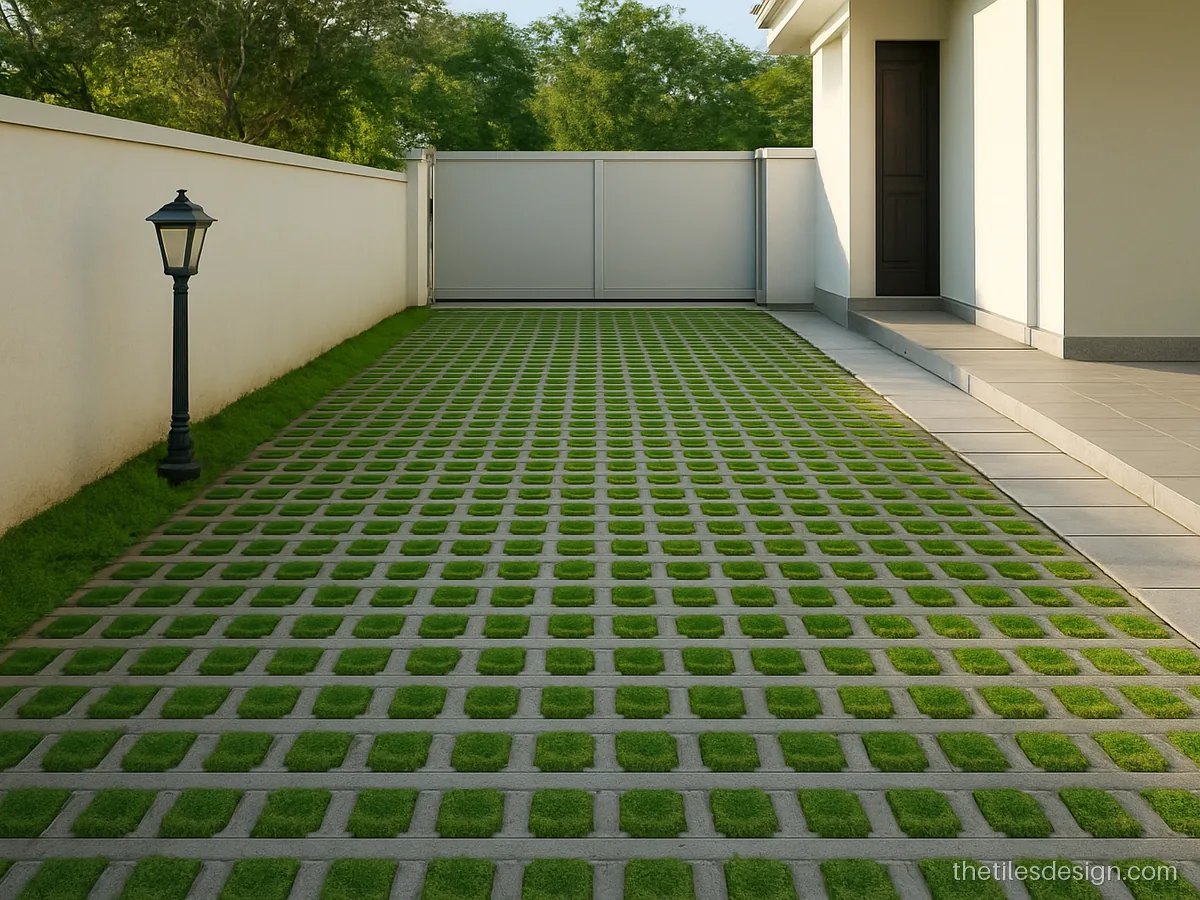
- Size
- 400 x 400 mm, 80 mm
- Finish
- Open grid concrete
- Best for
- Occasional parking
Grass pavers let rain soak into the ground and keep the parking cooler. They suit a second parking spot used only now and then.
Fitter's tip: Fill the holes with soil and lawn grass, and water daily for the first month so roots take hold.
How to Choose Tiles for Parking Area
Start with load, then grip, then looks. A small hatchback and a heavy SUV both need strong tiles, but the SUV needs thicker ones.
- Thickness: pick 15 to 25 mm heavy duty tiles, or 60 to 80 mm pavers. Normal 8 to 10 mm floor tiles crack under turning tyres.
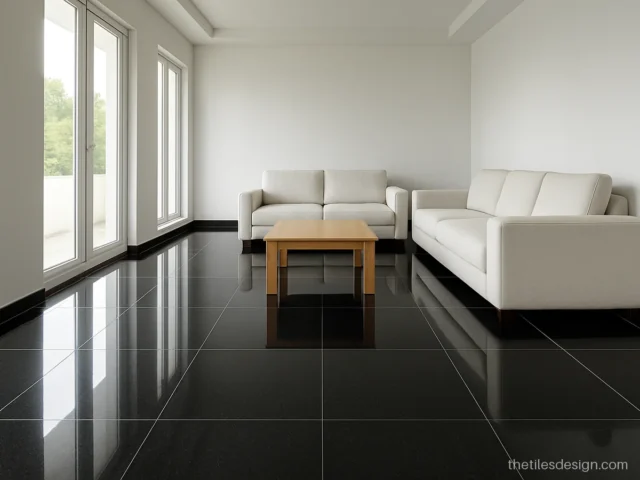
- Finish: matt, anti-skid, rustic or grooved. Never glossy or polished outside.
- Colour: mid grey, beige, brown and charcoal hide tyre marks. Pure white and pure black both show dirt.
- Sun: full body vitrified, granite and good concrete tiles do not fade. Cheap printed tiles may lose colour in a few summers.
- Budget: cost goes up with thickness, full body colour, natural stone and pattern labour.
If you want to match the parking with the house front, browse tiles colour ideas before you pick shades.
Parking Floor Tiles: Sizes and Finishes
| Type | Common size | Finish | Best use |
|---|---|---|---|
| Heavy duty vitrified | 300 x 300 mm, 15 to 20 mm | Matt or anti-skid | Most home parking |
| Cement or concrete tile | 400 x 400 mm (16 x 16 in) | Textured | Budget parking |
| Interlocking pavers | 60 to 80 mm thick | Rough | Driveways, big plots |
| Granite | 600 x 600 mm, 20 mm | Flamed or leather | Heavy cars |
| Kota or sandstone | 600 x 600 mm, 25 to 30 mm | Rough sawn or cleft | Porch, light traffic |
For more on thickness and sizes across the house, read our tile size guide.
Fitting and Care for Outdoor Parking Tiles
Most parking tile failures come from a weak base, not a weak tile. Ask your contractor for a 100 to 150 mm PCC concrete bed on compacted soil before tiling.
- Give the whole parking a gentle fall of about 1 in 100 towards a drain or the gate.
- Keep 3 to 5 mm joints outside, as tiles expand in the hot sun.
- Use dark grey or sand coloured grout. White grout turns black within a month.
- Keep the tiles off car load for at least 7 days so the mortar sets fully.
- Wash with plain water and a hard broom. For oil spots, use dish soap and warm water quickly, before the oil soaks in.
Tile questions people ask
Which tiles are best for car parking?
Heavy duty vitrified tiles 15 to 20 mm thick, concrete pavers and flamed granite are the best for car parking. All three take the load of tyres and stay grippy when wet. Choose a matt or anti-skid surface in a mid tone colour.
What size of parking tiles is best for a house?
Smaller tiles such as 300 x 300 mm or 400 x 400 mm handle load better than big ones, because each tile carries less bending. Large 600 x 600 mm sizes work only when they are thick and laid on a firm concrete bed.
Can I use normal vitrified floor tiles for parking?
No. Normal indoor vitrified tiles are 8 to 10 mm thick and crack under car tyres, especially where the car turns. Ask for vitrified parking tiles made as heavy duty tiles, which are much thicker.
Granite or tiles: which is better for parking floor?
Flamed granite lasts longer and never fades, but it costs more and needs skilled laying. Heavy duty tiles are cheaper and come in more colours and patterns. For heavy SUVs and a long life, granite is the safer pick.
How do I stop parking tiles from becoming slippery in the rain?
Use a matt, rustic, grooved or anti-skid finish and avoid glossy tiles outside. Give the floor a slope so water does not stand. Scrub off moss and algae from shaded corners every few months during the monsoon.
Which porch tiles design suits an Indian house?
A stone look or wood look matt tile works well in a covered porch, with slate or stone look porch wall tiles to hide splashes. Keep the porch colour close to the parking floor so the two spaces look connected.