Pooja Room Tiles Design Ideas for Mandir Walls and Floors
15 designs Tiles by room Updated 8 Oct 2026
A good pooja room tiles design keeps the mandir bright, calm and easy to clean. Pooja tiles face oil smoke from diyas, agarbatti ash, kumkum and water, so a glazed surface that wipes clean matters more than fancy detail.
Below are pooja room wall tiles, mandir floor and step tiles, marble look corners, 3D pattern tiles and small niche ideas. We show patterns like lotus, mandala, jaali and diya shapes with plain wooden or marble mandir units, so you can place your own idols and photos on the shelf.
Doing the rooms around the mandir too? See bedroom tiles design and hall tiles design so the floors match at the door.
Pooja Room Wall Tiles Design
Pooja room wall tiles take soot from diyas and agarbatti, so pick a glazed face that wipes clean. Soft colours like cream, ivory, light gold and pale peach keep the space calm.

- Size
- 300 x 600 mm
- Finish
- Satin glaze
- Best for
- Mandir back walls
Cream tiles with a thin gold lotus outline make a calm backdrop for a wooden mandir unit. The glazed face wipes clean of diya soot.
Fitter's tip: Centre the lotus pattern on the mandir and check it with a plumb line before fixing.
- Size
- 300 x 450 mm
- Finish
- Matt
- Best for
- Pooja corners
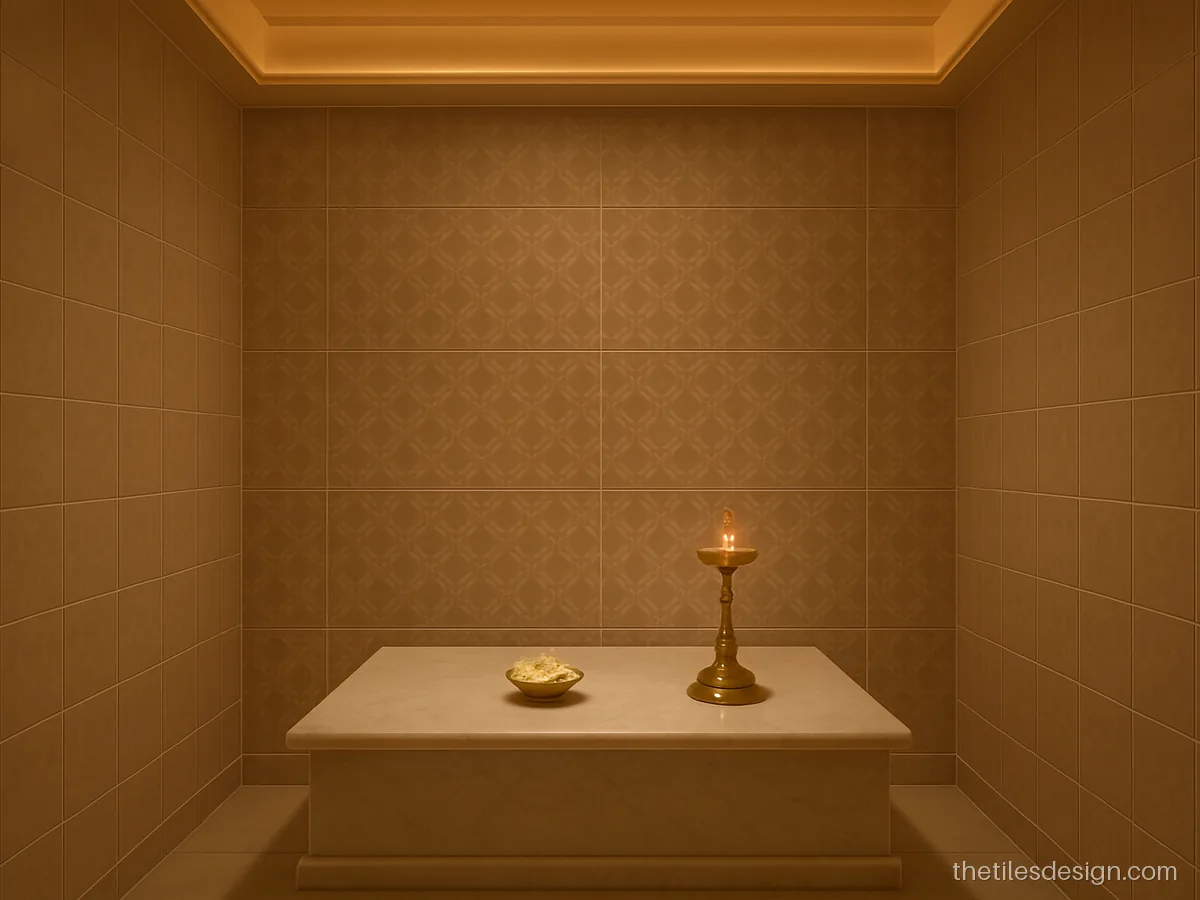
An ivory jaali pattern looks like carved stone without the cost of real carving. Warm cove light from the top brings out the fine lines.
Fitter's tip: Use ivory epoxy grout so oily soot can be wiped off the joints easily.
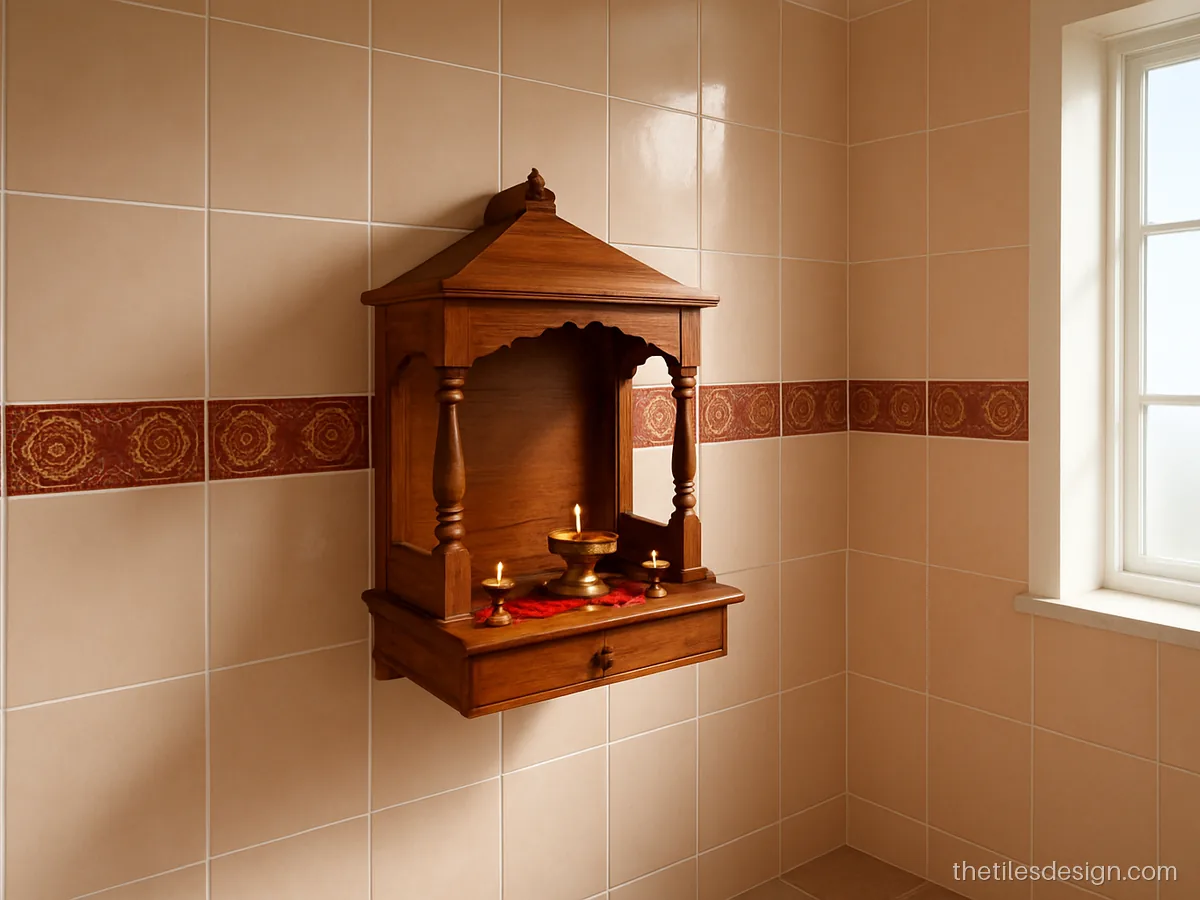
- Size
- 300 x 600 mm + border
- Finish
- Glossy
- Best for
- Apartment pooja rooms
Plain pale peach tiles with one mandala border band at eye level keep the wall simple. A good look for a puja room in an apartment.
Fitter's tip: Fix the border band first at eye level, then tile above and below it.
Mandir Floor and Step Tiles
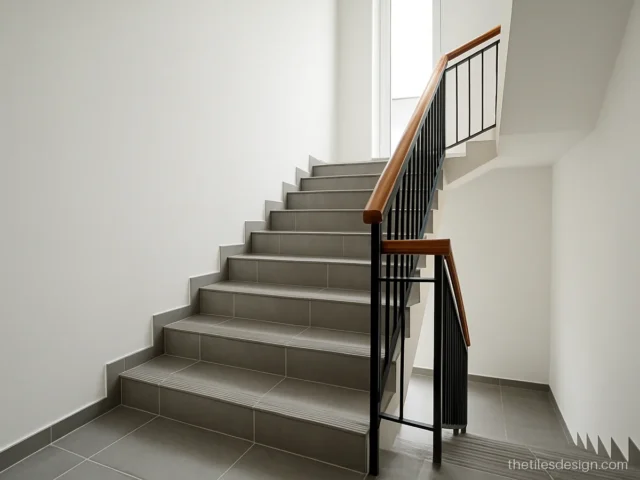
The mandir floor sees bare feet, water and oil drops, so choose a matt or satin tile that is not slippery. Many homes raise the mandir on one or two low steps. For more step ideas see stair tiles design.
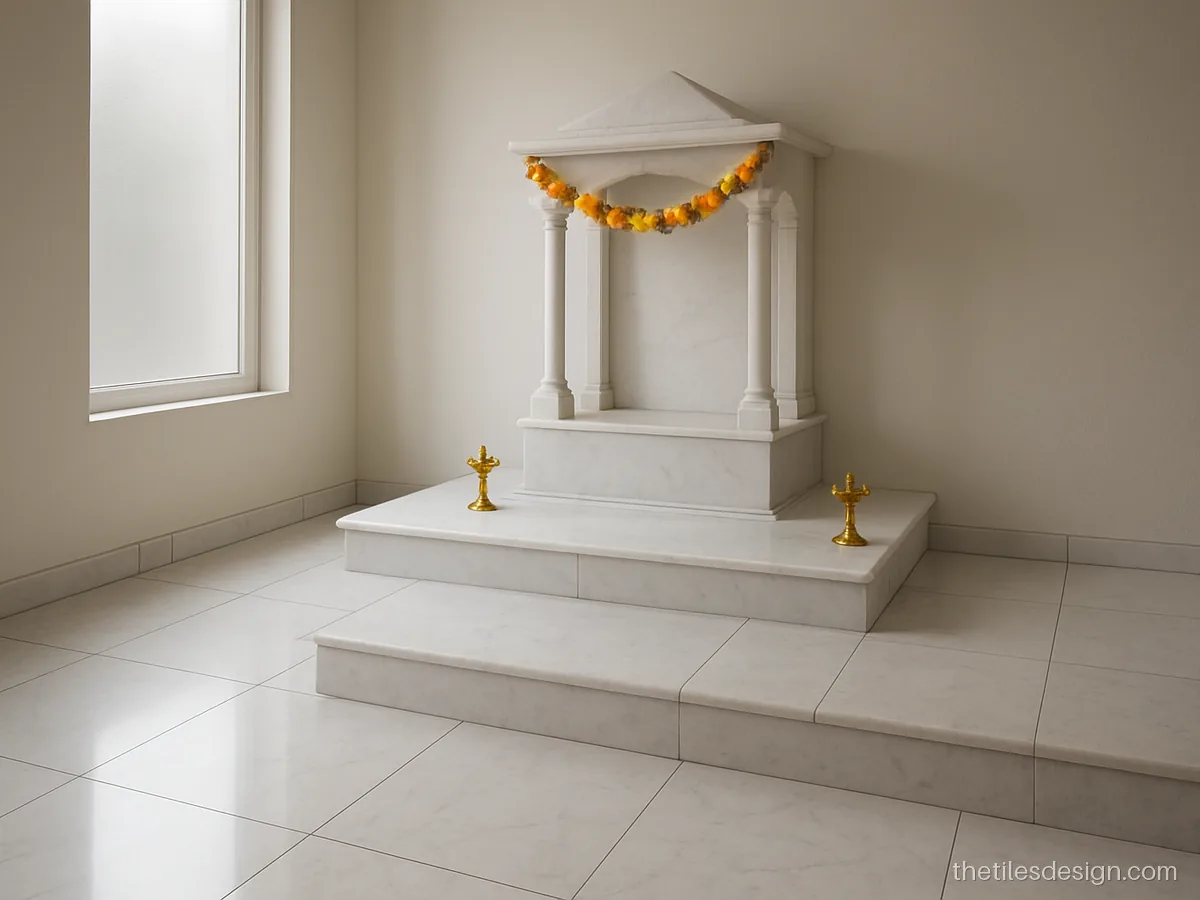
- Size
- 600 x 600 mm floor
- Finish
- Satin
- Best for
- Raised mandir platforms
White marble look tiles run from the floor up two low steps to the mandir platform. Rounded edge pieces on the steps feel smooth on bare feet.
Fitter's tip: Fit bullnose edge pieces on the step fronts and keep a slight slope towards the door.
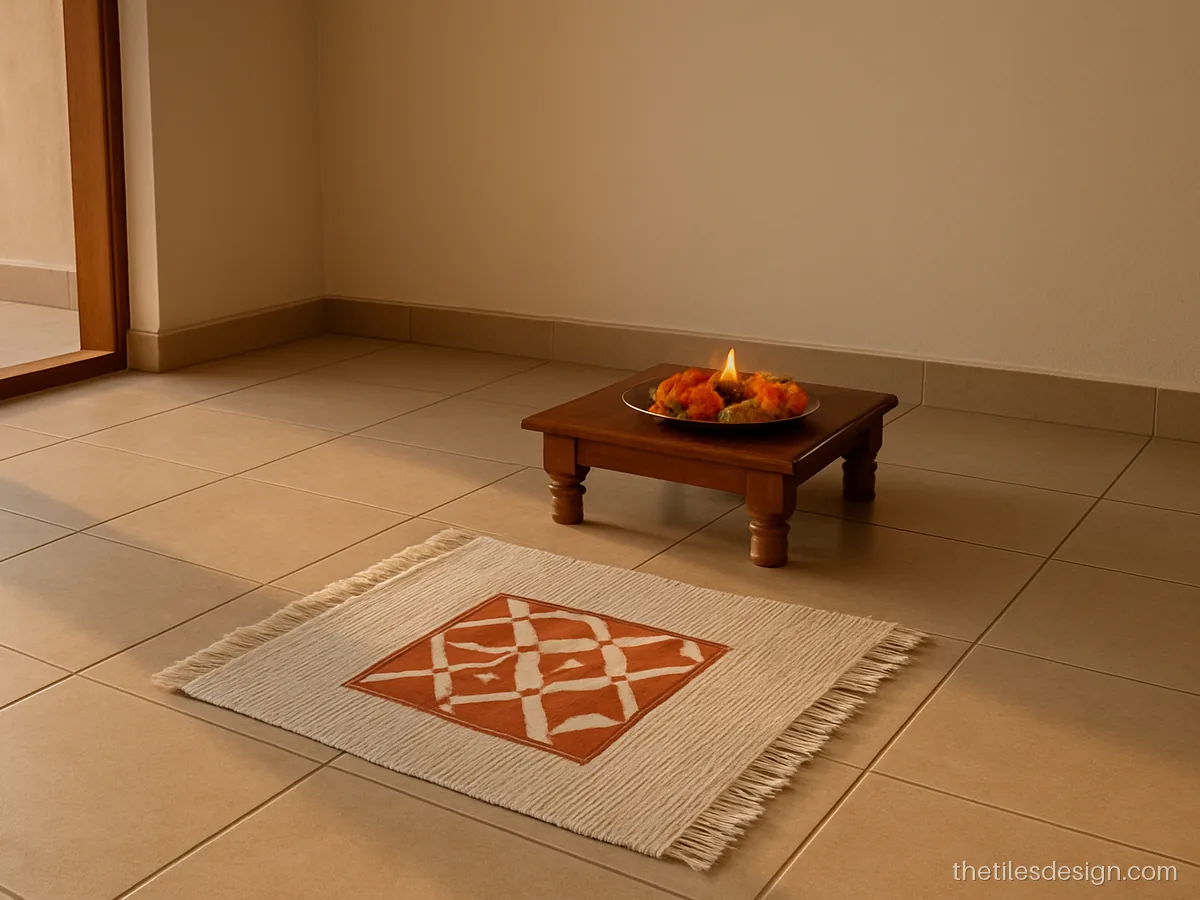
- Size
- 600 mm with 200 mm inlay
- Finish
- Matt
- Best for
- Floor puja spaces
Beige matt tiles with one patterned centre tile mark the spot for rangoli and the puja thali. Matt grip is safer when water spills.
Fitter's tip: Cut the inlay opening on a wet saw so the joints around it stay tight and even.
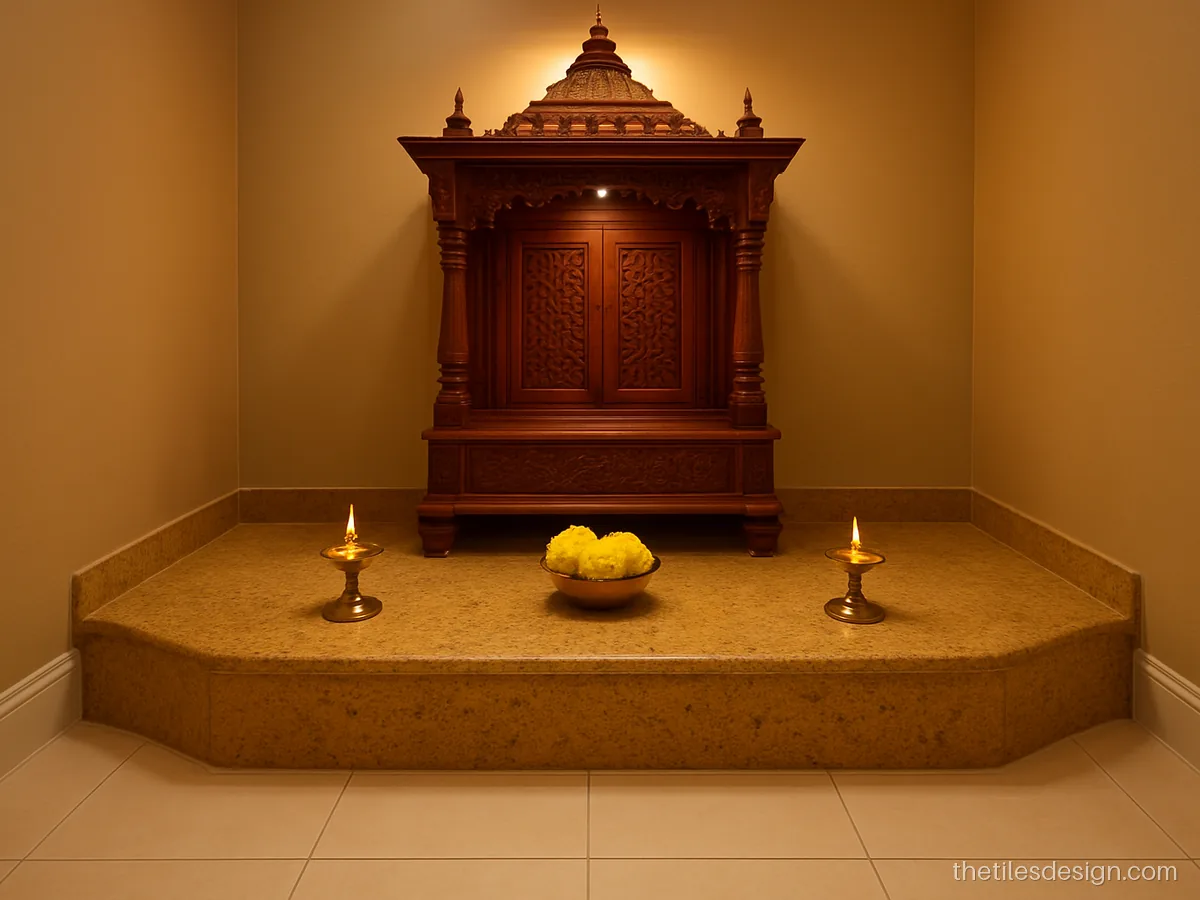
- Size
- 300 x 1200 mm treads
- Finish
- Polished edge
- Best for
- Mandir steps
Yellow granite look tiles on a raised mandir step hide oil marks and turmeric stains well. The speckles stop the step from looking dirty.
Fitter's tip: Seal joints with epoxy grout so turmeric and kumkum do not stain them.
Marble Look Pooja Room Tiles Design
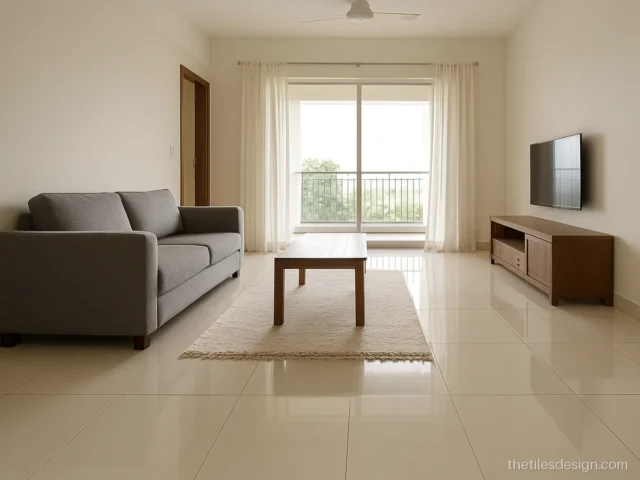
Marble is the classic stone for a home temple. Marble look tiles give the same white or cream look with fewer stains and no polishing. Compare real stone on our marble floor design page.
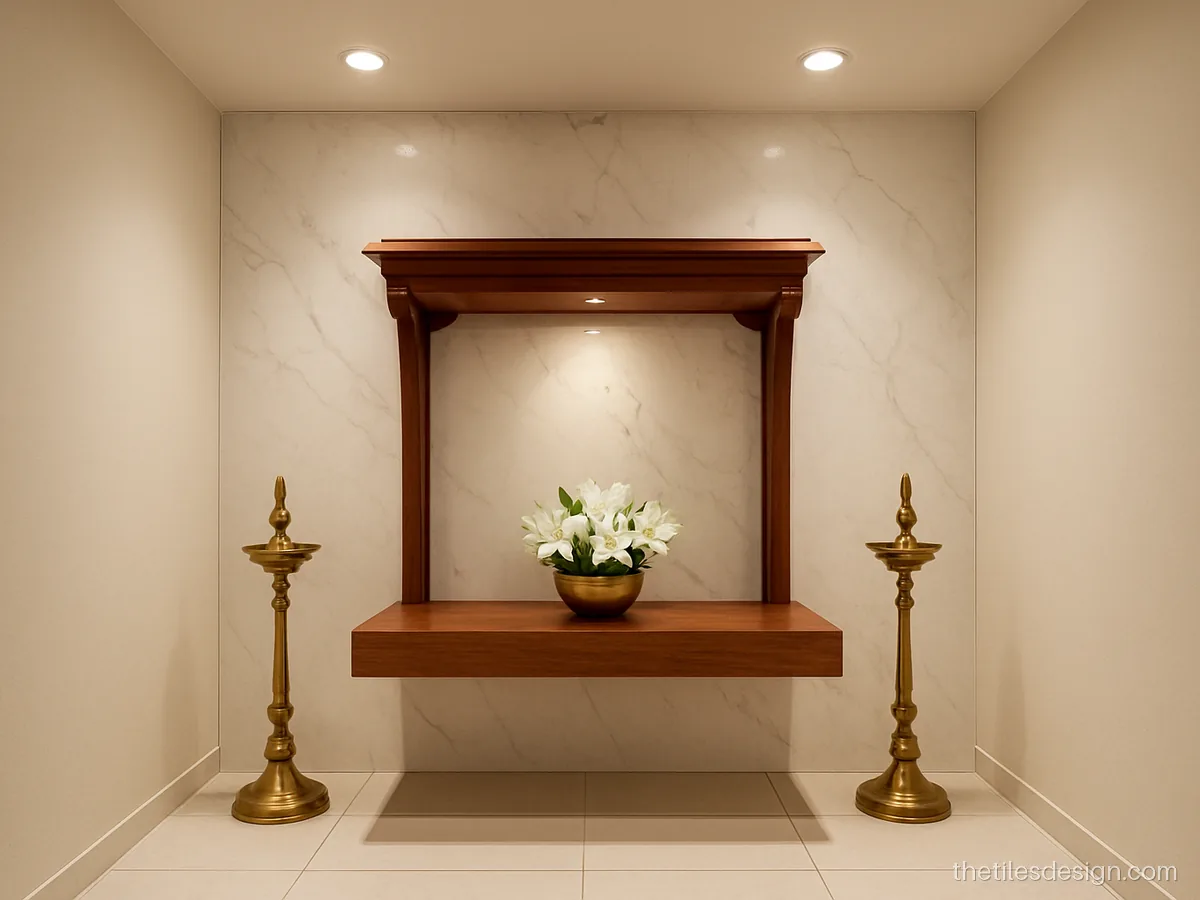
- Size
- 800 x 1600 mm slab
- Finish
- Polished
- Best for
- Modern pooja rooms
One large white slab with soft grey veins gives a clean back wall with almost no joints. Matched vein slabs look rich but cost more.
Fitter's tip: Fix slabs with tile adhesive and support clips, and check the wall is plumb first.
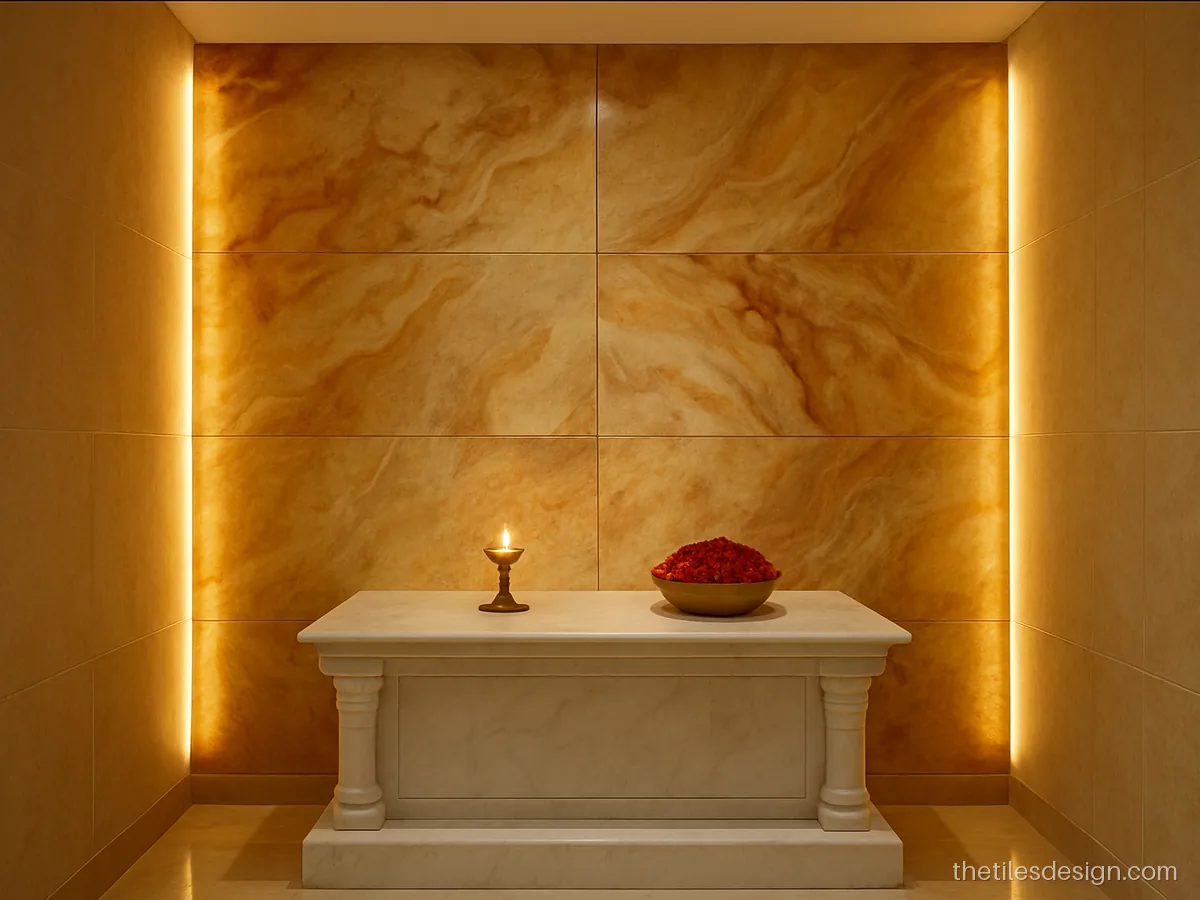
- Size
- 600 x 1200 mm
- Finish
- Glossy
- Best for
- Feature back walls
Honey onyx look tiles show a warm golden glow under soft light. Use them on the back wall only and keep the floor plain.
Fitter's tip: Lay all tiles on the floor in order first so the veins match across joints.
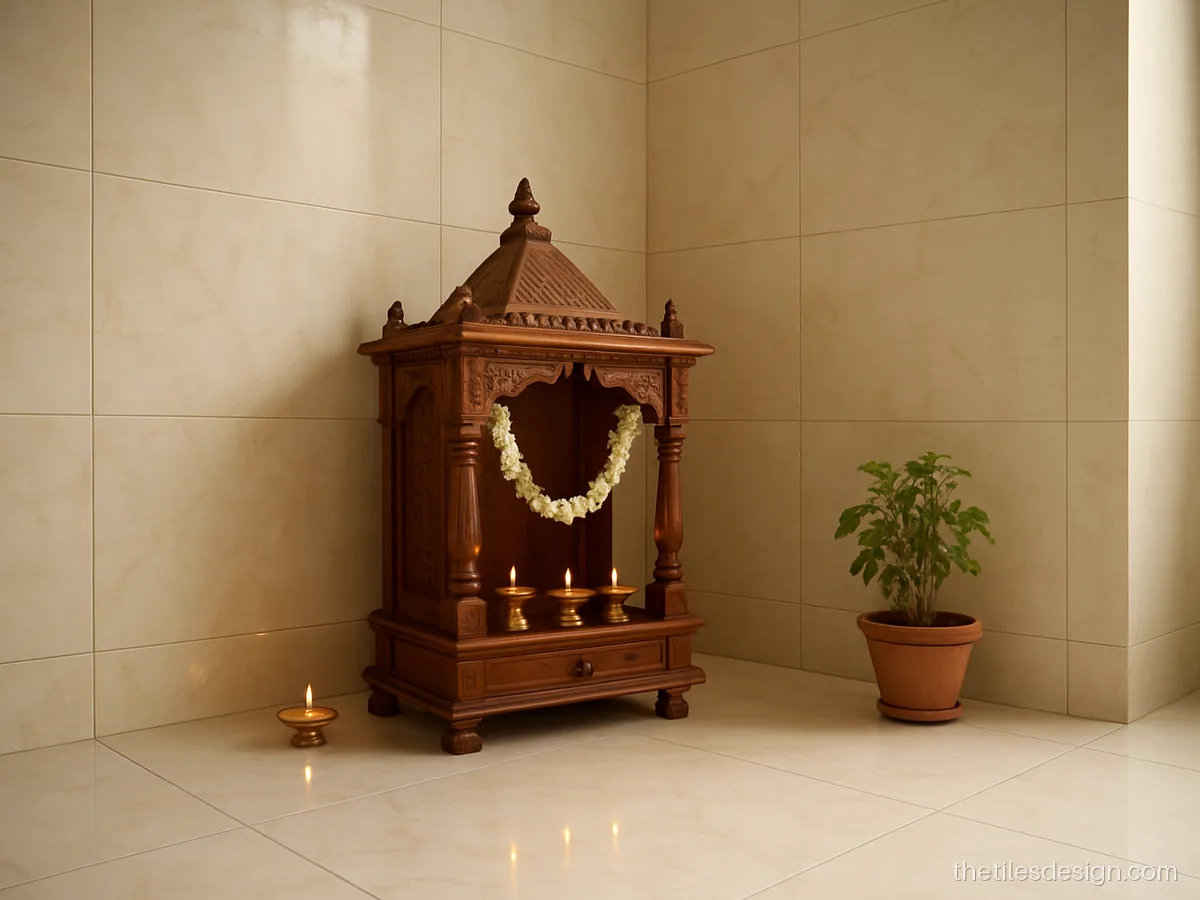
- Size
- 600 x 600 mm
- Finish
- Satin
- Best for
- Living room corners
In a living room corner, cream marble look tiles on both walls and the floor mark the pooja space without building a separate room.
Fitter's tip: Finish outer corners with a mitred joint or slim metal trim for a neat edge.
3D Tiles for Pooja Room and Carved Patterns
3D tiles for pooja room walls give a carved temple feel at a lower cost than stone carving. Choose pattern tiles such as lotus, mandala, jaali, bells or diya shapes. See more raised designs on 3D wall tiles.
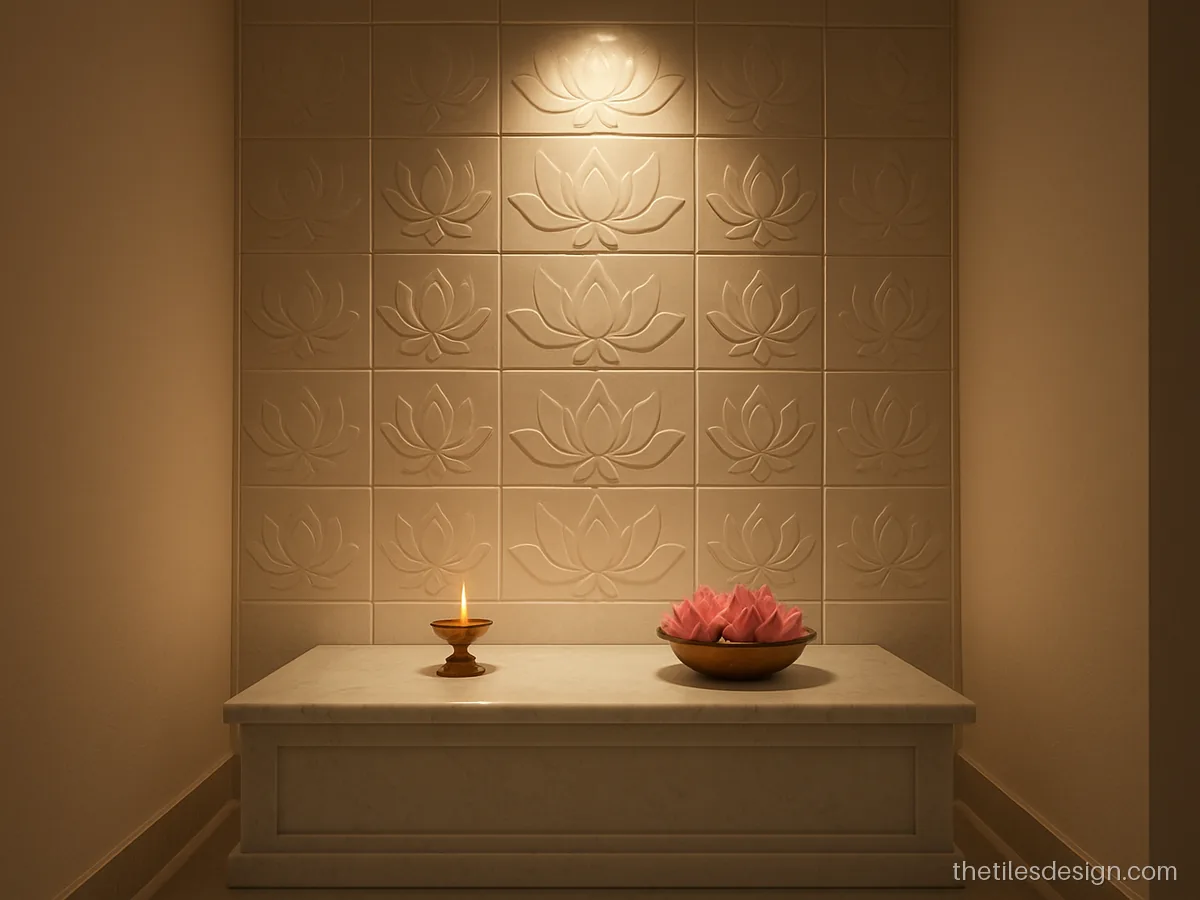
- Size
- 300 x 300 mm
- Finish
- Matt 3D
- Best for
- Back walls
Raised white lotus tiles look like carved marble when lit from above. Matt white hides small soot marks better than glossy white.
Fitter's tip: Dust the relief with a soft dry brush every week; a wet cloth pushes soot into the grooves.
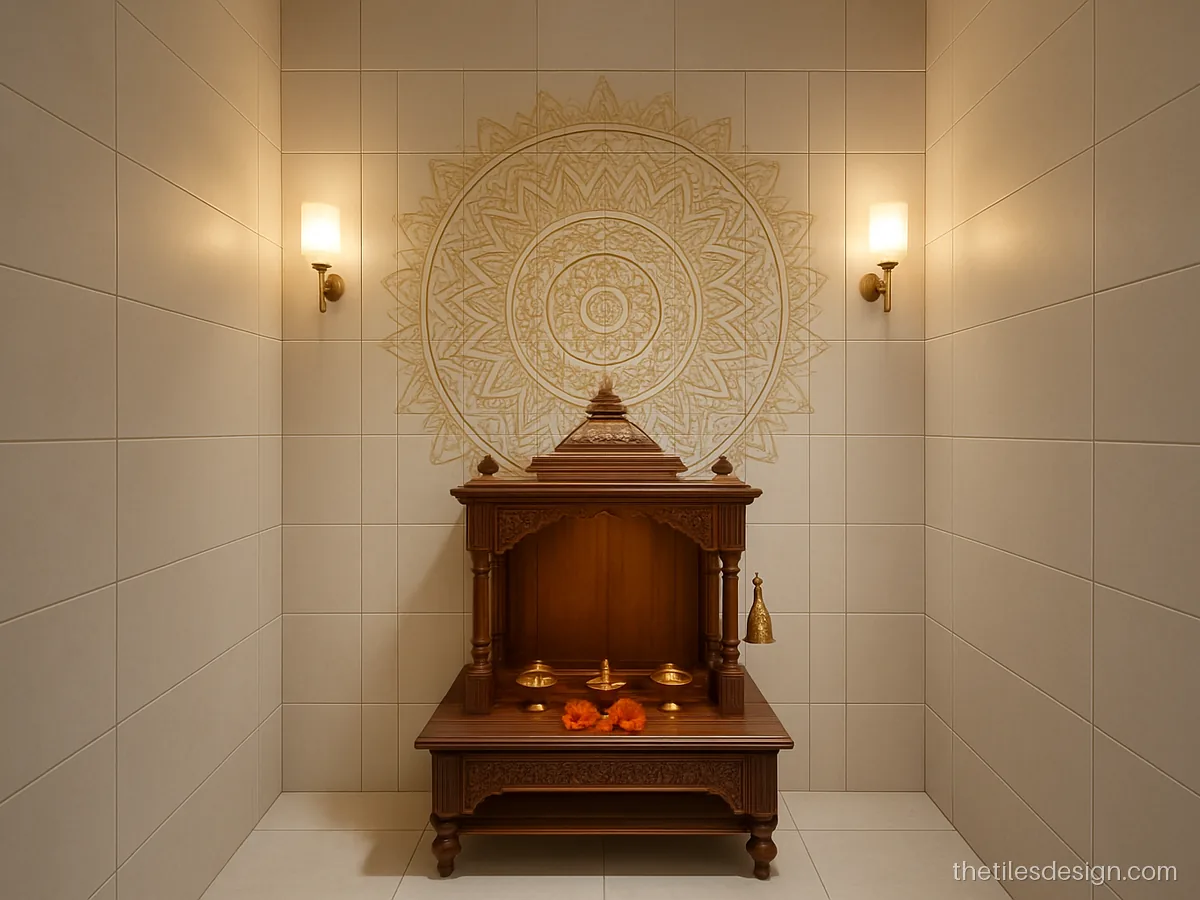
- Size
- 600 x 600 mm
- Finish
- Satin with gold
- Best for
- Large pooja rooms
Cream tiles with a raised gold mandala make a rich feature wall above the mandir shelf. Keep it to a small panel so the gold does not look heavy.
Fitter's tip: Never use acid or scrub pads on gold glaze; wipe with a soft damp cloth.
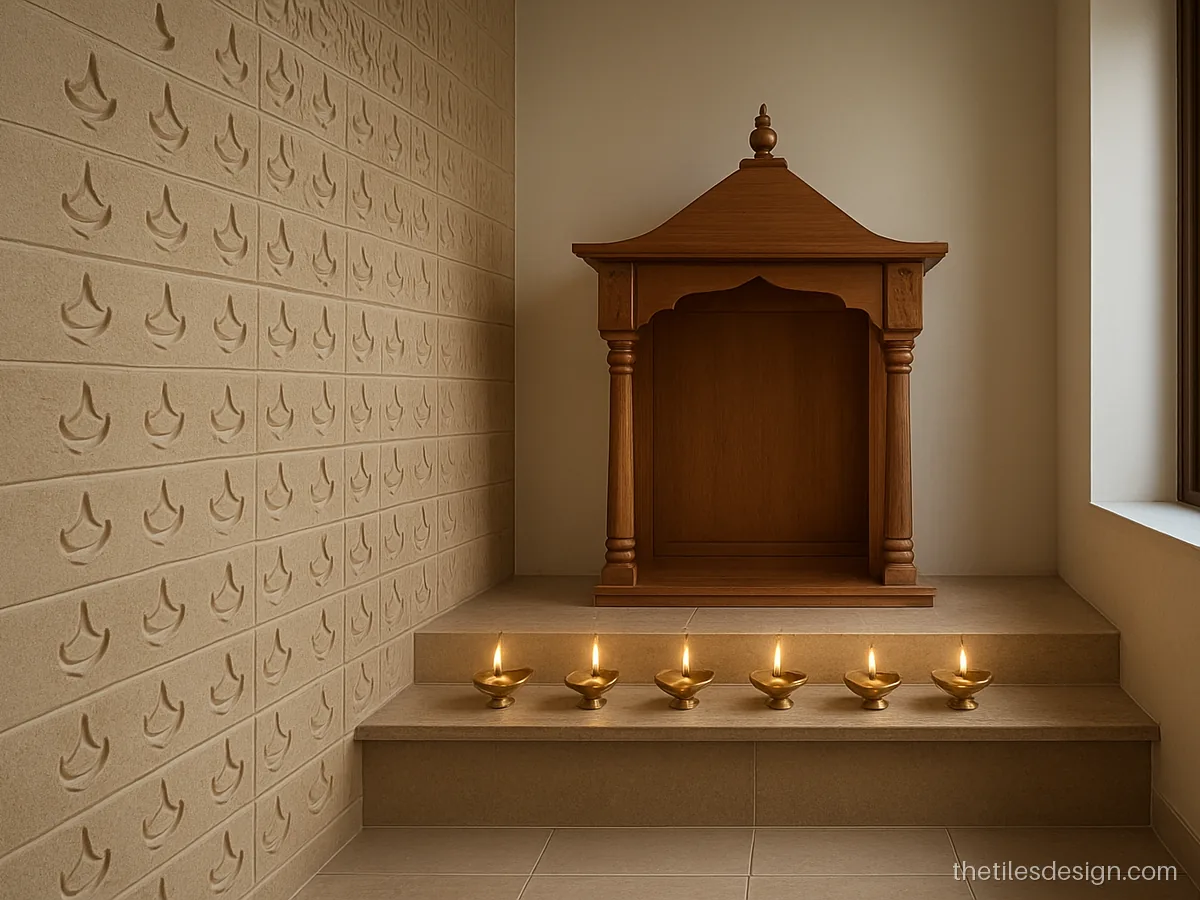
- Size
- 300 x 600 mm
- Finish
- Matt relief
- Best for
- Side walls
A jaali tile with small diya shapes adds detail on the side wall. It pairs well with a plain wooden mandir and brass lamps.
Fitter's tip: Order 10 percent extra, because carved tiles chip at the edges during cutting.
Small Pooja Niche and Mandir Wall Tiles Design
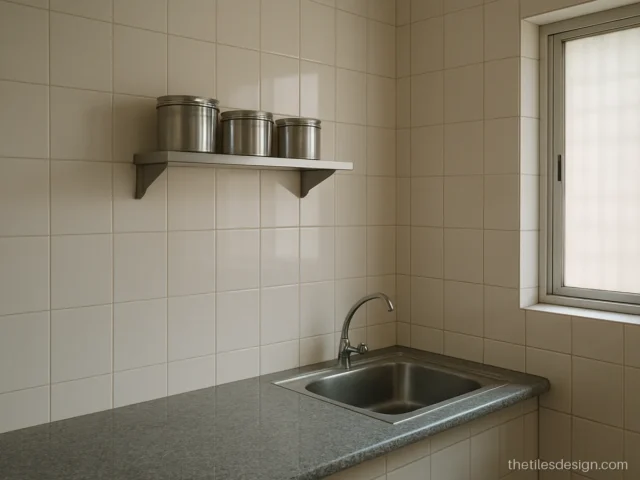
Many flats have only a wall niche or a kitchen corner for the mandir. A simple mandir tiles design with small tiles and one feature panel makes a little space look complete. For kitchen corners, see kitchen wall tiles.
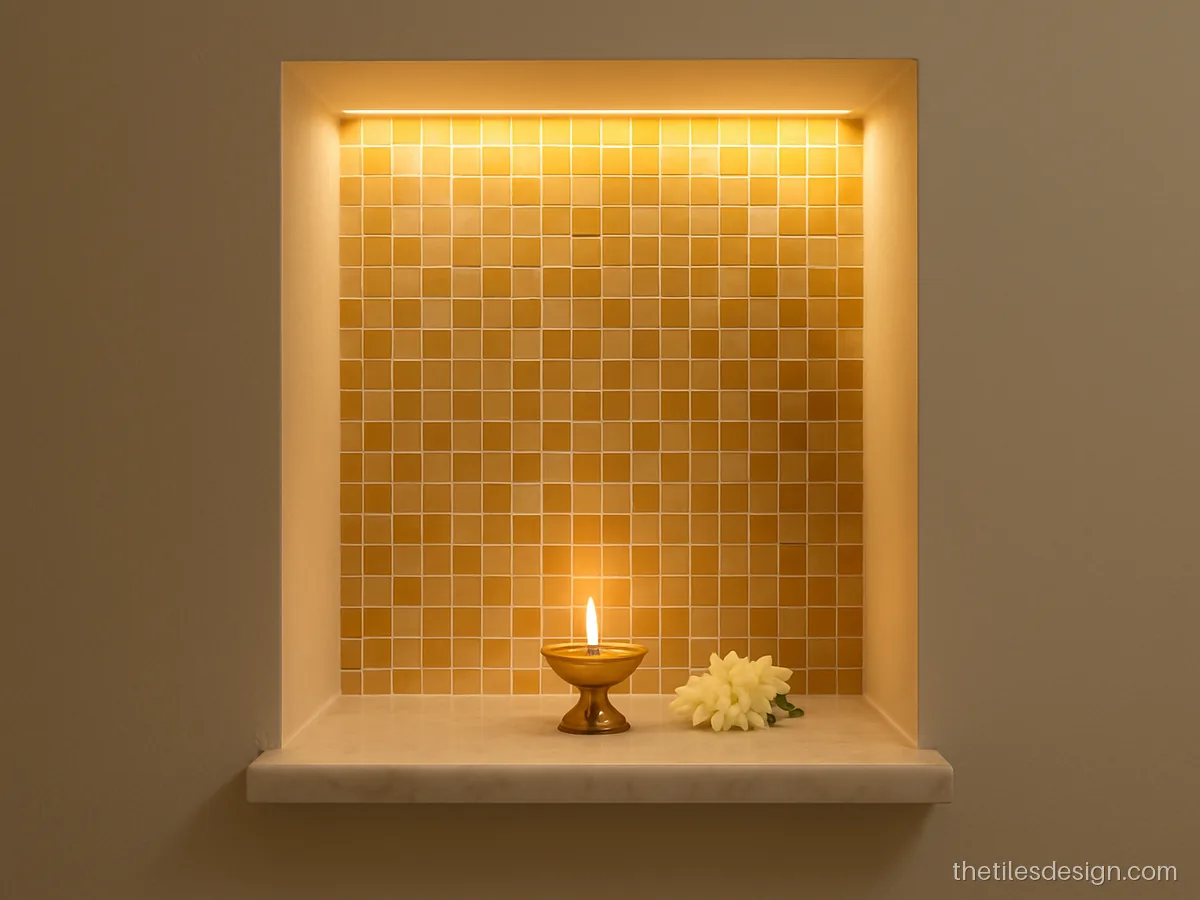
- Size
- 25 x 25 mm mosaic
- Finish
- Glossy glass
- Best for
- Wall niches
A wall niche lined with gold and cream glass mosaic glows under a small LED strip. Ideal for a flat with no separate pooja room.
Fitter's tip: Use white epoxy grout in mosaic; it stays clean and holds the small pieces firmly.
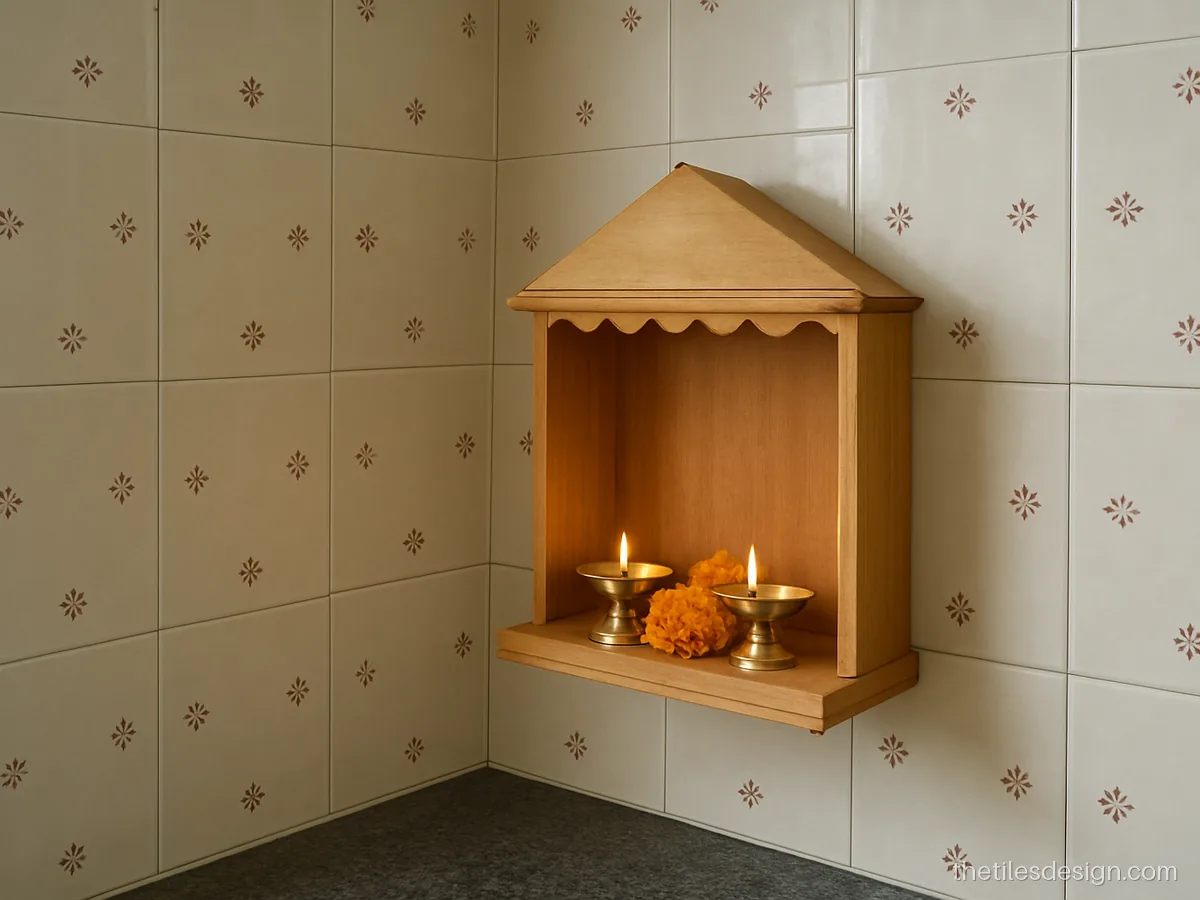
- Size
- 300 x 300 mm
- Finish
- Glossy
- Best for
- Kitchen mandirs
A wall mounted wooden mandir in the kitchen corner gets its own ivory pattern tiles to set it apart from the kitchen dado.
Fitter's tip: Keep the mandir at least 600 mm away from the hob so heat and oil do not reach it.
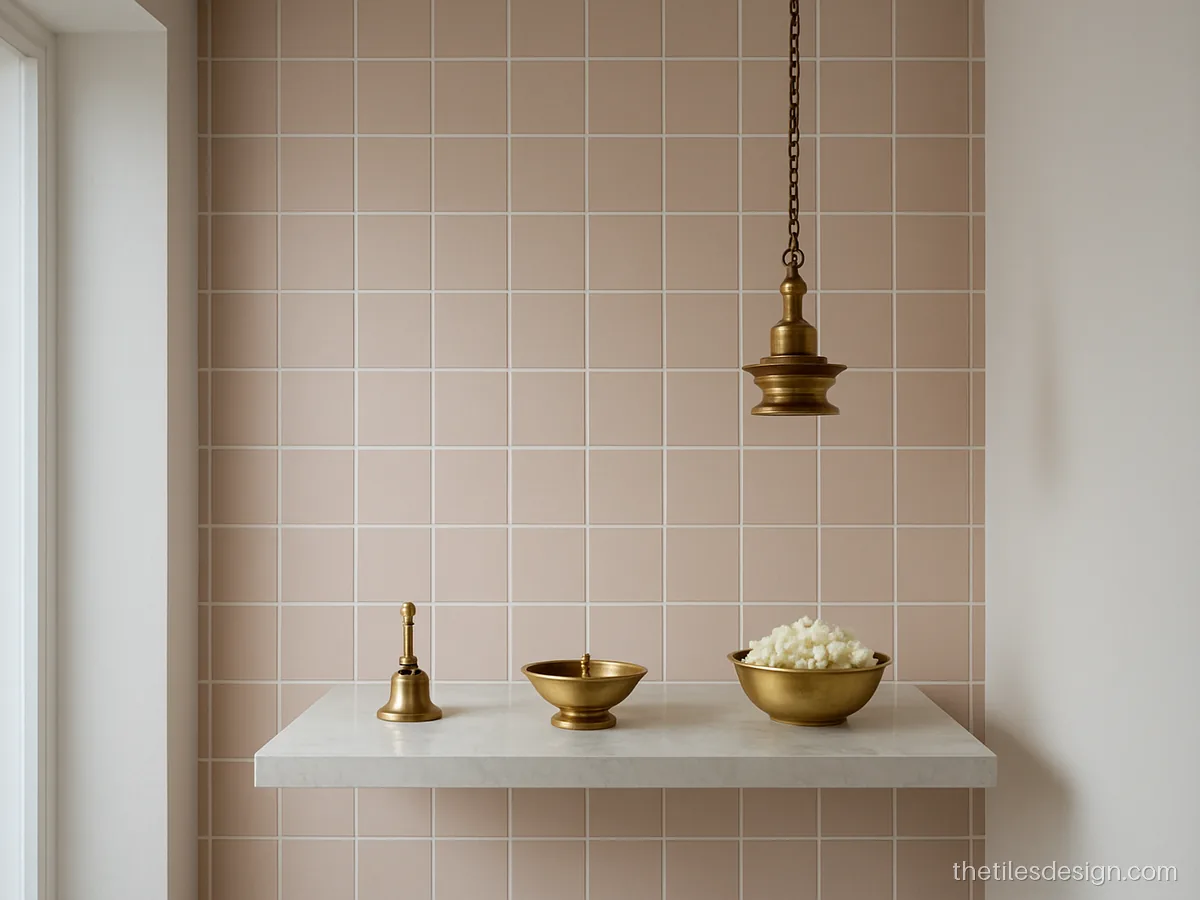
- Size
- 200 x 200 mm
- Finish
- Matt
- Best for
- Small apartments
Pale pink matt tiles with a floating white marble shelf make a modern mandir wall in a small apartment. Simple to wipe and quick to fit.
Fitter's tip: Fix shelf brackets into the wall before tiling and cut tiles neatly around them.
How to Choose Pooja Room Tiles
Plan each part of the mandir on its own. The back wall can be decorative, but the floor and steps must be safe for bare feet.
| Area | Tile type | Size | Finish |
|---|---|---|---|
| Back wall | Ceramic or GVT pattern tiles | 300 x 600 mm | Satin or glossy |
| Floor | Vitrified or marble look | 600 x 600 mm | Matt or satin |
| Steps | Granite look or full body | 300 x 1200 mm treads | Matt, rounded edge |
| Niche | Glass or stone mosaic | 25 x 25 mm | Glossy |
Gold glaze, 3D relief, large slabs and carved patterns cost more than plain tiles. Hand cut inlays and borders also add labour. More pattern ideas are on our tiles border design page.
Fitting and Care for Mandir Tiles
- Use epoxy grout on walls near diyas and on the floor, as it does not soak up oil or kumkum.
- Keep a 50 to 75 mm gap between a diya and the tile, or place it on a brass plate, so heat does not crack the glaze.
- Wipe soot weekly with warm water and a drop of dish soap. Avoid acid and bleach on gold or printed tiles.
- Buy 10 percent extra and keep one box, since pattern tiles are hard to match later.
Tile questions people ask
Which tiles are best for mandir floor tiles design?
Matt or satin vitrified tiles in white, cream or light beige work best. They do not get slippery when water spills and are easy to mop. Marble look and granite look tiles are good for raised steps.
Should I use god tiles for pooja room walls?
Many shops sell god tiles with printed pictures. We suggest pattern tiles such as lotus, mandala or jaali instead. Printed tiles can fade, chip or crack, and one broken piece is hard to replace. Keep your idols and photos on the mandir shelf.
What colour pooja room tiles are good as per vastu?
Vastu advisers usually suggest light colours like white, cream, light yellow and pale peach. Dark grey and black are generally avoided. Light colours also make soot easy to spot and clean.
Are 3D tiles for pooja room walls hard to clean?
A little harder than flat tiles, because soot settles in the grooves. Choose a shallow relief, keep diyas a little away from the wall and dust with a soft brush every week.
What is a good god room tiles design for a small flat?
A wall niche with mosaic tiles or a single pattern panel behind a wall hung mandir works well. Keep the colour light and add one warm LED strip. It takes very little space and looks complete.
Can I use real marble in the mandir instead of tiles?
Yes, white marble is a traditional choice. It can stain from oil and turmeric and needs polishing every few years. Marble look porcelain tiles give a similar look with less care.